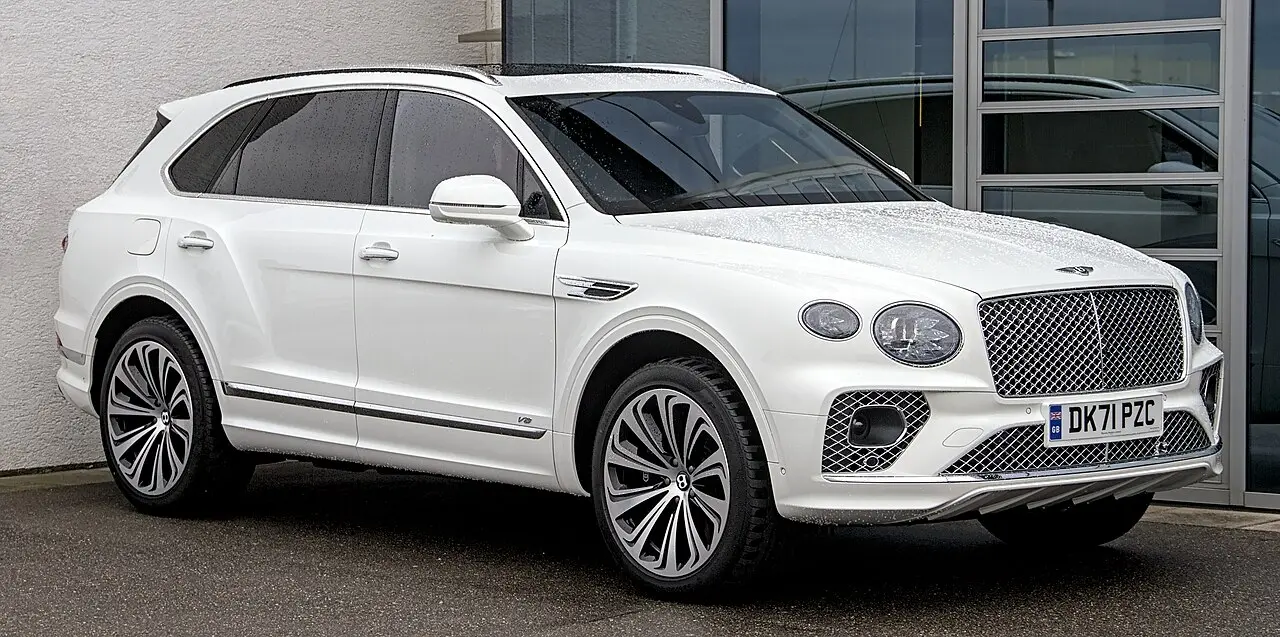
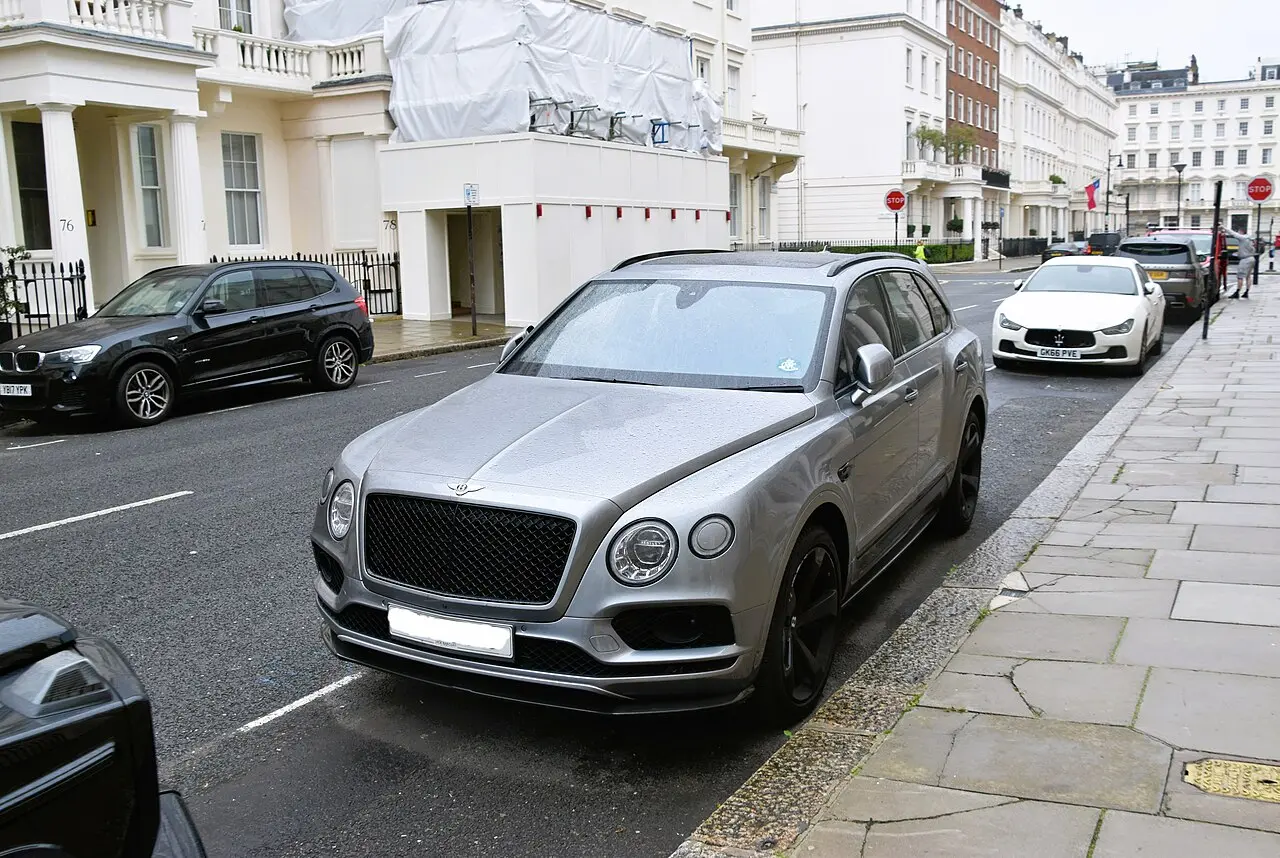
The official data lists 81 versions of the Bentley Bentayga (2016–2027), in the European Union, the United Kingdom, the United States, and Canada. Each market publishes its own figures, measured on its own test procedure.
At a glance
Years in the data
2016–2027
Markets
European Union, United Kingdom, United States, Canada
Engines
3.0 L to 6.0 L
Power
250 kW (340 PS) to 550 kW (748 PS)
Fuels
Petrol, Plug-in hybrid, Hybrid, Diesel
Lowest consumption (United Kingdom)
8.0 L/100 km (NEDC)
Lowest consumption (European Union)
12.9 L/100 km (WLTP)
Lowest consumption (United States)
13.1 L/100 km (EPA)
Plug-in hybrid, weighted (European Union)
3.0 L/100 km (WLTP)
Plug-in hybrid, weighted (United Kingdom)
10.6 L/100 km (WLTP)
New registrations in the EU
13,274
What is the Bentley Bentayga?
The Bentayga is Bentley’s luxury SUV, bringing the marque’s craftsmanship and performance to a taller body with space for passengers and luggage. It extends Bentley’s range beyond coupés and saloons. Bentley named it after Roque Bentayga on Gran Canaria.
The first Bentayga arrived with a W12 petrol engine. The range later expanded to include diesel, V8 and hybrid versions, giving the SUV several ways to suit different kinds of driving.
Bentayga generations
The first generation is listed from 2017 to 2020. Bentley introduced the second generation in 2020; it is listed from 2021 onward. The later model carried on the Bentayga’s luxury SUV format, and plug-in hybrid versions appear in official figures alongside petrol models.
Engines, power and official consumption
EU figures cover engines from 3.0 to 6.0 litres and power from 250 kW (340 PS) to 467 kW (635 PS). The EU range includes petrol, diesel, hybrid and plug-in hybrid entries. UK figures include petrol, diesel and plug-in hybrid versions, while North American figures cover engines from 3.0 to 6.0 litres.
The lowest listed non-plug-in figure in the EU is 12.9 L/100 km on WLTP. The lowest plug-in hybrid figure is 3 L/100 km on WLTP; this weighted result assumes some driving is electric. The lowest listed non-plug-in figures are 13.1 L/100 km in the US under EPA testing and 13.2 L/100 km in Canada under the 5-cycle procedure. WLTP, EPA and Canada’s 5-cycle tests use different procedures.
Where was the Bentayga sold?
Official figures are available for the EU, UK, US and Canada. EU registrations total 13,274 from 2016 to 2025. UK figures span 2016 to 2026, US figures span 2017 to 2027, and Canadian figures span 2017 to 2026.
Questions and answers
When did Bentley launch the Bentayga?
Bentley introduced the Bentayga as its first SUV. The first generation is listed from 2017 to 2020, followed by the second generation from 2021 onward.
What kinds of powertrains are listed for the Bentayga?
EU figures include petrol, diesel, hybrid and plug-in hybrid versions. US and Canadian figures include petrol and plug-in hybrid versions.
What is the lowest EU consumption figure?
The lowest listed figure is 3 L/100 km for a plug-in hybrid on WLTP. It is a weighted result that assumes some driving is electric.
New cars registered in the EU (plus Norway and Iceland), from the European Environment Agency. Figures on the NEDC procedure until 2020 and on WLTP from 2021; versions are grouped by engine and power, with their number of registrations.
Years and version
Engine
Power
Fuel
Consumption (combined)
CO₂
Electric range
EU registrations
2025
4.0 L
404 kW (549 PS)
Petrol
13.0 L/100 km WLTP
296 g/km
–
258
2025
3.0 L
250 kW (340 PS)
Plug-in hybrid
3.3 L/100 km WLTP27.0 kWh/100 km WLTP
84 g/km
45 km
101
2025
4.0 L
478 kW (650 PS)
Petrol
13.1 L/100 km WLTP
298 g/km
–
24
2024
4.0 L
404 kW (549 PS)
Petrol
12.9 L/100 km WLTP
295 g/km
–
351
2024
3.0 L
250 kW (340 PS)
Plug-in hybrid
3.1 L/100 km WLTP27.1 kWh/100 km WLTP
70 g/km
48 km
76
2023
4.0 L
404 kW (549 PS)
Petrol
13.0 L/100 km WLTP
294 g/km
–
553
2023
3.0 L
250 kW (340 PS)
Plug-in hybrid
3.0 L/100 km WLTP26.1 kWh/100 km WLTP
69 g/km
44 km
91
2022
4.0 L
404 kW (549 PS)
Petrol
13.0 L/100 km WLTP
293 g/km
–
489
2022
3.0 L
250 kW (340 PS)
Plug-in hybrid
3.4 L/100 km WLTP25.5 kWh/100 km WLTP
82 g/km
43 km
193
2021
4.0 L
404 kW (549 PS)
Petrol
12.9 L/100 km WLTP
295 g/km
–
804
2021
3.0 L
250 kW (340 PS)
Plug-in hybrid
3.8 L/100 km WLTP25.3 kWh/100 km WLTP
84 g/km
40 km
213
2021
4.0 L
150 kW (204 PS)
Petrol
13.0 L/100 km WLTP
295 g/km
–
30
2021
3.0 L
250 kW (340 PS)
Petrol
24.3 kWh/100 km WLTP
82 g/km
43 km
23
2021
4.0 L
107 kW (145 PS)
Petrol
13.0 L/100 km WLTP
294 g/km
–
14
2021
3.0 L
250 kW (340 PS)
Hybrid
–
82 g/km
40 km
10
United Kingdom 11 versions
New cars on sale in the UK, from the Vehicle Certification Agency. NEDC figures until 2018 and WLTP figures after; years are the editions a version appeared in.
Model years sold in the USA, from the EPA and the Department of Energy (fueleconomy.gov). MPG on the EPA test; litres per 100 km = 235.215 ÷ MPG.
Years and version
Engine
Fuel
Gearbox
Drive
Consumption (combined)
CO₂
2026–2027SIDI; PHEV
3.0 L
Plug-in hybrid
8-speed automatic
All-wheel drive
21 MPG (11.2 L/100 km) EPA
128 g/km
2024–2027SIDI
4.0 L
Petrol
8-speed automatic
All-wheel drive
16 MPG (14.7 L/100 km) EPA
344 g/km
2025SIDI; PHEV
3.0 L
Plug-in hybrid
8-speed automatic
All-wheel drive
21 MPG (11.2 L/100 km) EPA
126 g/km
2023SIDI; PHEV
3.0 L
Plug-in hybrid
8-speed automatic
All-wheel drive
20 MPG (11.8 L/100 km) EPA
138 g/km
2023SIDI
4.0 L
Petrol
8-speed automatic
All-wheel drive
17 MPG (13.8 L/100 km) EPA
327 g/km
2023SIDI & PFI
6.0 L
Petrol
8-speed automatic
All-wheel drive
14 MPG (16.8 L/100 km) EPA
383 g/km
2021–2022SIDI
4.0 L
Petrol
8-speed automatic
All-wheel drive
18 MPG (13.1 L/100 km) EPA
309 g/km
2021–2022SIDI & PFI
6.0 L
Petrol
8-speed automatic
All-wheel drive
14 MPG (16.8 L/100 km) EPA
383 g/km
2021SIDI; PHEV
3.0 L
Plug-in hybrid
8-speed automatic
All-wheel drive
19 MPG (12.4 L/100 km) EPA
159 g/km
Canada 8 versions
Model years sold in Canada, from Natural Resources Canada fuel consumption ratings (5-cycle test).
Years and version
Engine
Fuel
Gearbox
Consumption (combined)
CO₂
Electric range
2024–2026Sport utility vehicle: Standard
3.0 L
Plug-in hybrid
8-speed automatic
11.3 L/100 km 5-cycle
128 g/km
34 km
2024–2026Sport utility vehicle: Standard
4.0 L
Petrol
8-speed automatic
14.6 L/100 km 5-cycle
343 g/km
–
2023Sport utility vehicle: Standard
3.0 L
Plug-in hybrid
8-speed automatic
11.7 L/100 km 5-cycle
138 g/km
31 km
2023Sport utility vehicle: Standard
4.0 L
Petrol
8-speed automatic
14.0 L/100 km 5-cycle
328 g/km
–
2023Sport utility vehicle: Standard
6.0 L
Petrol
8-speed automatic
16.3 L/100 km 5-cycle
383 g/km
–
2021–2022Sport utility vehicle: Standard
4.0 L
Petrol
8-speed automatic
13.2 L/100 km 5-cycle
309 g/km
–
2021–2022Sport utility vehicle: Standard
6.0 L
Petrol
8-speed automatic
16.3 L/100 km 5-cycle
383 g/km
–
2021Sport utility vehicle: Standard
3.0 L
Plug-in hybrid
8-speed automatic
12.7 L/100 km 5-cycle
159 g/km
29 km
Versions outside these generations
European Union 1 version
New cars registered in the EU (plus Norway and Iceland), from the European Environment Agency. Figures on the NEDC procedure until 2020 and on WLTP from 2021; versions are grouped by engine and power, with their number of registrations.
Years and version
Engine
Power
Fuel
CO₂
EU registrations
2016
6.0 L
447 kW (608 PS)
Petrol
316 g/km
1,617
United Kingdom 1 version
New cars on sale in the UK, from the Vehicle Certification Agency. NEDC figures until 2018 and WLTP figures after; years are the editions a version appeared in.
Years and version
Engine
Fuel
Consumption (combined)
CO₂
2016–2018Bentayga · Bentayga W12
6.0 L
Petrol
13.1 L/100 km NEDC
296 g/km
Official figures are measured on standard test procedures and differ between markets. Your consumption depends on how, where and in what conditions you drive.