The official data lists 28 versions of the Alpina B3 (2010 - 2025), in the European Union. Each market publishes its own figures, measured on its own test procedure.
At a glance
Years in the data
2010 - 2025
Markets
European Union
Engines
3.0 L to 4.4 L
Power
257 kW (349 PS) to 466 kW (634 PS)
Fuels
Petrol, Hybrid, Diesel
Lowest consumption (European Union)
6.9 L/100 km (WLTP)
New registrations in the EU
11,230
What is the Alpina B3?
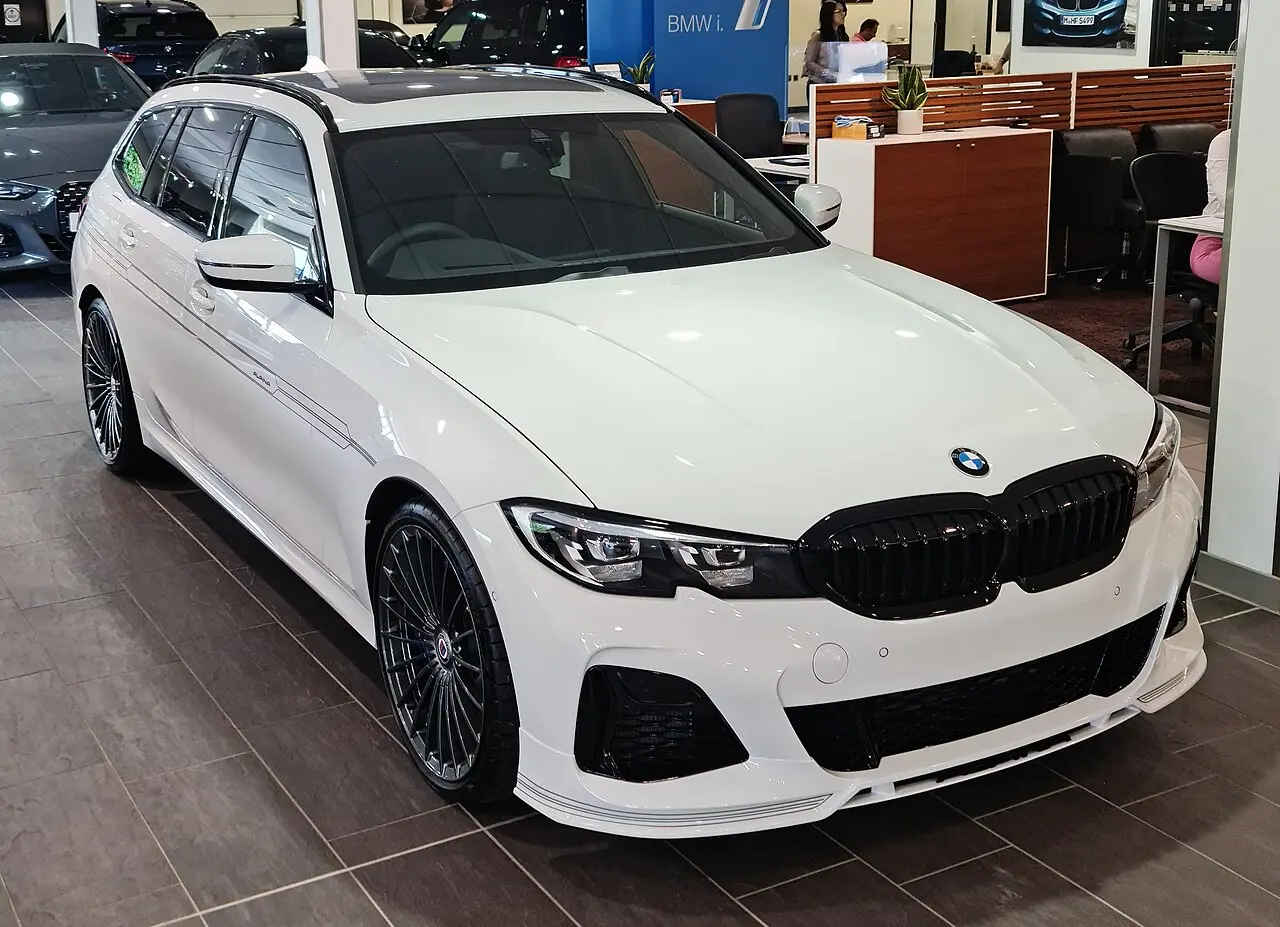
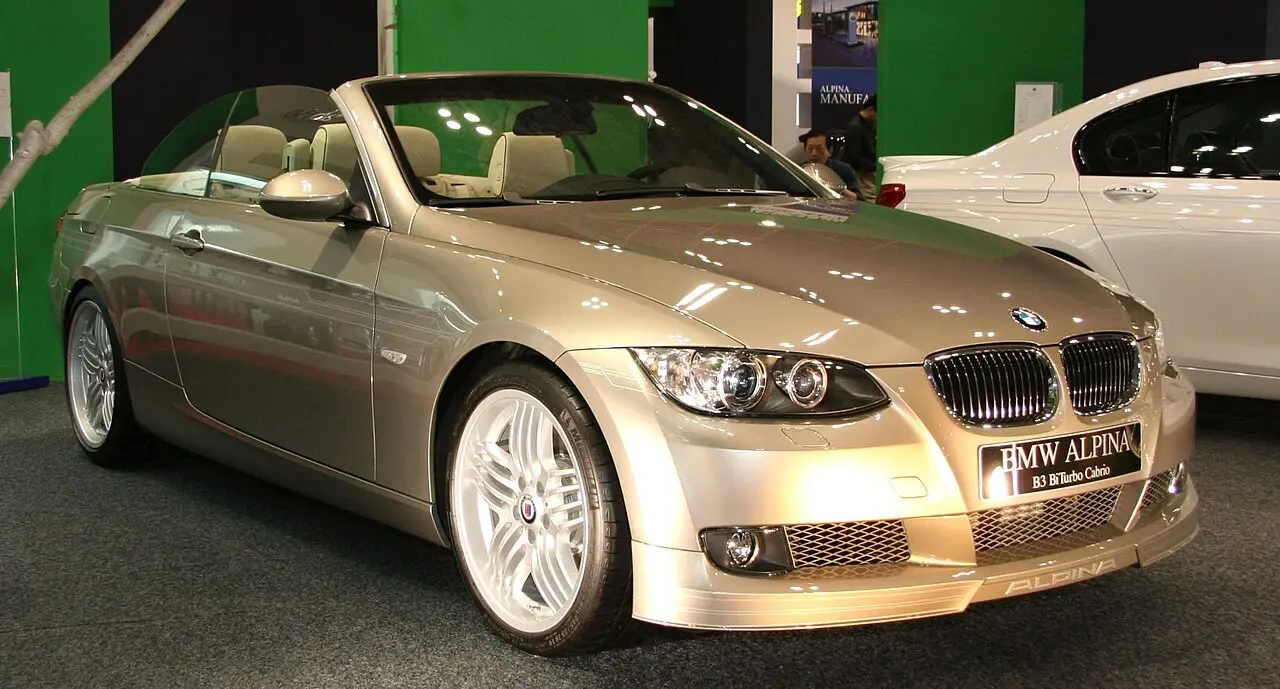
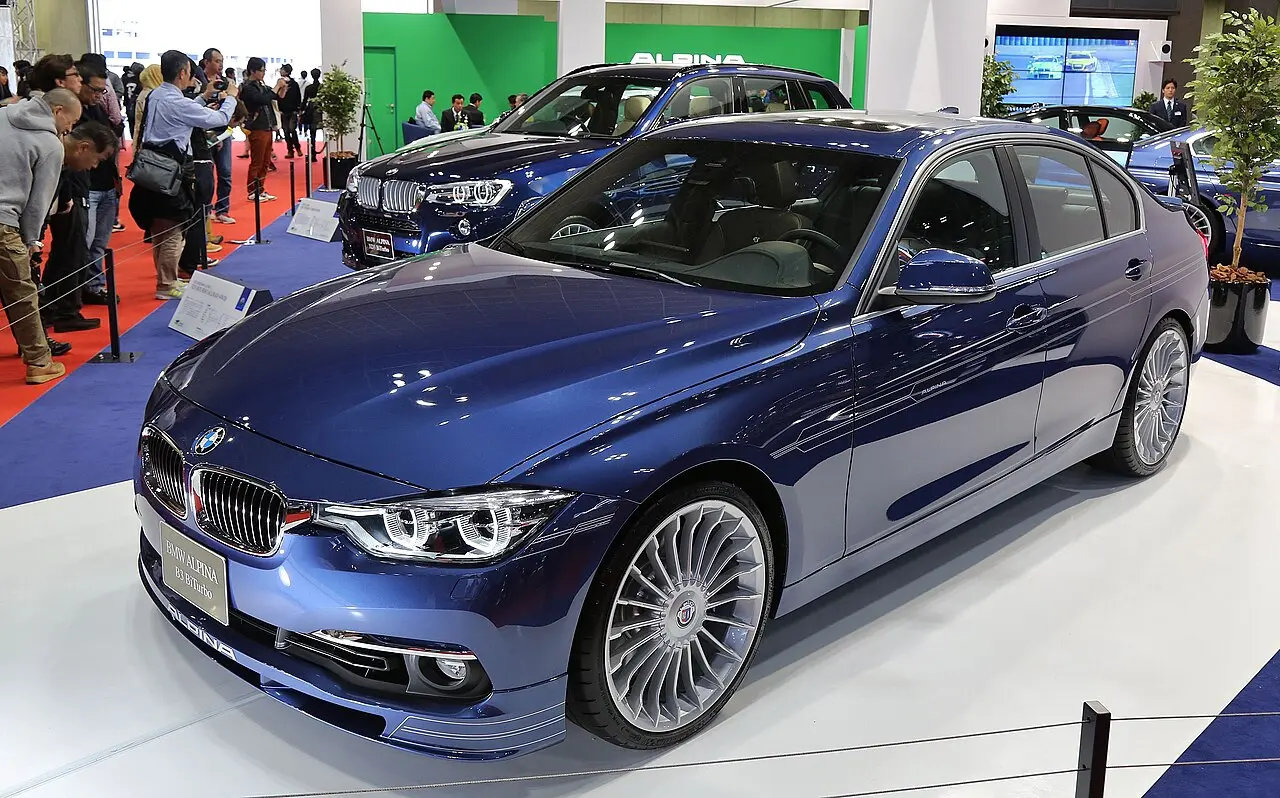
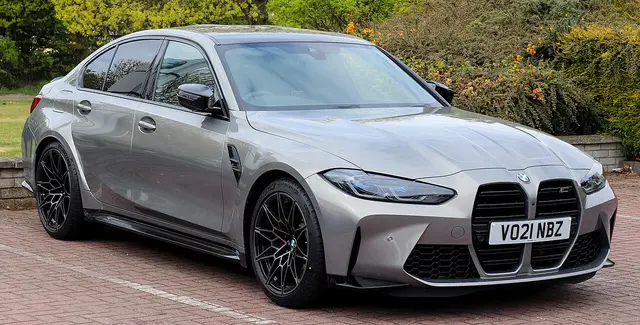
The Alpina B3 is based on the BMW 3 Series, a compact executive car. The wider B3 range has included saloon, estate, coupé and convertible body styles, depending on generation. The estate offers extra load space, while the saloon keeps a more traditional three-box shape. Alpina grew from a business tuning BMWs into a recognised car manufacturer, developing its own versions of BMW models.
Generations and engines
The E90 generation ran from 2010 to 2013 and includes body codes E90, E91, E92 and E93. The F30 generation followed from 2013 to 2019, with F30 and F31 forms. The G20 generation runs from 2020 to today and includes the G20 and G21.
EU versions from 2010 to 2025 use a 3.0-litre petrol engine. Power ranges from 257 kW (349 PS) to 466 kW (634 PS). Among the leading registration entries are a 294 kW (400 PS) version in 2011 and a 324 kW (441 PS) version in 2018.
EU registrations
There were 11,230 EU registrations from 2010 to 2025. The B3 brings Alpina’s take on the 3 Series to drivers looking for a compact executive car, with saloon and estate forms among the options across its generations.
Questions and answers
What type of car is the Alpina B3?
It is an Alpina based on the BMW 3 Series, with saloon and estate forms across the generations covered.
What engine and power are listed for the B3?
EU versions have a 3.0-litre petrol engine and power from 294 kW (400 PS) to 324 kW (441 PS).
How many B3s were registered in the EU?
There were 11,230 EU registrations from 2010 to 2025.
New cars registered in the EU (plus Norway and Iceland), from the European Environment Agency. Figures on the NEDC procedure until 2020 and on WLTP from 2021; versions are grouped by engine and power, with their number of registrations.
Years and version
Engine
Power
Fuel
Consumption (combined)
CO₂
EU registrations
2024 - 2025
3.0 L
389 kW (529 PS)
Petrol
10.4 - 10.6 L/100 km WLTP
238 - 241 g/km
494
2023 - 2025
4.4 L
457 kW (621 PS)
Hybrid
11.6 - 12.8 L/100 km WLTP
288 - 289 g/km
255
2022 - 2025
3.0 L
261 kW (355 PS)
Hybrid
6.9 - 7.5 L/100 km WLTP
182 - 196 g/km
517
2022 - 2025
3.0 L
290 kW (394 PS)
Diesel
8.6 L/100 km WLTP
224 g/km
632
2022 - 2025
3.0 L
364 kW (495 PS)
Petrol
10.1 L/100 km WLTP
229 g/km
597
2023 - 2025
4.4 L
466 kW (634 PS)
Petrol
11.4 - 11.8 L/100 km WLTP
259 - 267 g/km
182
2021 - 2025
4.4 L
457 kW (621 PS)
Petrol
11.9 - 12.2 L/100 km WLTP
267 - 280 g/km
861
2022 - 2024
3.0 L
300 kW (408 PS)
Diesel
8.6 - 8.7 L/100 km WLTP
226 - 227 g/km
224
2021 - 2022
3.0 L
340 kW (462 PS)
Petrol
10.2 - 10.9 L/100 km WLTP
247 g/km
598
2021
3.0 L
261 kW (355 PS)
Hybrid
-
197 g/km
298
2021
3.0 L
285 kW (387 PS)
Diesel
8.2 L/100 km WLTP
225 g/km
226
2021
3.0 L
300 kW (408 PS)
Diesel
-
226 g/km
226
2021
4.4 L
447 kW (608 PS)
Petrol
11.2 L/100 km WLTP
264 g/km
30
2021
3.0 L
290 kW (394 PS)
Diesel
-
227 g/km
22
2021
3.0 L
261 kW (355 PS)
Diesel
7.6 L/100 km WLTP
185 g/km
14
2020
3.0 L
285 kW (387 PS)
Diesel
-
185 g/km
526
2020
3.0 L
340 kW (462 PS)
Petrol
-
247 g/km
100
2020
3.0 L
261 kW (355 PS)
Hybrid
-
176 g/km
86
2020
4.4 L
457 kW (621 PS)
Petrol
-
220 g/km
86
2020
3.0 L
300 kW (408 PS)
Diesel
-
195 g/km
46
2020
3.0 L
332 kW (451 PS)
Petrol
-
208 g/km
36
2020
4.4 L
447 kW (608 PS)
Petrol
-
254 g/km
36
2020
3.0 L
324 kW (441 PS)
Petrol
-
209 g/km
14
Versions outside these generations
European Union 4 versions
New cars registered in the EU (plus Norway and Iceland), from the European Environment Agency. Figures on the NEDC procedure until 2020 and on WLTP from 2021; versions are grouped by engine and power, with their number of registrations.
Years and version
Engine
Power
Fuel
CO₂
EU registrations
2013 - 2015
3.0 L
300 kW (408 PS)
Petrol
224 g/km
64
2013
3.0 L
301 kW (409 PS)
Petrol
181 g/km
274
2013
3.0 L
257 kW (349 PS)
Diesel
174 g/km
134
2013
3.0 L
294 kW (400 PS)
Petrol
225 g/km
22
Alpina B3 recalls
2 official safety recalls for the Alpina B3 from NHTSA (United States), DVSA (United Kingdom) and the EU Safety Gate, newest first. Recall repairs are normally free at the maker’s dealers.
Positive battery cable contact may become damaged2009 - 2011
Official figures are measured on standard test procedures and differ between markets. Your consumption depends on how, where and in what conditions you drive.