

Peugeot 508 II
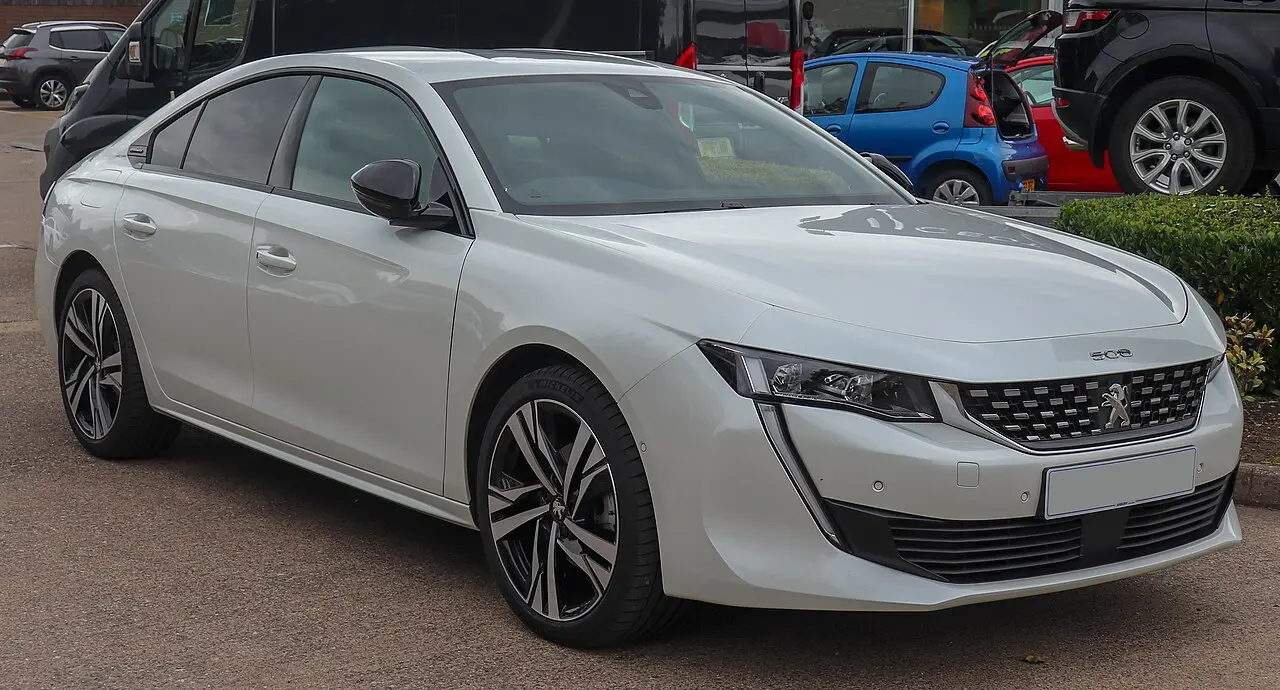
The Peugeot 508 II (since 2018): dimensions, weights, reliability and the official figures of its 76 versions in the European Union, the United Kingdom, and France.
Model codes: R8 · Sold in: European Union, United Kingdom, and France
Dimensions, weights and capacity
| Specification | Europe | Wikipedia |
|---|---|---|
| Dimensions | ||
| Length | 4,750–4,790 mm RDW | 4,750–4,870 mm |
| Width | 1,860 mm RDW | 1,855–1,859 mm |
| Height | 1,410–1,420 mm RDW | 1,403–1,455 mm |
| Wheelbase | 2,800 mm RDW | 2,795–2,848 mm |
| Front track | 1,590–1,600 mm ASTRA | – |
| Rear track | 1,590–1,600 mm ASTRA | – |
| Weights and towing | ||
| Kerb weight | 1,375–1,746 kg RDW | 1,495–1,761 kg |
| Mass in running order | 1,475–1,846 kg RDW | – |
| Gross vehicle weight | 1,970–2,300 kg RDW | – |
| Towing, braked trailer | 1,290–1,600 kg RDW | – |
| Towing, unbraked trailer | 735–750 kg RDW | – |
| Seats and space | ||
| Seats | 5 RDW | – |
| Doors | 4–5 RDW | – |
| Performance | ||
| Top speed | 208–250 km/h RDW | – |
| Torque | 230–400 Nm ASTRA | – |
Tyre sizes (most common first): 215/55R17, 215/60R16, 235/45R18, 235/40R19
Ranges cover the generation’s versions and body styles; European and North American versions can differ. Sources: RDW type approvals (Netherlands), Wikipedia, ASTRA type approvals (Switzerland), Traficom type approvals (Finland). Wikipedia figures are used under CC BY-SA 4.0.
Reliability and owner reports
UK MOT: first-time pass rate by age
| Age at test | Pass rate | UK average | Tests |
|---|---|---|---|
| 3 years | 87.6% (86.7–88.5) | 92.2% | 4,827 |
| 4–5 years | 87.2% (86.4–88.1) | 91.0% | 5,926 |
What the MOT finds
| Area | This model | UK average, same ages |
|---|---|---|
| Tyres | 27.1% | 22.6% |
| Brakes | 20.0% | 13.4% |
| Visibility (glass, mirrors, wipers) | 11.1% | 6.0% |
| Suspension | 3.3% | 3.7% |
| Lights and electrics | 2.4% | 4.5% |
| Body, chassis and structure | 1.9% | 0.9% |
First MOT test of each car per year in 2022–2024, from the DVSA’s anonymised test results; only ages with at least 500 tests are shown. The figure in brackets is the 95% confidence interval; green or red means clearly above or below the UK average. The second table shows how often an item was noted (defect or advisory) in each area, against the UK average for cars of the same ages. DVSA anonymised MOT tests (Open Government Licence)
All 76 versions of the Peugeot 508 II
Show all 76 versions
European Union 36 versions
New cars registered in the EU (plus Norway and Iceland), from the European Environment Agency. Figures on the NEDC procedure until 2020 and on WLTP from 2021; versions are grouped by engine and power, with their number of registrations.
| Years and version | Engine | Power | Fuel | Consumption (combined) | CO₂ | Electric range | EU registrations |
|---|---|---|---|---|---|---|---|
| 2023–2025 | 1.6 L | 110 kW (150 PS) | Plug-in hybrid | 1.2–1.5 L/100 km WLTP15.0–17.0 kWh/100 km WLTP | 28–34 g/km | 52–62 km | 1,874 |
| 2021–2025 | 1.6 L | 133 kW (181 PS) | Plug-in hybrid | 1.3–1.5 L/100 km WLTP15.0–17.1 kWh/100 km WLTP | 28–34 g/km | 53–62 km | 22,931 |
| 2021–2025 | 1.6 L | 147 kW (200 PS) | Plug-in hybrid | 1.8–2.0 L/100 km WLTP16.0–18.8 kWh/100 km WLTP | 40–47 g/km | 47–55 km | 5,180 |
| 2021–2025 | 1.5 L | 96 kW (131 PS) | Diesel | 4.6–5.2 L/100 km WLTP | 123–135 g/km | – | 33,567 |
| 2021–2025 | 1.2 L | 96 kW (131 PS) | Petrol | 5.9–6.1 L/100 km WLTP | 133–136 g/km | – | 7,333 |
| 2025 | 1.6 L | – | Hybrid | 5.8 L/100 km WLTP | 123 g/km | – | 29 |
| 2023 | 1.5 L | 67 kW (91 PS) | Diesel | 5.0 L/100 km WLTP | 130 g/km | – | 11 |
| 2021–2022 | 1.6 L | 133 kW (181 PS) | Petrol | 5.3–6.3 L/100 km WLTP14.9–15.2 kWh/100 km WLTP | 146–147 g/km | – | 4,634 |
| 2022 | 1.6 L | 121 kW (165 PS) | Petrol | – | 134 g/km | – | 18 |
| 2022 | 2.0 L | 103 kW (140 PS) | Diesel | – | 119 g/km | – | 15 |
| 2021–2022 | 1.6 L | 165 kW (224 PS) | Petrol | 6.1–7.0 L/100 km WLTP | 154–160 g/km | – | 1,540 |
| 2021 | 1.6 L | 133 kW (181 PS) | Hybrid | 1.4 L/100 km WLTP14.9 kWh/100 km WLTP | 31 g/km | 59 km | 517 |
| 2021 | 2.0 L | 120 kW (163 PS) | Diesel | 5.3 L/100 km WLTP | 147 g/km | – | 513 |
| 2021 | 2.0 L | 130 kW (177 PS) | Diesel | 5.4 L/100 km WLTP | 152 g/km | – | 301 |
| 2021 | 1.6 L | 147 kW (200 PS) | Hybrid | 16.5 kWh/100 km WLTP | 46 g/km | 46 km | 62 |
| 2021 | 1.6 L | 164 kW (223 PS) | Plug-in hybrid | 2.0 L/100 km WLTP16.6 kWh/100 km WLTP | 46 g/km | 46 km | 36 |
| 2018–2020 | 1.5 L | 96 kW (131 PS) | Diesel | – | 95–100 g/km | – | 40,735 |
| 2020 | 1.6 L | 133 kW (181 PS) | Plug-in hybrid | 15.2 kWh/100 km NEDC | 36 g/km | 58 km | 11,934 |
| 2018–2020 | 2.0 L | 120 kW (163 PS) | Diesel | – | 114–119 g/km | – | 21,666 |
| 2018–2020 | 1.6 L | 133 kW (181 PS) | Petrol | – | 117–124 g/km | – | 18,659 |
| 2018–2020 | 2.0 L | 130 kW (177 PS) | Diesel | – | 114–124 g/km | – | 19,529 |
| 2018–2020 | 1.5 L | – | Diesel | – | 98–102 g/km | – | 4,038 |
| 2018–2020 | 1.6 L | 165 kW (224 PS) | Petrol | – | 124–132 g/km | – | 11,262 |
| 2020 | 1.6 L | – | Plug-in hybrid | 15.1 kWh/100 km NEDC | 35 g/km | 58 km | 1,120 |
| 2018–2020 | 2.0 L | – | Diesel | – | 113–120 g/km | – | 1,406 |
| 2020 | 1.6 L | 30 kW (41 PS) | Plug-in hybrid | 15.1 kWh/100 km NEDC | 35 g/km | 58 km | 208 |
| 2020 | 1.2 L | 96 kW (131 PS) | Petrol | – | 109 g/km | – | 110 |
| 2020 | 1.6 L | 147 kW (200 PS) | Plug-in hybrid | 16.6 kWh/100 km NEDC | 42 g/km | 48 km | 52 |
| 2019 | 1.6 L | 133 kW (181 PS) | Plug-in hybrid | – | 38 g/km | – | 212 |
| 2018–2019 | 1.6 L | 88 kW (120 PS) | Diesel | – | 99–100 g/km | – | 7,473 |
| 2018–2019 | 2.0 L | 133 kW (181 PS) | Diesel | – | 111–113 g/km | – | 3,107 |
| 2018–2019 | 2.0 L | 110 kW (150 PS) | Diesel | – | 107–108 g/km | – | 4,292 |
| 2019 | 1.5 L | 75 kW (102 PS) | Diesel | – | 100 g/km | – | 16 |
| 2018–2019 | 1.6 L | 85 kW (116 PS) | Diesel | – | 99–101 g/km | – | 428 |
| 2018–2019 | 1.6 L | 121 kW (165 PS) | Petrol | – | 133–134 g/km | – | 734 |
| 2018 | 2.0 L | 100 kW (136 PS) | Diesel | – | 105 g/km | – | 18 |
United Kingdom 35 versions
New cars on sale in the UK, from the Vehicle Certification Agency. NEDC figures until 2018 and WLTP figures after; years are the editions a version appeared in.
| Years and version | Engine | Power | Fuel | Gearbox | Consumption (combined) | CO₂ | Electric range |
|---|---|---|---|---|---|---|---|
| 2024PureTech 130 (VL) · PureTech 130 (VL) (GT) | 1.2 L | 131 kW (178 PS) | Petrol | 8-speed automatic | 5.7 L/100 km WLTP | 128 g/km | – |
| 2024PureTech 130 (VH) · PureTech 130 (VH) (GT) | 1.2 L | 131 kW (178 PS) | Petrol | 8-speed automatic | 6.7 L/100 km WLTP | 150 g/km | – |
| 2024PLUG-IN HYBRID 225 (VH) · HYBRID 225 (VH) · HYBRID 225 (VH) (GT) | 1.6 L | 181 kW (246 PS) | Plug-in hybrid | 8-speed automatic | 6.9 L/100 km WLTP18.7 kWh/100 km WLTP | 157 g/km | 48 km |
| 2024PLUG-IN HYBRID 225 (VL) · HYBRID 225 (VL) · HYBRID 225 (VL) (GT) | 1.6 L | 181 kW (246 PS) | Plug-in hybrid | 8-speed automatic | 6.1 L/100 km WLTP16.5 kWh/100 km WLTP | 137 g/km | 54 km |
| 2024PLUG-IN HYBRID 360 | 1.6 L | 200 kW (272 PS) | Plug-in hybrid | 8-speed automatic | 7.7 L/100 km WLTP18.8 kWh/100 km WLTP | 175 g/km | 46 km |
| 2020–2023PureTech 130 Auto | 1.2 L | 96 kW (131 PS) | Petrol | 8-speed automatic | 5.8–6.7 L/100 km WLTP | 129–151 g/km | – |
| 2023PureTech 130 (VL) | 1.2 L | 96 kW (131 PS) | Petrol | 8-speed automatic | 5.6 L/100 km WLTP | 127 g/km | – |
| 2023PureTech 130 (VH) | 1.2 L | 96 kW (131 PS) | Petrol | 8-speed automatic | 6.6 L/100 km WLTP | 149 g/km | – |
| 2020–2023Blue HDI 130 | 1.5 L | 96 kW (131 PS) | Diesel | 6-speed manual | 4.4–5.3 L/100 km WLTP | 116–138 g/km | – |
| 2020–2023Blue HDI 130 Auto | 1.5 L | 96 kW (131 PS) | Diesel | 8-speed automatic | 4.6–5.4 L/100 km WLTP | 119–141 g/km | – |
| 2020–2023HYBRID 225 Auto | 1.6 L | 133 kW (181 PS) | Plug-in hybrid | 8-speed automatic | 6.4–7.2 L/100 km WLTP15.0–17.5 kWh/100 km WLTP | 143–163 g/km | 53–63 km |
| 2020–2023PureTech 180 Auto | 1.6 L | 133 kW (181 PS) | Petrol | 8-speed automatic | 6.4–7.3 L/100 km WLTP | 145–165 g/km | – |
| 2023PLUG-IN HYBRID 225 (VL) | 1.6 L | 133 kW (181 PS) | Plug-in hybrid | 8-speed automatic | 6.1 L/100 km WLTP18.1 kWh/100 km WLTP | 137 g/km | 68 km |
| 2023PLUG-IN HYBRID 225 (VH) | 1.6 L | 133 kW (181 PS) | Plug-in hybrid | 8-speed automatic | 6.9 L/100 km WLTP20.6 kWh/100 km WLTP | 157 g/km | 55 km |
| 2020–2023PSE HYBRID 225 Auto | 1.6 L | 147 kW (200 PS) | Plug-in hybrid | 8-speed automatic | 7.5 L/100 km WLTP17.5 kWh/100 km WLTP | 169 g/km | 46 km |
| 2023PLUG-IN HYBRID 360 | 1.6 L | 147 kW (200 PS) | Plug-in hybrid | 8-speed automatic | 8.0 L/100 km WLTP22.4 kWh/100 km WLTP | 180 g/km | 55 km |
| 2020–2023PureTech 225 Auto | 1.6 L | 165 kW (224 PS) | Petrol | 8-speed automatic | 6.5–7.4 L/100 km WLTP | 147–168 g/km | – |
| 2020–2023Blue HDI 160 Auto | 2.0 L | 120 kW (163 PS) | Diesel | 8-speed automatic | 5.3–6.2 L/100 km WLTP | 140–163 g/km | – |
| 2020–2023Blue HDI 180 Auto | 2.0 L | 130 kW (177 PS) | Diesel | 8-speed automatic | 5.6–6.2 L/100 km WLTP | 147–162 g/km | – |
| 20191.5L BlueHDi 130 EAT8 S&S | 1.5 L | 96 kW (131 PS) | Diesel | 8-speed automatic | 4.8–5.5 L/100 km WLTP | – | – |
| 20191.5L BlueHDi 130 S&S | 1.5 L | 96 kW (131 PS) | Diesel | 6-speed manual | 4.7–5.4 L/100 km WLTP | – | – |
| 20191.6L PureTech 180 EAT8 S&S | 1.6 L | 133 kW (181 PS) | Petrol | 8-speed automatic | 6.8–7.4 L/100 km WLTP | – | – |
| 20191.6L PureTech 225 EAT8 S&S | 1.6 L | 165 kW (224 PS) | Petrol | 8-speed automatic | 7.1–7.8 L/100 km WLTP | – | – |
| 20192.0L BlueHDi 160 EAT8 S&S | 2.0 L | 120 kW (163 PS) | Diesel | 8-speed automatic | 5.5–6.2 L/100 km WLTP | – | – |
| 20192.0L BlueHDi EAT8 180 S&S | 2.0 L | 130 kW (177 PS) | Diesel | 8-speed automatic | 5.6–6.3 L/100 km WLTP | – | – |
| 20181.5L BlueHDi 130 S&S | 1.5 L | – | Diesel | 6-speed manual | 3.8 L/100 km NEDC | 101 g/km | – |
| 20181.5L BlueHDi 130 EAT8 S&S | 1.5 L | – | Diesel | 8-speed automatic | 3.7 L/100 km NEDC | 98 g/km | – |
| 2018GT Line 1.5L BlueHDi 130 EAT8 S&S | 1.5 L | – | Diesel | 8-speed automatic | 3.8 L/100 km NEDC | 101 g/km | – |
| 2018GT Line 1.5L BlueHDi 130 S&S | 1.5 L | – | Diesel | 6-speed manual | 3.9 L/100 km NEDC | 103 g/km | – |
| 2018Allure 1.6L PureTech 180 EAT8 S&S | 1.6 L | – | Petrol | 8-speed automatic | 5.4 L/100 km NEDC | 123 g/km | – |
| 20181.6L PureTech 225 EAT8 S&S | 1.6 L | – | Petrol | 8-speed automatic | 5.7 L/100 km NEDC | 131 g/km | – |
| 2018GT Line 1.6L PureTech 180 EAT8 S&S | 1.6 L | – | Petrol | 8-speed automatic | 5.5 L/100 km NEDC | 125 g/km | – |
| 2018Allure 2.0L BlueHDi 160 EAT8 S&S | 2.0 L | – | Diesel | 8-speed automatic | 4.5 L/100 km NEDC | 118 g/km | – |
| 20182.0L BlueHDi 180 EAT8 S&S | 2.0 L | – | Diesel | 8-speed automatic | 4.7 L/100 km NEDC | 124 g/km | – |
| 2018GT Line 2.0L BlueHDi 160 EAT8 S&S | 2.0 L | – | Diesel | 8-speed automatic | 4.5 L/100 km NEDC | 120 g/km | – |
France 5 versions
New cars on sale in France, from ADEME Car Labelling. NEDC figures until 2015, WLTP figures in the current catalogue.
| Years and version | Engine | Power | Fuel | Gearbox | Consumption (combined) | CO₂ | Electric range |
|---|---|---|---|---|---|---|---|
| 2026508 SW (130ch) | 1.2 L | 96 kW (131 PS) | Petrol | 8-speed automatic | 5.6 L/100 km WLTP | 127 g/km | – |
| 2026508 (181ch+30Kw) | 1.6 L | 133 kW (181 PS) | Plug-in hybrid | 8-speed automatic | 1.0–1.2 L/100 km WLTP14.1–14.4 kWh/100 km WLTP | 23–27 g/km | 63–68 km |
| 2026508 SW (181ch+30Kw) | 1.6 L | 133 kW (181 PS) | Plug-in hybrid | 8-speed automatic | 1.0 L/100 km WLTP14.4 kWh/100 km WLTP | 23 g/km | 68 km |
| 2026508 (200ch+63Kw) | 1.6 L | 147 kW (200 PS) | Plug-in hybrid | 8-speed automatic | – | – | – |
| 2026508 SW (200ch+63Kw) | 1.6 L | 147 kW (200 PS) | Plug-in hybrid | 8-speed automatic | – | – | – |
Similar models from other brands




Official figures are measured on standard test procedures and differ between markets. Your consumption depends on how, where and in what conditions you drive.