The official data lists 253 versions of the Citroën C5 (2001–2022), in the European Union, the United Kingdom, and France. Each market publishes its own figures, measured on its own test procedure.
At a glance
Years in the data
2001–2022
Markets
European Union, United Kingdom, France
Engines
1.5 L to 3.0 L
Power
80 kW (109 PS) to 177 kW (241 PS)
Fuels
Diesel, Petrol, Hybrid
Lowest consumption (United Kingdom)
4.1 L/100 km (NEDC)
Lowest consumption (France)
4.3 L/100 km (NEDC)
Lowest consumption (European Union)
5.1 L/100 km (WLTP)
New registrations in the EU
450,310
What is the Citroën C5?
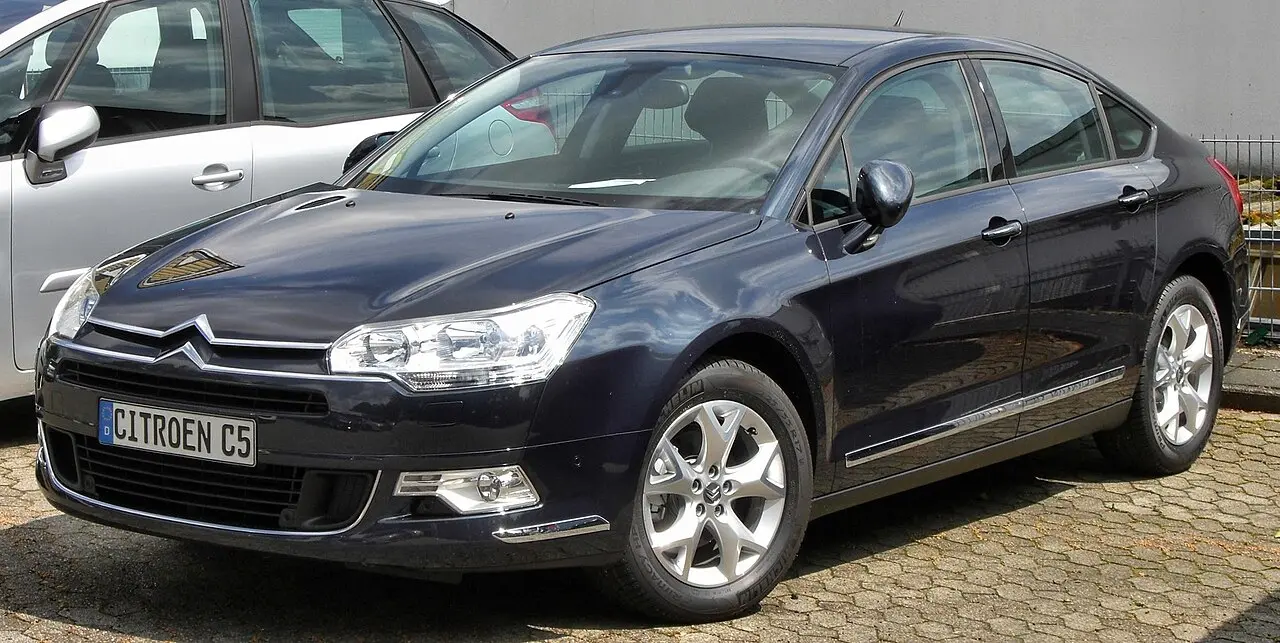
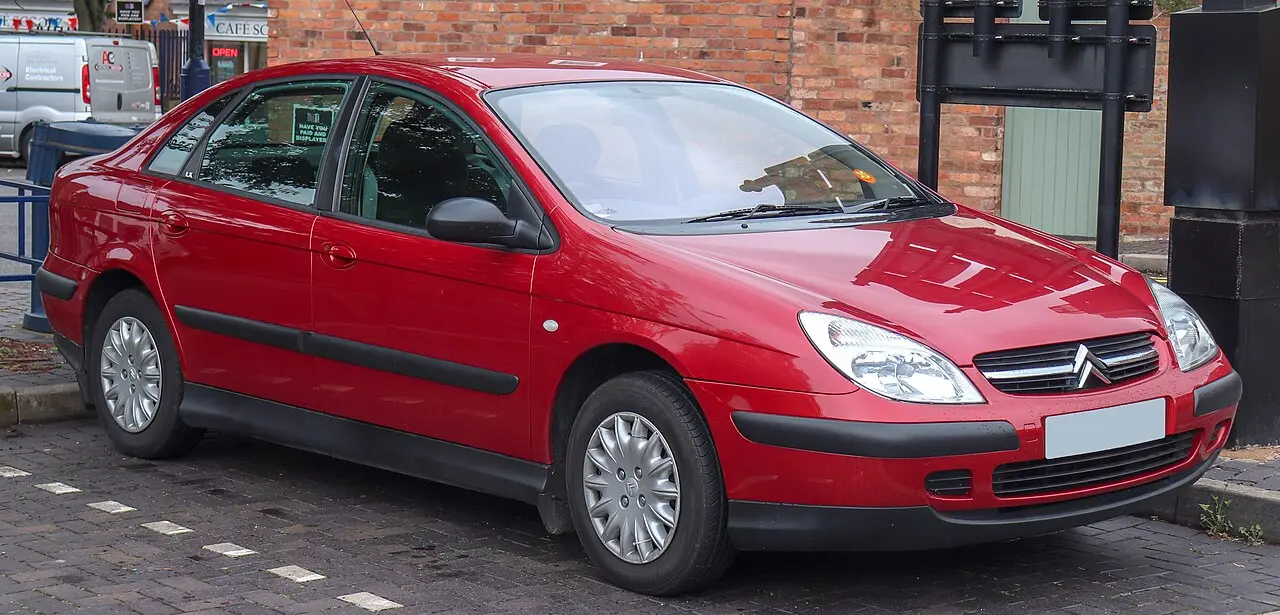
The C5 is a family-sized saloon and estate, built for drivers who need space for passengers and luggage. Comfort has long been part of Citroën’s identity, and the C5 carried that into the larger-car class. Its Hydractive suspension was a notable feature, though equipment varied between versions.
The first generation, C5 I (X3), ran from 2001 to 2008. C5 II (X7) followed from 2008 to 2017, with a more sculpted body. The two generations together span the model’s run from 2001 to 2017.
Engines and power
EU listings from 2010 to 2022 cover engines from 1.2 to 3.0 litres and power from 82 kW (111 PS) to 177 kW (241 PS). They include diesel, petrol, hybrid and other fuel entries. UK figures from 2001 to 2016 show 1.6- to 3.0-litre engines and power from 67 to 119 kW (91–162 PS). French listings from 2012 to 2015 give power from 82 to 177 kW (111–241 PS), with petrol and diesel versions.
How economical is the Citroën C5?
The lowest listed EU consumption for petrol, diesel and hybrid versions is 5.1 L/100 km on WLTP. The lowest UK figure is 4.1 L/100 km on NEDC, and France lists 4.3 L/100 km, also on NEDC. WLTP and NEDC are different test procedures, so figures from these markets are not directly comparable.
The EU recorded 450,310 C5 registrations from 2010 to 2022. The 2.0-litre diesel was prominent in the early registration years, including a 120 kW (163 PS) version in the 2011 listing.
Where was the C5 sold?
The C5 appears in EU, UK and French listings. Their recorded periods differ: 2010 to 2022 in the EU, 2001 to 2016 in the UK, and 2012 to 2015 in France. The generations ran from 2001 to 2017. European consumption figures use WLTP or NEDC, depending on the listing, and the results reflect different test procedures.
Questions and answers
What are the C5 generations and their years?
C5 I (X3) ran from 2001 to 2008; C5 II (X7) ran from 2008 to 2017.
What was the lowest listed C5 consumption?
The UK listing gives the lowest figure: 4.1 L/100 km on NEDC. The EU figure is 5.1 L/100 km on WLTP; the procedures differ.
Model codes: X7 · Sold in: European Union, United Kingdom, and France · References: snr.fr
European Union 90 versions
New cars registered in the EU (plus Norway and Iceland), from the European Environment Agency. Figures on the NEDC procedure until 2020 and on WLTP from 2021; versions are grouped by engine and power, with their number of registrations.
Years and version
Engine
Power
Fuel
CO₂
EU registrations
2017–2018
2.0 L
110 kW (150 PS)
Diesel
112 g/km
3,332
2017
2.0 L
133 kW (181 PS)
Diesel
114 g/km
6,222
2017
2.0 L
200 kW (272 PS)
Diesel
114 g/km
122
2017
2.0 L
165 kW (224 PS)
Diesel
113 g/km
46
2016
2.0 L
133 kW (181 PS)
Diesel
114 g/km
10,494
2016
2.0 L
110 kW (150 PS)
Diesel
110 g/km
7,438
2016
1.6 L
84 kW (114 PS)
Diesel
119 g/km
128
2016
2.0 L
120 kW (163 PS)
Diesel
149 g/km
118
2016
2.0 L
100 kW (136 PS)
Diesel
142 g/km
70
2016
2.0 L
103 kW (140 PS)
Diesel
131 g/km
54
2016
2.2 L
150 kW (204 PS)
Diesel
157 g/km
22
2016
2.0 L
110 kW (150 PS)
Other fuel
108 g/km
16
2016
2.0 L
–
Hybrid
–
10
2015
2.0 L
120 kW (163 PS)
Diesel
153 g/km
7,846
2015
1.6 L
84 kW (114 PS)
Diesel
117 g/km
4,120
2015
2.0 L
110 kW (150 PS)
Diesel
108 g/km
3,756
2015
2.0 L
133 kW (181 PS)
Diesel
114 g/km
3,628
2015
2.0 L
103 kW (140 PS)
Diesel
132 g/km
3,578
2015
2.2 L
150 kW (204 PS)
Diesel
158 g/km
1,934
2015
1.6 L
115 kW (156 PS)
Petrol
162 g/km
776
2015
2.0 L
100 kW (136 PS)
Diesel
135 g/km
572
2015
2.0 L
120 kW (163 PS)
Hybrid
151 g/km
86
2015
2.0 L
110 kW (150 PS)
Hybrid
108 g/km
64
2015
1.6 L
88 kW (120 PS)
Petrol
146 g/km
50
2015
2.0 L
133 kW (181 PS)
Hybrid
114 g/km
16
2015
1.6 L
84 kW (114 PS)
Hybrid
117 g/km
12
2015
2.2 L
150 kW (204 PS)
Hybrid
158 g/km
10
2014
2.0 L
120 kW (163 PS)
Diesel
148 g/km
13,506
2014
1.6 L
84 kW (114 PS)
Diesel
118 g/km
8,256
2014
2.0 L
103 kW (140 PS)
Diesel
132 g/km
6,968
2014
2.2 L
150 kW (204 PS)
Diesel
157 g/km
3,766
2014
1.6 L
115 kW (156 PS)
Petrol
161 g/km
1,426
2014
2.0 L
100 kW (136 PS)
Diesel
142 g/km
884
2014
1.6 L
88 kW (120 PS)
Petrol
146 g/km
170
2014
3.0 L
177 kW (241 PS)
Diesel
195 g/km
146
2014
1.6 L
82 kW (111 PS)
Diesel
121 g/km
32
2013
2.0 L
120 kW (163 PS)
Diesel
148 g/km
13,878
2013
1.6 L
84 kW (114 PS)
Diesel
122 g/km
11,840
2013
2.0 L
103 kW (140 PS)
Diesel
135 g/km
8,630
2013
2.2 L
150 kW (204 PS)
Diesel
157 g/km
4,090
2013
2.0 L
–
Other fuel
137 g/km
3,380
2013
1.6 L
115 kW (156 PS)
Petrol
161 g/km
2,102
2013
2.0 L
100 kW (136 PS)
Diesel
145 g/km
1,082
2013
3.0 L
177 kW (241 PS)
Diesel
189 g/km
982
2013
1.6 L
–
Other fuel
124 g/km
940
2013
1.6 L
82 kW (111 PS)
Diesel
125 g/km
376
2013
1.6 L
88 kW (120 PS)
Petrol
146 g/km
260
2013
2.2 L
–
Other fuel
158 g/km
126
2013
–
–
Diesel
152 g/km
94
2013
1.6 L
–
Other fuel
155 g/km
56
2013
3.0 L
–
Other fuel
189 g/km
26
2013
2.9 L
–
Other fuel
141 g/km
10
2012
2.0 L
120 kW (163 PS)
Diesel
147 g/km
22,457
2012
1.6 L
82 kW (111 PS)
Diesel
123 g/km
13,738
2012
2.0 L
103 kW (140 PS)
Diesel
139 g/km
12,744
2012
1.6 L
84 kW (114 PS)
Diesel
124 g/km
4,621
2012
2.2 L
150 kW (204 PS)
Diesel
156 g/km
4,057
2012
1.6 L
115 kW (156 PS)
Petrol
161 g/km
3,278
2012
2.0 L
100 kW (136 PS)
Diesel
148 g/km
1,971
2012
3.0 L
177 kW (241 PS)
Diesel
186 g/km
1,676
2012
1.6 L
88 kW (120 PS)
Petrol
147 g/km
531
2012
–
–
Diesel
141 g/km
172
2012
–
–
Petrol
163 g/km
50
2012
1.6 L
80 kW (109 PS)
Diesel
140 g/km
10
2011
2.0 L
120 kW (163 PS)
Diesel
151 g/km
41,000
2011
1.6 L
82 kW (111 PS)
Diesel
126 g/km
29,154
2011
2.0 L
103 kW (140 PS)
Diesel
147 g/km
21,306
2011
2.2 L
150 kW (204 PS)
Diesel
156 g/km
5,222
2011
1.6 L
115 kW (156 PS)
Petrol
165 g/km
4,772
2011
3.0 L
177 kW (241 PS)
Diesel
191 g/km
3,110
2011
2.0 L
100 kW (136 PS)
Diesel
157 g/km
2,434
2011
1.6 L
80 kW (109 PS)
Diesel
140 g/km
830
2011
1.6 L
88 kW (120 PS)
Petrol
146 g/km
718
2011
–
–
Petrol
162 g/km
496
2011
3.0 L
–
Diesel
190 g/km
52
2011
–
–
Diesel
147 g/km
42
2011
1.7 L
92 kW (125 PS)
Petrol
190 g/km
14
2010
2.0 L
–
Diesel
158 g/km
75,038
2010
1.6 L
–
Diesel
140 g/km
34,266
2010
1.6 L
–
Petrol
168 g/km
5,964
2010
3.0 L
–
Diesel
191 g/km
4,720
2010
1.7 L
–
Petrol
186 g/km
1,458
2010
2.0 L
–
Petrol
203 g/km
1,346
2010
2.2 L
–
Diesel
161 g/km
1,188
2010
–
–
Petrol
179 g/km
1,038
2010
–
–
Other fuel
178 g/km
148
2010
3.0 L
–
Diesel
193 g/km
112
2010
–
–
Diesel
154 g/km
46
2010
2.9 L
–
Petrol
247 g/km
44
2010
2.7 L
–
Diesel
219 g/km
26
United Kingdom 54 versions
New cars on sale in the UK, from the Vehicle Certification Agency. NEDC figures until 2018 and WLTP figures after; years are the editions a version appeared in.
Years and version
Engine
Power
Fuel
Gearbox
Consumption (combined)
CO₂
2015–2016BlueHDi 180 S&S EAT6 Auto Exclusive Techno Pack
New cars registered in the EU (plus Norway and Iceland), from the European Environment Agency. Figures on the NEDC procedure until 2020 and on WLTP from 2021; versions are grouped by engine and power, with their number of registrations.
Official figures are measured on standard test procedures and differ between markets. Your consumption depends on how, where and in what conditions you drive.