The official data lists 396 versions of the Peugeot 508 (2010–2026), in the European Union, the United Kingdom, and France. Each market publishes its own figures, measured on its own test procedure.
At a glance
Years in the data
2010–2026
Markets
European Union, United Kingdom, France
Engines
1.2 L to 2.2 L
Power
84 kW (114 PS) to 165 kW (224 PS)
Fuels
Petrol, Plug-in hybrid, Diesel, Hybrid
Lowest consumption (European Union)
1.4 L/100 km (WLTP)
Lowest consumption (France)
3.3 L/100 km (NEDC)
Lowest consumption (United Kingdom)
3.5 L/100 km (NEDC)
Plug-in hybrid, weighted (France)
1.0 L/100 km (WLTP)
Plug-in hybrid, weighted (European Union)
1.2 L/100 km (WLTP)
New registrations in the EU
920,195
What is the Peugeot 508?
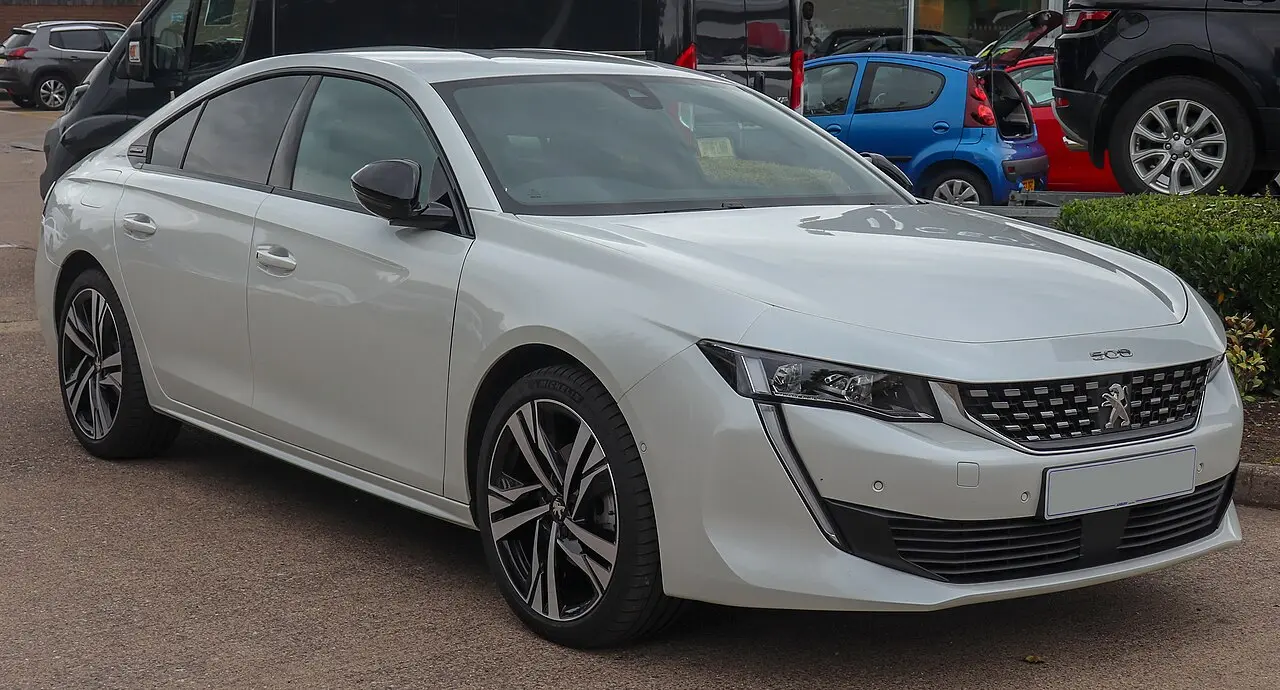
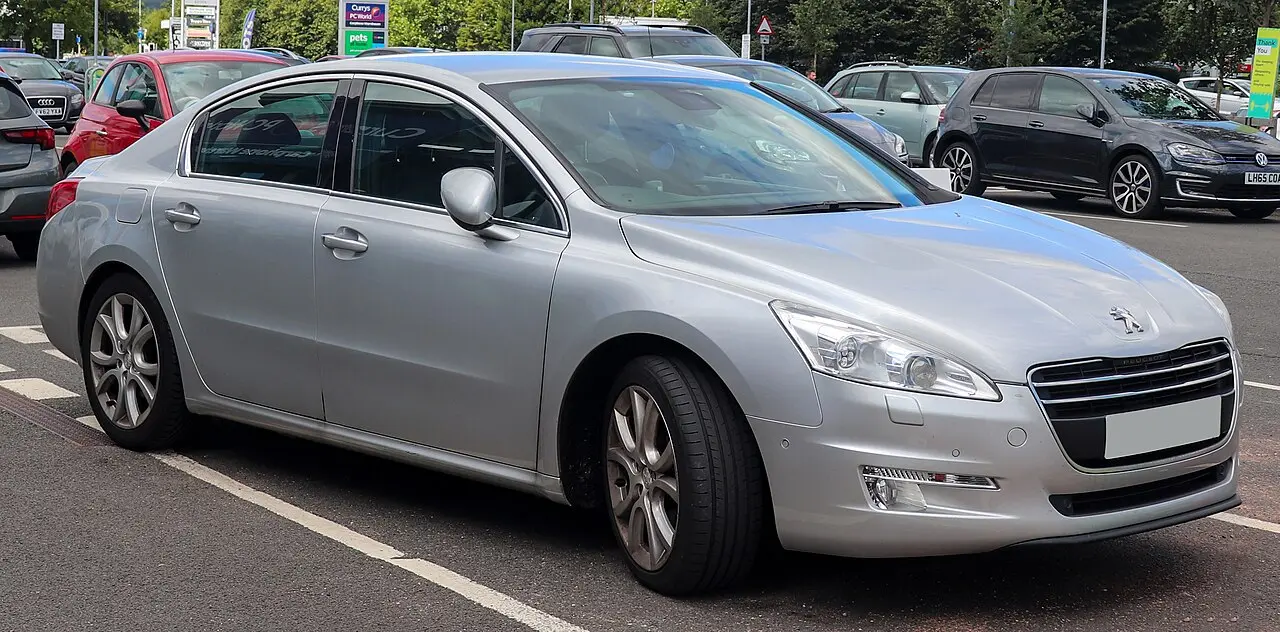
The Peugeot 508 is a large family car offered as a saloon and an estate, known as the SW. The first generation used traditional saloon and estate shapes. The second adopted a lower fastback profile, while keeping the SW estate for those who want more carrying room.
The 508 sits toward the upper end of Peugeot’s passenger-car range. Across its generations, the model has combined family-car space with distinctive styling. Plug-in hybrid versions added the option of electric running for part of a journey.
Generations and engines
Generation I ran from 2010 to 2018, followed by generation II, which has been built since 2018. The second generation brought the fastback shape, with the SW estate continuing alongside it.
EU figures cover engines from 1.2 L to 2.2 L and power from 82 kW (111 PS) to 165 kW (224 PS). UK figures span the same engine-size range and reach 200 kW (272 PS). Listed fuels include petrol, diesel, hybrid and plug-in hybrid. French figures cover 1.2 L to 1.6 L engines and power from 84 kW (114 PS) to 150 kW (204 PS).
Fuel consumption and markets
The lowest EU figure for non-plug-in versions is 1.4 L/100 km on WLTP; the lowest plug-in hybrid figure is 1.2 L/100 km on WLTP. The plug-in figure is weighted to account for some driving on electric power. UK figures give 3.5 L/100 km on NEDC for non-plug-in versions and 6.1 L/100 km on WLTP for plug-in hybrids. French figures give 3.3 L/100 km on NEDC and 1 L/100 km on WLTP, respectively. WLTP and NEDC are different European test procedures, and plug-in hybrid figures use a weighted calculation that assumes some electric driving.
EU registrations cover 2010–2025 and total 920,195. UK figures cover 2012–2024, and French figures cover 2012–2026.
Questions and answers
What are the Peugeot 508 generations?
Generation I ran from 2010 to 2018, followed by generation II, which has been built since 2018.
Which engines and fuels did the Peugeot 508 offer?
EU figures span 1.2 L to 2.2 L engines, with petrol, diesel, hybrid and plug-in hybrid options. Power ranges from 82 kW (111 PS) to 165 kW (224 PS) in EU figures.
What is the Peugeot 508’s lowest listed consumption?
The lowest listed plug-in hybrid figure is 1 L/100 km on WLTP in France. It is weighted to account for some driving on electric power.
Where was the Peugeot 508 sold?
The listed markets include the European Union, the UK and France.
New cars registered in the EU (plus Norway and Iceland), from the European Environment Agency. Figures on the NEDC procedure until 2020 and on WLTP from 2021; versions are grouped by engine and power, with their number of registrations.
Years and version
Engine
Power
Fuel
Consumption (combined)
CO₂
Electric range
EU registrations
2025
1.6 L
110 kW (150 PS)
Plug-in hybrid
1.5 L/100 km WLTP17.0 kWh/100 km WLTP
34 g/km
52 km
654
2025
1.6 L
133 kW (181 PS)
Plug-in hybrid
1.5 L/100 km WLTP17.1 kWh/100 km WLTP
34 g/km
53 km
650
2025
1.6 L
147 kW (200 PS)
Plug-in hybrid
2.0 L/100 km WLTP18.8 kWh/100 km WLTP
45 g/km
47 km
208
2025
1.5 L
96 kW (131 PS)
Diesel
5.2 L/100 km WLTP
135 g/km
–
198
2025
1.2 L
96 kW (131 PS)
Petrol
6.1 L/100 km WLTP
136 g/km
–
69
2025
1.6 L
–
Hybrid
5.8 L/100 km WLTP
123 g/km
–
29
2024
1.5 L
96 kW (131 PS)
Diesel
5.2 L/100 km WLTP
135 g/km
–
4,278
2024
1.6 L
133 kW (181 PS)
Plug-in hybrid
1.5 L/100 km WLTP16.9 kWh/100 km WLTP
33 g/km
54 km
1,938
2024
1.2 L
96 kW (131 PS)
Petrol
6.1 L/100 km WLTP
136 g/km
–
1,100
2024
1.6 L
110 kW (150 PS)
Plug-in hybrid
1.5 L/100 km WLTP16.6 kWh/100 km WLTP
33 g/km
53 km
813
2024
1.6 L
147 kW (200 PS)
Plug-in hybrid
1.9 L/100 km WLTP18.1 kWh/100 km WLTP
43 g/km
49 km
364
2023
1.5 L
96 kW (131 PS)
Diesel
5.0 L/100 km WLTP
132 g/km
–
3,663
2023
1.6 L
133 kW (181 PS)
Plug-in hybrid
1.3 L/100 km WLTP15.3 kWh/100 km WLTP
28 g/km
62 km
3,506
2023
1.2 L
96 kW (131 PS)
Petrol
6.0 L/100 km WLTP
134 g/km
–
1,031
2023
1.6 L
147 kW (200 PS)
Plug-in hybrid
1.8 L/100 km WLTP16.8 kWh/100 km WLTP
40 g/km
55 km
635
2023
1.6 L
110 kW (150 PS)
Plug-in hybrid
1.2 L/100 km WLTP15.0 kWh/100 km WLTP
28 g/km
62 km
407
2023
1.5 L
67 kW (91 PS)
Diesel
5.0 L/100 km WLTP
130 g/km
–
11
2022
1.5 L
96 kW (131 PS)
Diesel
4.6 L/100 km WLTP
123 g/km
–
5,302
2022
1.6 L
133 kW (181 PS)
Plug-in hybrid
1.5 L/100 km WLTP15.0 kWh/100 km WLTP
33 g/km
59 km
3,777
2022
1.2 L
96 kW (131 PS)
Petrol
5.9 L/100 km WLTP
133 g/km
–
1,563
2022
1.6 L
147 kW (200 PS)
Plug-in hybrid
1.9 L/100 km WLTP16.0 kWh/100 km WLTP
42 g/km
51 km
725
2022
1.6 L
133 kW (181 PS)
Petrol
5.3 L/100 km WLTP14.9 kWh/100 km WLTP
146 g/km
–
48
2022
1.6 L
121 kW (165 PS)
Petrol
–
134 g/km
–
18
2022
2.0 L
103 kW (140 PS)
Diesel
–
119 g/km
–
15
2022
1.6 L
165 kW (224 PS)
Petrol
6.1 L/100 km WLTP
154 g/km
–
10
2021
1.5 L
96 kW (131 PS)
Diesel
4.6 L/100 km WLTP
123 g/km
–
20,126
2021
1.6 L
133 kW (181 PS)
Plug-in hybrid
1.4 L/100 km WLTP15.0 kWh/100 km WLTP
33 g/km
59 km
13,060
2021
1.6 L
133 kW (181 PS)
Petrol
6.3 L/100 km WLTP15.2 kWh/100 km WLTP
147 g/km
–
4,586
2021
1.2 L
96 kW (131 PS)
Petrol
5.9 L/100 km WLTP
134 g/km
–
3,570
2021
1.6 L
147 kW (200 PS)
Plug-in hybrid
2.0 L/100 km WLTP16.5 kWh/100 km WLTP
47 g/km
47 km
3,248
2021
1.6 L
165 kW (224 PS)
Petrol
7.0 L/100 km WLTP
160 g/km
–
1,530
2021
1.6 L
133 kW (181 PS)
Hybrid
1.4 L/100 km WLTP14.9 kWh/100 km WLTP
31 g/km
59 km
517
2021
2.0 L
120 kW (163 PS)
Diesel
5.3 L/100 km WLTP
147 g/km
–
513
2021
2.0 L
130 kW (177 PS)
Diesel
5.4 L/100 km WLTP
152 g/km
–
301
2021
1.6 L
147 kW (200 PS)
Hybrid
16.5 kWh/100 km WLTP
46 g/km
46 km
62
2021
1.6 L
164 kW (223 PS)
Plug-in hybrid
2.0 L/100 km WLTP16.6 kWh/100 km WLTP
46 g/km
46 km
36
2020
1.5 L
96 kW (131 PS)
Diesel
–
95 g/km
–
17,151
2020
1.6 L
133 kW (181 PS)
Plug-in hybrid
15.2 kWh/100 km NEDC
36 g/km
58 km
11,934
2020
2.0 L
120 kW (163 PS)
Diesel
–
114 g/km
–
7,316
2020
1.6 L
133 kW (181 PS)
Petrol
–
117 g/km
–
4,705
2020
2.0 L
130 kW (177 PS)
Diesel
–
114 g/km
–
4,279
2020
1.5 L
–
Diesel
–
98 g/km
–
1,652
2020
1.6 L
165 kW (224 PS)
Petrol
–
124 g/km
–
1,491
2020
1.6 L
–
Plug-in hybrid
15.1 kWh/100 km NEDC
35 g/km
58 km
1,120
2020
2.0 L
–
Diesel
–
113 g/km
–
380
2020
1.6 L
30 kW (41 PS)
Plug-in hybrid
15.1 kWh/100 km NEDC
35 g/km
58 km
208
2020
1.2 L
96 kW (131 PS)
Petrol
–
109 g/km
–
110
2020
1.6 L
147 kW (200 PS)
Plug-in hybrid
16.6 kWh/100 km NEDC
42 g/km
48 km
52
2019
1.5 L
96 kW (131 PS)
Diesel
–
100 g/km
–
21,762
2019
2.0 L
120 kW (163 PS)
Diesel
–
119 g/km
–
13,238
2019
1.6 L
133 kW (181 PS)
Petrol
–
122 g/km
–
13,104
2019
2.0 L
130 kW (177 PS)
Diesel
–
123 g/km
–
12,510
2019
1.6 L
165 kW (224 PS)
Petrol
–
130 g/km
–
7,766
2019
1.5 L
–
Diesel
–
102 g/km
–
2,296
2019
2.0 L
–
Diesel
–
119 g/km
–
1,006
2019
1.6 L
133 kW (181 PS)
Plug-in hybrid
–
38 g/km
–
212
2019
1.6 L
88 kW (120 PS)
Diesel
–
99 g/km
–
48
2019
2.0 L
133 kW (181 PS)
Diesel
–
111 g/km
–
48
2019
2.0 L
110 kW (150 PS)
Diesel
–
107 g/km
–
30
2019
1.5 L
75 kW (102 PS)
Diesel
–
100 g/km
–
16
2019
1.6 L
85 kW (116 PS)
Diesel
–
99 g/km
–
10
2019
1.6 L
121 kW (165 PS)
Petrol
–
134 g/km
–
10
2018
1.6 L
88 kW (120 PS)
Diesel
–
100 g/km
–
7,425
2018
2.0 L
110 kW (150 PS)
Diesel
–
108 g/km
–
4,262
2018
2.0 L
133 kW (181 PS)
Diesel
–
113 g/km
–
3,059
2018
2.0 L
130 kW (177 PS)
Diesel
–
124 g/km
–
2,740
2018
1.6 L
165 kW (224 PS)
Petrol
–
132 g/km
–
2,005
2018
1.5 L
96 kW (131 PS)
Diesel
–
99 g/km
–
1,822
2018
2.0 L
120 kW (163 PS)
Diesel
–
119 g/km
–
1,112
2018
1.6 L
133 kW (181 PS)
Petrol
–
124 g/km
–
850
2018
1.6 L
121 kW (165 PS)
Petrol
–
133 g/km
–
724
2018
1.6 L
85 kW (116 PS)
Diesel
–
101 g/km
–
418
2018
1.5 L
–
Diesel
–
102 g/km
–
90
2018
2.0 L
–
Diesel
–
120 g/km
–
20
2018
2.0 L
100 kW (136 PS)
Diesel
–
105 g/km
–
18
United Kingdom 49 versions
New cars on sale in the UK, from the Vehicle Certification Agency. NEDC figures until 2018 and WLTP figures after; years are the editions a version appeared in.
New cars on sale in France, from ADEME Car Labelling. NEDC figures until 2015, WLTP figures in the current catalogue.
Years and version
Engine
Power
Fuel
Gearbox
Consumption (combined)
CO₂
Electric range
2026508 SW (130ch)
1.2 L
96 kW (131 PS)
Petrol
8-speed automatic
5.6 L/100 km WLTP
127 g/km
–
2026508 (181ch+30Kw)
1.6 L
133 kW (181 PS)
Plug-in hybrid
8-speed automatic
1.2 L/100 km WLTP14.1 kWh/100 km WLTP
27 g/km
63 km
2026508 SW (181ch+30Kw)
1.6 L
133 kW (181 PS)
Plug-in hybrid
8-speed automatic
1.0 L/100 km WLTP14.4 kWh/100 km WLTP
23 g/km
68 km
2026508 (181ch+30Kw)
1.6 L
133 kW (181 PS)
Plug-in hybrid
8-speed automatic
1.0 L/100 km WLTP14.4 kWh/100 km WLTP
23 g/km
68 km
2026508 (200ch+63Kw)
1.6 L
147 kW (200 PS)
Plug-in hybrid
8-speed automatic
–
–
–
2026508 SW (200ch+63Kw)
1.6 L
147 kW (200 PS)
Plug-in hybrid
8-speed automatic
–
–
–
Official figures are measured on standard test procedures and differ between markets. Your consumption depends on how, where and in what conditions you drive.