Renault

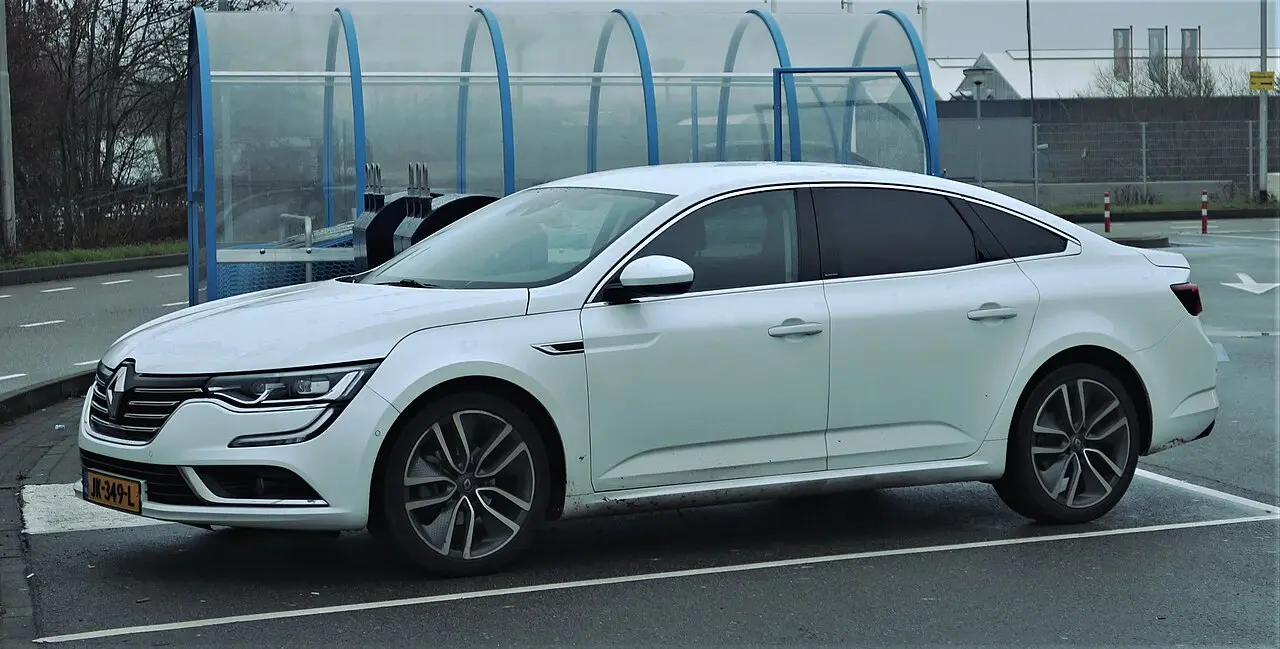
Renault Talisman

Renault Talisman
Photo: Charles01 / Wikimedia Commons · CC BY-SA 4.0

The official data lists 70 versions of the Renault Talisman (2015–2026), in the European Union and France. Each market publishes its own figures, measured on its own test procedure.

At a glance

Years in the data
2015–2026
Markets
European Union, France
Engines
1.3 L to 2.0 L
Power
81 kW (110 PS) to 177 kW (241 PS)
Fuels
Petrol, Diesel
Lowest consumption (European Union)
4.9 L/100 km (WLTP)
Lowest consumption (France)
5.6 L/100 km (WLTP)
New registrations in the EU
232,629

What is the Renault Talisman?

The Talisman is a large family saloon, also sold as an estate, that sat at the more upmarket end of Renault’s passenger-car range. Its single generation, Talisman I (LFD), ran from 2015 to 2022.

Renault offered the Talisman with 4Control, its four-wheel steering system, and adjustable driving modes. The estate paired the saloon’s general character with a longer load area.

Engines and power

EU registration figures cover 1.3 L to 2.0 L engines, listed as diesel, petrol and other fuels. Power ranges from 81 kW (110 PS) to 177 kW (241 PS). French ADEME listings show 1.3 L to 2.0 L petrol and diesel versions rated from 103 kW (140 PS) to 118 kW (160 PS).

Diesel versions feature among the leading EU registration entries, including a 1.6 L diesel rated at 118 kW (160 PS) and a 1.5 L diesel rated at 81 kW (110 PS).

How economical is the Renault Talisman?

The lowest listed EU consumption is 4.9 L/100 km on WLTP. The French ADEME listing gives 5.6 L/100 km on WLTP. These are test-cycle results; actual consumption depends on driving conditions. For comparisons across markets, note that European procedures include WLTP and NEDC, the USA uses EPA testing, and Canada uses a 5-cycle procedure.

Official EU registration figures record 232,629 Talisman cars from 2015 to 2023. The listed entries include several engine sizes and fuel types.

Where was the Talisman sold?

EU registration figures cover 2015 to 2023, while French ADEME listings are dated 2026. Renault introduced the Talisman as a saloon and estate for European markets.

Questions and answers

Was the Renault Talisman available as an estate?

Yes. Renault offered the Talisman as both a saloon and an estate.

When was the Talisman’s generation sold?

The single generation, Talisman I (LFD), ran from 2015 to 2022.

What is the Talisman’s lowest listed fuel consumption?

EU figures show 4.9 L/100 km on WLTP; the French listing shows 5.6 L/100 km on WLTP.

What was the Talisman’s power range in EU figures?

EU versions range from 81 kW (110 PS) to 177 kW (241 PS).

Talisman I (2015–2022)

Renault Talisman I
Photo: Charles01 / Wikimedia Commons · CC BY-SA 4.0

Model codes: LFD · Sold in: European Union and France · References: en.wikipedia.org, autobild.de

European Union 65 versions

New cars registered in the EU (plus Norway and Iceland), from the European Environment Agency. Figures on the NEDC procedure until 2020 and on WLTP from 2021; versions are grouped by engine and power, with their number of registrations.

Years and versionEnginePowerFuelConsumption (combined)CO₂EU registrations
20221.3 L116 kW (158 PS)Petrol6.4 L/100 km WLTP145 g/km1,009
20222.0 L139 kW (189 PS)Diesel5.9 L/100 km WLTP155 g/km762
20222.0 L118 kW (160 PS)Diesel5.7 L/100 km WLTP152 g/km480
20221.3 L103 kW (140 PS)Petrol6.0 L/100 km WLTP137 g/km22
20211.3 L116 kW (158 PS)Petrol6.2 L/100 km WLTP142 g/km3,572
20212.0 L118 kW (160 PS)Diesel5.7 L/100 km WLTP152 g/km3,354
20212.0 L147 kW (200 PS)Diesel5.2 L/100 km WLTP153 g/km1,594
20212.0 L139 kW (189 PS)Diesel5.9 L/100 km WLTP157 g/km1,540
20211.3 L117 kW (159 PS)Petrol5.8 L/100 km WLTP151 g/km650
20211.8 L165 kW (224 PS)Petrol7.5 L/100 km WLTP174 g/km588
20211.7 L110 kW (150 PS)Diesel5.0 L/100 km WLTP136 g/km299
20211.7 L88 kW (120 PS)Diesel4.9 L/100 km WLTP132 g/km166
20211.3 L103 kW (140 PS)Petrol6.0 L/100 km WLTP136 g/km162
20202.0 L118 kW (160 PS)Diesel–131 g/km4,479
20202.0 L147 kW (200 PS)Diesel–132 g/km3,595
20201.3 L117 kW (159 PS)Petrol–134 g/km2,337
20201.7 L110 kW (150 PS)Diesel–123 g/km2,230
20201.8 L165 kW (224 PS)Petrol–167 g/km1,816
20201.7 L88 kW (120 PS)Diesel–122 g/km843
20201.3 L116 kW (158 PS)Petrol–126 g/km156
20191.8 L165 kW (224 PS)Petrol–168 g/km6,014
20192.0 L118 kW (160 PS)Diesel–131 g/km5,668
20192.0 L147 kW (200 PS)Diesel–134 g/km5,444
20191.7 L110 kW (150 PS)Diesel–127 g/km5,278
20191.3 L117 kW (159 PS)Petrol–134 g/km3,078
20191.7 L88 kW (120 PS)Diesel–125 g/km2,344
20191.6 L96 kW (131 PS)Diesel–111 g/km1,320
20191.6 L118 kW (160 PS)Diesel–119 g/km748
20191.5 L81 kW (110 PS)Diesel–98 g/km370
20191.6 L147 kW (200 PS)Petrol–134 g/km268
20191.6 L110 kW (150 PS)Petrol–131 g/km198
20192.0 L149 kW (203 PS)Diesel–154 g/km12
20181.6 L96 kW (131 PS)Diesel–110 g/km12,851
20181.6 L118 kW (160 PS)Diesel–119 g/km9,457
20181.5 L81 kW (110 PS)Diesel–98 g/km7,998
20181.6 L147 kW (200 PS)Petrol–133 g/km4,398
20181.6 L110 kW (150 PS)Petrol–132 g/km3,868
20181.8 L165 kW (224 PS)Petrol–168 g/km354
20181.7 L110 kW (150 PS)Diesel–129 g/km106
20181.7 L88 kW (120 PS)Diesel–129 g/km24
2016–20171.5 L81 kW (110 PS)Diesel–98 g/km24,088
20171.6 L118 kW (160 PS)Diesel–119 g/km21,848
20171.6 L96 kW (131 PS)Diesel–109 g/km16,701
20171.6 L147 kW (200 PS)Petrol–132 g/km5,576
20171.6 L110 kW (150 PS)Petrol–131 g/km3,516
20171.6 L177 kW (241 PS)Diesel–117 g/km684
20171.6 L221 kW (300 PS)Petrol–132 g/km516
20171.6 L–Other fuel–132 g/km464
20171.6 L144 kW (196 PS)Diesel–108 g/km402
20171.6 L165 kW (224 PS)Petrol–131 g/km348
20171.5 L122 kW (166 PS)Diesel–116 g/km96
20171.6 L96 kW (131 PS)Other fuel–110 g/km63
20171.6 L118 kW (160 PS)Other fuel–120 g/km24
20161.6 L118 kW (160 PS)Diesel–118 g/km27,614
20161.6 L96 kW (131 PS)Diesel–109 g/km16,384
20161.6 L147 kW (200 PS)Petrol–132 g/km7,060
20161.6 L110 kW (150 PS)Petrol–130 g/km3,838
20161.6 L110 kW (150 PS)Diesel–130 g/km162
20161.6 L118 kW (160 PS)Petrol–119 g/km22
20161.6 L147 kW (200 PS)Diesel–132 g/km10
20151.6 L118 kW (160 PS)Diesel–118 g/km2,064
20151.6 L96 kW (131 PS)Diesel–103 g/km1,006
20151.5 L81 kW (110 PS)Diesel–96 g/km416
20151.6 L147 kW (200 PS)Petrol–130 g/km210
20151.6 L110 kW (150 PS)Petrol–129 g/km36

Versions outside these generations

European Union 2 versions

New cars registered in the EU (plus Norway and Iceland), from the European Environment Agency. Figures on the NEDC procedure until 2020 and on WLTP from 2021; versions are grouped by engine and power, with their number of registrations.

Years and versionEnginePowerFuelConsumption (combined)CO₂EU registrations
20232.0 L139 kW (189 PS)Diesel5.9 L/100 km WLTP155 g/km15
20231.3 L103 kW (140 PS)Petrol6.0 L/100 km WLTP136 g/km14

France 3 versions

New cars on sale in France, from ADEME Car Labelling. NEDC figures until 2015, WLTP figures in the current catalogue.

Years and versionEnginePowerFuelGearboxConsumption (combined)CO₂
2026TALISMAN (140ch)1.3 L103 kW (140 PS)Petrol6-speed manual5.8 L/100 km WLTP132 g/km
2026TALISMAN (158ch)1.3 L116 kW (158 PS)Petrol7-speed automatic6.0 L/100 km WLTP135 g/km
2026TALISMAN (160ch)2.0 L118 kW (160 PS)Diesel6-speed automatic5.6 L/100 km WLTP148 g/km

Official figures are measured on standard test procedures and differ between markets. Your consumption depends on how, where and in what conditions you drive.