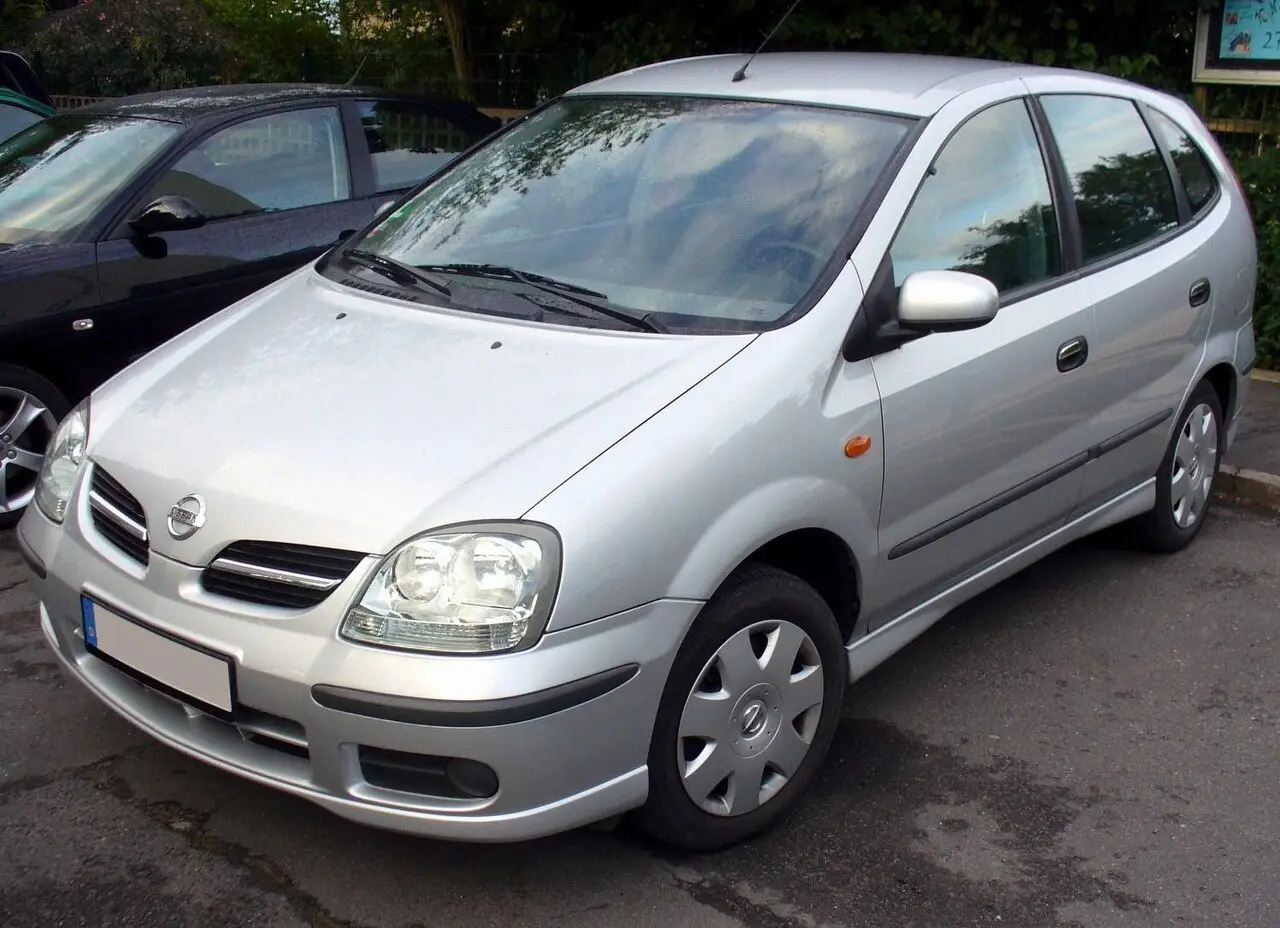
Nissan Almera Tino

Nissan Almera Tino
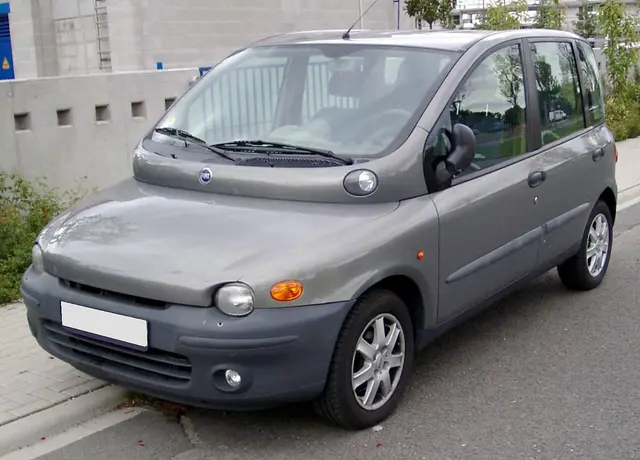
Photo: Thomas doerfer / Wikimedia Commons · CC BY 3.0

The official data lists 9 versions of the Nissan Almera Tino (2001 - 2006), in the United Kingdom. Each market publishes its own figures, measured on its own test procedure.

At a glance

Years in the data
2001 - 2006
Markets
United Kingdom
Engines
1.8 L to 2.2 L
Power
82 kW (111 PS) to 100 kW (136 PS)
Fuels
Petrol, Diesel
Lowest consumption (United Kingdom)
6.2 L/100 km (NEDC)

What is the Nissan Almera Tino?

The Almera Tino is a compact MPV, with a taller body and a flexible cabin designed for everyday family use. It sat alongside the Almera in Nissan’s range, offering a more upright alternative to a conventional hatchback. Its shape puts cabin space and easy access at the heart of the design.

In the United Kingdom, Nissan sold the Almera Tino from 2001 to 2006. In Japan, it was known as the Tino. Nissan described it as an all-purpose high-roof wagon, a practical family car with a distinct shape.

Generations, engines and power

The UK Almera Tino belongs to the V10 generation, sold from 2001 to 2006. It kept the compact MPV format throughout its run, with a cabin arranged for family passengers and luggage.

UK versions had petrol or diesel engines ranging from 1.8 L to 2.2 L. Power ran from 82 kW (111 PS) to 100 kW (136 PS), giving the range a choice of outputs in the same practical body style.

How economical is the Almera Tino?

The lowest listed fuel consumption for the UK model is 6.2 L/100 km on the NEDC test. NEDC was the European test procedure used during this period; actual consumption varies with driving conditions.

The Almera Tino combined a family-friendly cabin with a choice of petrol and diesel engines. Its official consumption figure offers a standardised reference for the range.

Questions and answers

When was the Nissan Almera Tino sold in the UK?

It was sold in the UK from 2001 to 2006.

What generation is the UK Almera Tino?

It is the V10 generation, sold from 2001 to 2006.

What engines and power outputs were available?

The UK range had 1.8 L to 2.2 L petrol and diesel engines, with power from 82 kW (111 PS) to 100 kW (136 PS).

What is its lowest official fuel consumption?

The lowest listed figure is 6.2 L/100 km on the NEDC test.
Almera Tino V10 (2001 - 2006)

Nissan Almera Tino V10
Photo: Thomas doerfer / Wikimedia Commons · CC BY 3.0

Model codes: V10 · Sold in: United Kingdom · References: en.wikipedia.org

At a glance: Length 4,264 mm Specifications, reliability and all versions

United Kingdom 9 versions

New cars on sale in the UK, from the Vehicle Certification Agency. NEDC figures until 2018 and WLTP figures after; years are the editions a version appeared in.

Years and versionEnginePowerFuelGearboxConsumption (combined)CO₂
2001 - 20061.81.8 LNot listedPetrolManual7.7 - 7.8 L/100 km NEDC183 - 186 g/km
2003 - 20061.81.8 LNot listedPetrolAutomatic8.2 L/100 km NEDC199 g/km
20061.8 16V1.8 LNot listedPetrol5-speed manual7.7 L/100 km NEDC183 g/km
2004 - 20062.2 dCi (112 PS)2.2 L82 kW (111 PS)DieselManual6.2 L/100 km NEDC170 g/km
20062.2 dCi (136 PS)2.2 L100 kW (136 PS)DieselManual6.6 L/100 km NEDC181 g/km
2003 - 20042.2 dCi 136PS · 2.2 dCi (136 PS)2.2 L100 kW (136 PS)DieselManual6.6 L/100 km NEDC181 g/km
20032.2 dCi 112PS2.2 L82 kW (111 PS)DieselManual6.4 L/100 km NEDC175 g/km
2001 - 20022.02.0 LNot listedPetrolContinuously variable (CVT)9.3 L/100 km NEDC223 g/km
2001 - 20022.22.2 LNot listedDieselManual6.4 L/100 km NEDC168 g/km

Nissan Almera Tino recalls

7 official safety recalls for the Nissan Almera Tino from NHTSA (United States), DVSA (United Kingdom) and the EU Safety Gate, newest first. Recall repairs are normally free at the maker’s dealers.

  • Passenger airbag inflator may need replacement2004 - 2005
  • Airbag inflators checked in an earlier recall to be replaced2004 - 2005
  • Passenger airbag inflator propellant may deteriorate2004 - 2005
  • Passenger airbag inflator may rupture2001 - 2005
  • Front seat cover may expose a sharp edge2004

See all 7 recalls

Official figures are measured on standard test procedures and differ between markets. Your consumption depends on how, where and in what conditions you drive.