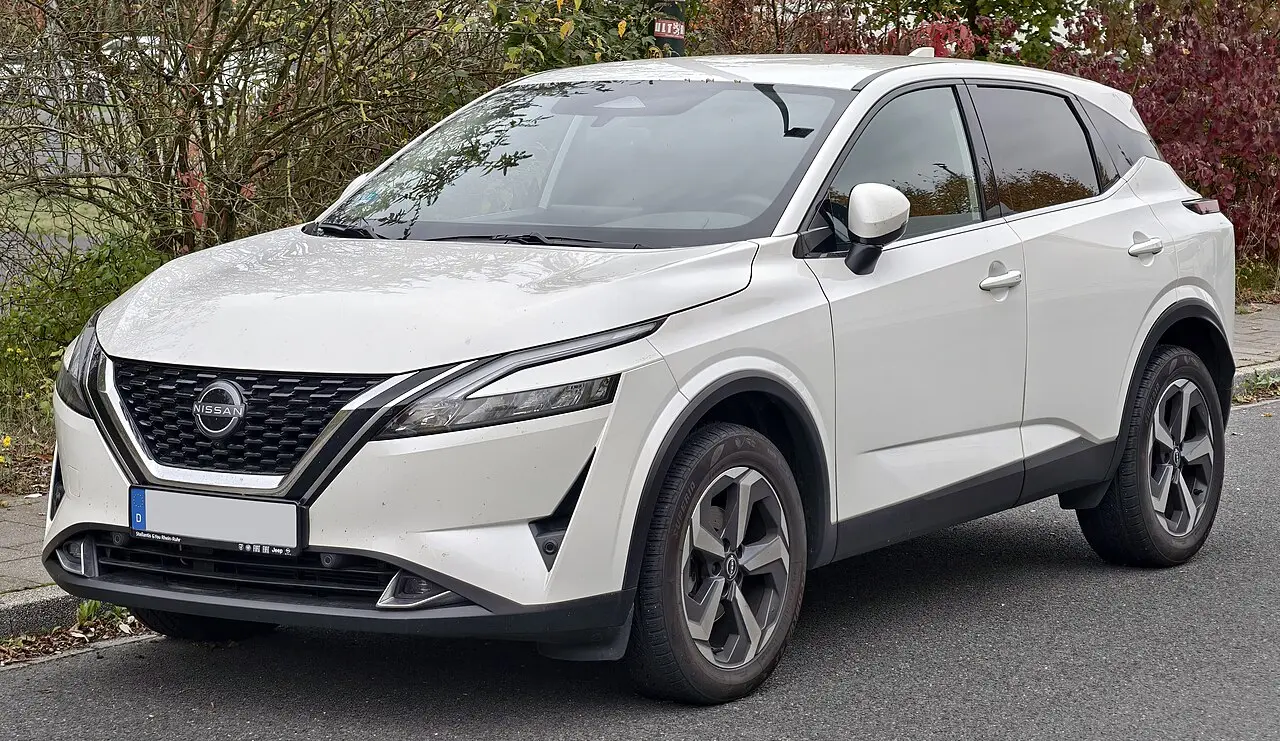
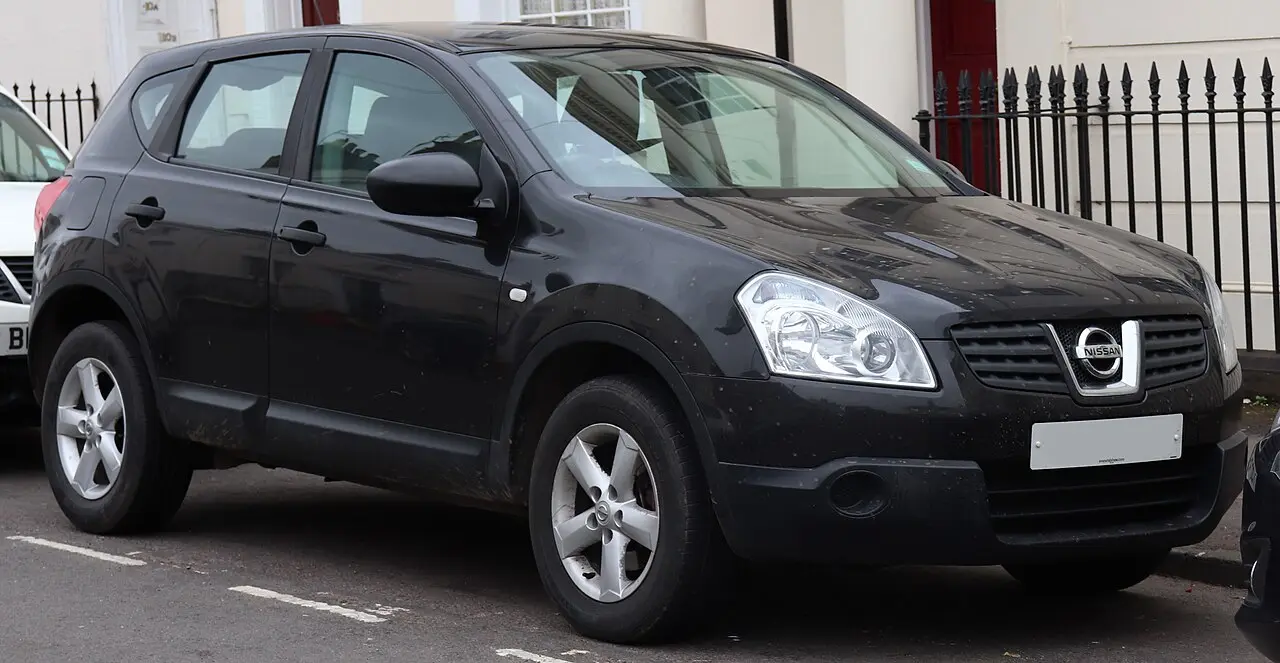
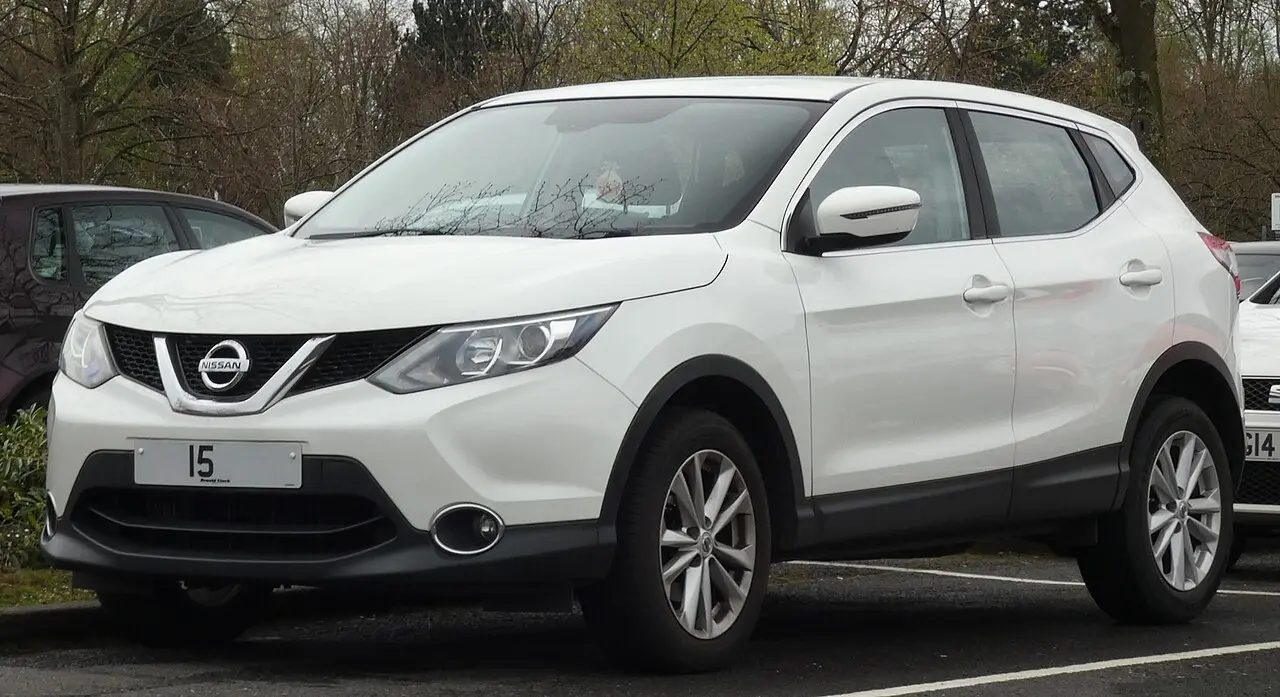
The official data lists 352 versions of the Nissan Qashqai (2007–2026), in the European Union, the United Kingdom, France, and Canada. Each market publishes its own figures, measured on its own test procedure.
The Qashqai is a compact crossover SUV that brings an SUV-like stance to the family hatchback class. Nissan launched it in Europe in 2007, shaping it for drivers who wanted the feel of an SUV in a car suited to everyday family use. It became a familiar part of Nissan’s European range.
The model has passed through three generations: J10 (2007–2013), J11 (2014–2021) and J12 (2022–today). Each keeps the compact crossover format while introducing a new design and updated technology. The current generation includes Nissan’s e-Power system: a petrol engine generates electricity, and an electric motor drives the wheels.
Engines and power
In official EU registration figures, the Qashqai spans 2010–2025, with engines from 1.2 to 2.0 litres and power from 78 kW (106 PS) to 180 kW (245 PS). Fuels include petrol, diesel, hybrid, plug-in hybrid, electric, LPG and other types. UK figures span 2007–2026, with 1.2- to 2.0-litre engines producing 103 kW (140 PS) to 160 kW (218 PS). French figures span 2012–2026 and cover 1.3-litre versions with 81 kW (110 PS) to 120 kW (163 PS).
How economical is the Nissan Qashqai?
The lowest combined consumption listed for petrol, diesel and hybrid versions is 4.6 L/100 km on WLTP in the EU. The UK and France each list a low of 3.8 L/100 km on NEDC. The EU also lists a weighted WLTP figure of 6.4 L/100 km for plug-in hybrids, assuming some driving is electric.
Canada’s figures cover petrol Qashqais from 2017 to 2023, with a 2.0-litre engine and a lowest listed consumption of 8.2 L/100 km on the Canadian five-cycle test. In official EU registration figures, 4,757,962 Qashqais were registered across 2010–2025. The most registered entries listed are the 1.5-litre diesel rated at 81 kW (110 PS) in 2016 and 2015, followed by the 1.2-litre petrol rated at 85 kW (116 PS) in 2018.
Questions and answers
What kind of car is the Qashqai?
It is a compact crossover SUV with a family-car role and a raised stance.
What are the Qashqai generations?
The generations are J10 (2007–2013), J11 (2014–2021) and J12 (2022–today).
What is the lowest listed Qashqai consumption in the EU?
It is 4.6 L/100 km on WLTP for petrol, diesel and hybrid versions. The separate weighted plug-in hybrid figure is 6.4 L/100 km WLTP.
Was the Qashqai sold in Canada?
Yes. Canadian figures cover petrol Qashqais with a 2.0-litre engine from 2017 to 2023.
New cars registered in the EU (plus Norway and Iceland), from the European Environment Agency. Figures on the NEDC procedure until 2020 and on WLTP from 2021; versions are grouped by engine and power, with their number of registrations.
Years and version
Engine
Power
Fuel
Consumption (combined)
CO₂
Electric range
EU registrations
2025
1.3 L
116 kW (158 PS)
Hybrid
6.4 L/100 km WLTP
145 g/km
–
32,303
2025
1.5 L
116 kW (158 PS)
Hybrid
5.2 L/100 km WLTP
118 g/km
–
29,670
2025
1.3 L
103 kW (140 PS)
Hybrid
6.4 L/100 km WLTP
144 g/km
–
19,569
2025
1.5 L
116 kW (158 PS)
Hybrid
4.6 L/100 km WLTP
104 g/km
–
8,091
2025
1.3 L
116 kW (158 PS)
Petrol
6.5 L/100 km WLTP
148 g/km
–
4,265
2025
1.3 L
116 kW (158 PS)
Plug-in hybrid
6.4 L/100 km WLTP
146 g/km
–
589
2025
1.5 L
140 kW (190 PS)
Hybrid
5.2 L/100 km WLTP
117 g/km
–
471
2025
Electric motor
–
Electric
1.5 kWh/100 km WLTP
0 g/km
400 km
82
2025
1.5 L
–
Petrol
5.8 L/100 km WLTP
57 g/km
–
67
2025
1.5 L
116 kW (158 PS)
Plug-in hybrid
5.3 L/100 km WLTP
119 g/km
–
33
2025
1.3 L
103 kW (140 PS)
Petrol
6.4 L/100 km WLTP
145 g/km
–
23
2025
–
–
Petrol
8.0 L/100 km WLTP
57 g/km
–
13
2025
1.5 L
151 kW (205 PS)
Hybrid
4.5 L/100 km WLTP
104 g/km
–
10
2024
1.3 L
116 kW (158 PS)
Hybrid
6.4 L/100 km WLTP
145 g/km
–
38,853
2024
1.5 L
116 kW (158 PS)
Hybrid
5.2 L/100 km WLTP
118 g/km
–
37,360
2024
1.3 L
103 kW (140 PS)
Hybrid
6.4 L/100 km WLTP
144 g/km
–
22,093
2022–2023
1.3 L
103 kW (140 PS)
Hybrid
6.4 L/100 km WLTP
144 g/km
–
54,111
2023
1.5 L
116 kW (158 PS)
Hybrid
5.3 L/100 km WLTP
120 g/km
–
41,578
2023
1.3 L
116 kW (158 PS)
Hybrid
6.4 L/100 km WLTP
144 g/km
–
35,720
2022
1.3 L
116 kW (158 PS)
Hybrid
6.4 L/100 km WLTP
145 g/km
–
32,299
2022
1.5 L
116 kW (158 PS)
Hybrid
5.4 L/100 km WLTP
122 g/km
–
2,969
2022
1.3 L
116 kW (158 PS)
Petrol
6.2 L/100 km WLTP
145 g/km
–
2,660
2022
1.3 L
103 kW (140 PS)
Petrol
6.1 L/100 km WLTP
144 g/km
–
2,594
2022
1.5 L
140 kW (190 PS)
Hybrid
5.3 L/100 km WLTP
121 g/km
–
222
2022
1.3 L
206 kW (280 PS)
Hybrid
–
146 g/km
–
155
2022
Electric motor
116 kW (158 PS)
Electric
–
0 g/km
–
16
2022
–
140 kW (190 PS)
Plug-in hybrid
17.0 kWh/100 km WLTP
123 g/km
–
12
2022
1.5 L
116 kW (158 PS)
Hybrid
5.4 L/100 km WLTP
122 g/km
–
10
United Kingdom 37 versions
New cars on sale in the UK, from the Vehicle Certification Agency. NEDC figures until 2018 and WLTP figures after; years are the editions a version appeared in.
Years and version
Engine
Power
Fuel
Gearbox
Consumption (combined)
CO₂
2025–2026QASH 140 MT VIS · QASH 140 MT ACPR
1.3 L
103 kW (140 PS)
Petrol
6-speed manual
6.3 L/100 km WLTP
143 g/km
2025–2026QASH 140 MT NCO
1.3 L
103 kW (140 PS)
Petrol
6-speed manual
6.4 L/100 km WLTP
144 g/km
2025–2026QASH 140 MT PREMIERE
1.3 L
103 kW (140 PS)
Petrol
6-speed manual
6.4 L/100 km WLTP
145 g/km
2025–2026QASH 140 MT TEK
1.3 L
103 kW (140 PS)
Petrol
6-speed manual
6.4 L/100 km WLTP
146 g/km
2025–2026QASH 160 CVT 4W NCO
1.3 L
116 kW (158 PS)
Petrol
7-speed automatic
6.9 L/100 km WLTP
155 g/km
2025–2026QASH 160 CVT 4W TEK
1.3 L
116 kW (158 PS)
Petrol
7-speed automatic
6.9 L/100 km WLTP
158 g/km
2025–2026QASH 160 CVT 4W TEK+
1.3 L
116 kW (158 PS)
Petrol
7-speed automatic
7.0 L/100 km WLTP
157 g/km
2025–2026QASH 160 CVT ACPR
1.3 L
116 kW (158 PS)
Petrol
7-speed automatic
6.3 L/100 km WLTP
142 g/km
2025–2026QASH 160 CVT NCO
1.3 L
116 kW (158 PS)
Petrol
7-speed automatic
6.4 L/100 km WLTP
144 g/km
2025–2026QASH 160 CVT TEK · QASH 160 CVT PREMIERE
1.3 L
116 kW (158 PS)
Petrol
7-speed automatic
6.4 L/100 km WLTP
145 g/km
2025–2026QASH 160 CVT TEK+
1.3 L
116 kW (158 PS)
Petrol
7-speed automatic
6.5 L/100 km WLTP
144 g/km
2025–2026QASH 160 MT ACPR
1.3 L
116 kW (158 PS)
Petrol
6-speed manual
6.3 L/100 km WLTP
143 g/km
2025–2026QASH 160 MT NCO
1.3 L
116 kW (158 PS)
Petrol
6-speed manual
6.4 L/100 km WLTP
144 g/km
2025–2026QASH 160 MT TEK
1.3 L
116 kW (158 PS)
Petrol
6-speed manual
6.4 L/100 km WLTP
146 g/km
2025–2026QASH 160 MT TEK+
1.3 L
116 kW (158 PS)
Petrol
6-speed manual
6.5 L/100 km WLTP
146 g/km
2026QQ DIGT 158 MT ACENTA PREM
1.3 L
116 kW (158 PS)
Hybrid
6-speed manual
6.3 L/100 km WLTP
142 g/km
2026QQ DIGT 158 AT ACENTA PREM
1.3 L
116 kW (158 PS)
Hybrid
7-speed automatic
6.2 L/100 km WLTP
140 g/km
2026QQ DIGT 158 MT N-CONNECTA
1.3 L
116 kW (158 PS)
Hybrid
6-speed manual
6.4 L/100 km WLTP
144 g/km
2026QQ DIGT 158 AT N-CONNECTA · QQ DIGT 158 AT N-DESIGN 2T
New cars on sale in France, from ADEME Car Labelling. NEDC figures until 2015, WLTP figures in the current catalogue.
Years and version
Engine
Power
Fuel
Gearbox
Consumption (combined)
CO₂
2026Mild Hybrid (140ch) 6MT BUSINESS EDITION/N-CONNECTA/TEKNA · Mild Hybrid (140ch) 6MT N-CONNECTA/TEKNA · Mild Hybrid (140ch) 6MT VISIA/ACENTA/BUSINESS EDITION/N-CONNECTA and 1 more trim
1.3 L
103 kW (140 PS)
Hybrid
6-speed manual
6.3 L/100 km WLTP
143 g/km
Canada 3 versions
Model years sold in Canada, from Natural Resources Canada fuel consumption ratings (5-cycle test).
Years and version
Engine
Fuel
Gearbox
Consumption (combined)
CO₂
2022–2023Station wagon: Small
2.0 L
Petrol
Continuously variable (CVT)
8.2 L/100 km 5-cycle
194 g/km
2022–2023Station wagon: Small
2.0 L
Petrol
Continuously variable (CVT)
8.6 L/100 km 5-cycle
201 g/km
2022Station wagon: Small
2.0 L
Petrol
6-speed manual
9.1 L/100 km 5-cycle
213 g/km
Official figures are measured on standard test procedures and differ between markets. Your consumption depends on how, where and in what conditions you drive.