

Dacia Logan third generation
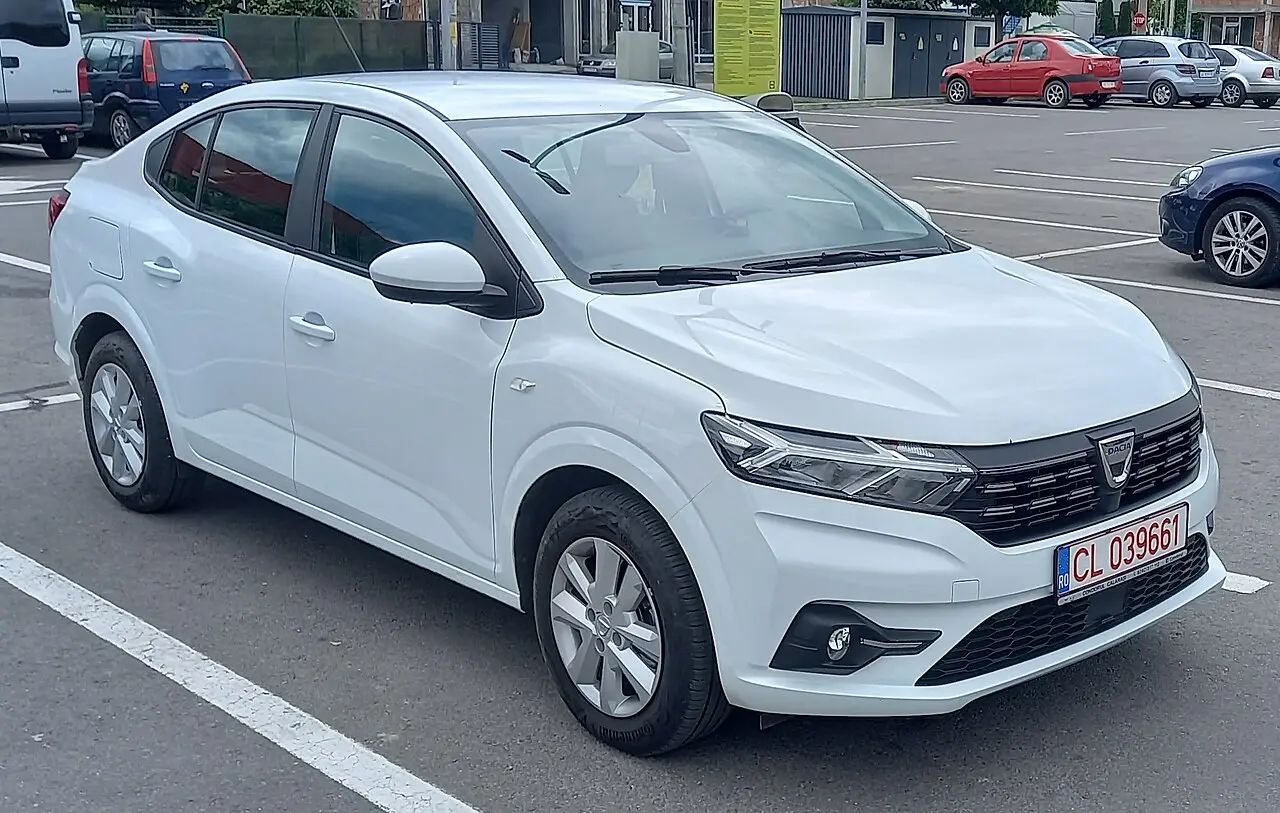
The Dacia Logan third generation (since 2020): dimensions, weights, reliability and the official figures of its 16 versions in the European Union.
Model codes: LJI
Dimensions, weights and capacity
| Specification | Europe | Wikipedia |
|---|---|---|
| Dimensions | ||
| Length | 4,400–4,490 mm RDW | 4,396 mm |
| Width | 1,730–1,760 mm RDW | 1,848 mm |
| Height | 1,490–1,520 mm RDW | 1,501 mm |
| Wheelbase | 2,630–2,650 mm RDW | 2,649 mm |
| Weights and towing | ||
| Kerb weight | 1,043–1,118 kg RDW | – |
| Mass in running order | 1,143–1,218 kg RDW | – |
| Gross vehicle weight | 1,565–1,605 kg RDW | – |
| Towing, braked trailer | 1,100–1,110 kg RDW | – |
| Towing, unbraked trailer | 570–605 kg RDW | – |
| Seats and space | ||
| Seats | 5 RDW | – |
| Doors | 4 RDW | – |
| Fuel tank | – | 40–50 L |
| Performance | ||
| Top speed | 172–180 km/h RDW | 160–186 km/h |
| Torque | – | 95–200 Nm |
Tyre sizes (most common first): 185/65R15, 185/70R14, 195/55R16
Ranges cover the generation’s versions and body styles; European and North American versions can differ. Sources: RDW type approvals (Netherlands), Wikipedia (en, de), Traficom type approvals (Finland). Wikipedia figures are used under CC BY-SA 4.0.
All 16 versions of the Dacia Logan third generation
Show all 16 versions
European Union 16 versions
New cars registered in the EU (plus Norway and Iceland), from the European Environment Agency. Figures on the NEDC procedure until 2020 and on WLTP from 2021; versions are grouped by engine and power, with their number of registrations.
| Years and version | Engine | Power | Fuel | Consumption (combined) | CO₂ | EU registrations |
|---|---|---|---|---|---|---|
| 2021–2025 | 1.0 L | 67 kW (91 PS) | LPG | 5.3–6.7 L/100 km WLTP | 105–109 g/km | 54,487 |
| 2021–2025 | 1.0 L | 67 kW (91 PS) | Petrol | 5.2–5.3 L/100 km WLTP | 118–119 g/km | 28,605 |
| 2021–2025 | 1.0 L | 74 kW (101 PS) | LPG | 5.4–6.4 L/100 km WLTP | 104–121 g/km | 2,364 |
| 2021–2023 | 1.0 L | 49 kW (67 PS) | Petrol | 5.2 L/100 km WLTP | 118 g/km | 2,997 |
| 2021 | 0.9 L | 66 kW (90 PS) | Petrol | 5.6 L/100 km WLTP | 138 g/km | 701 |
| 2021 | 1.5 L | 70 kW (95 PS) | Diesel | 3.9 L/100 km WLTP | 120 g/km | 688 |
| 2021 | 1.0 L | 54 kW (73 PS) | Petrol | 5.3 L/100 km WLTP | 128 g/km | 284 |
| 2021 | 1.5 L | 55 kW (75 PS) | Diesel | 4.0 L/100 km WLTP | 114 g/km | 150 |
| 2021 | 1.0 L | 74 kW (101 PS) | Petrol | – | 130 g/km | 43 |
| 2020 | 0.9 L | 66 kW (90 PS) | Petrol | – | 121 g/km | 27,507 |
| 2020 | 1.0 L | 54 kW (73 PS) | Petrol | – | 114 g/km | 16,766 |
| 2020 | 1.0 L | 74 kW (101 PS) | LPG | – | 102 g/km | 15,269 |
| 2020 | 1.5 L | 70 kW (95 PS) | Diesel | – | 99 g/km | 9,830 |
| 2020 | 1.5 L | 55 kW (75 PS) | Diesel | – | 95 g/km | 5,145 |
| 2020 | 1.0 L | 74 kW (101 PS) | Petrol | – | 109 g/km | 763 |
| 2020 | 0.9 L | 66 kW (90 PS) | LPG | – | 120 g/km | 77 |
Similar models from other brands

Official figures are measured on standard test procedures and differ between markets. Your consumption depends on how, where and in what conditions you drive.