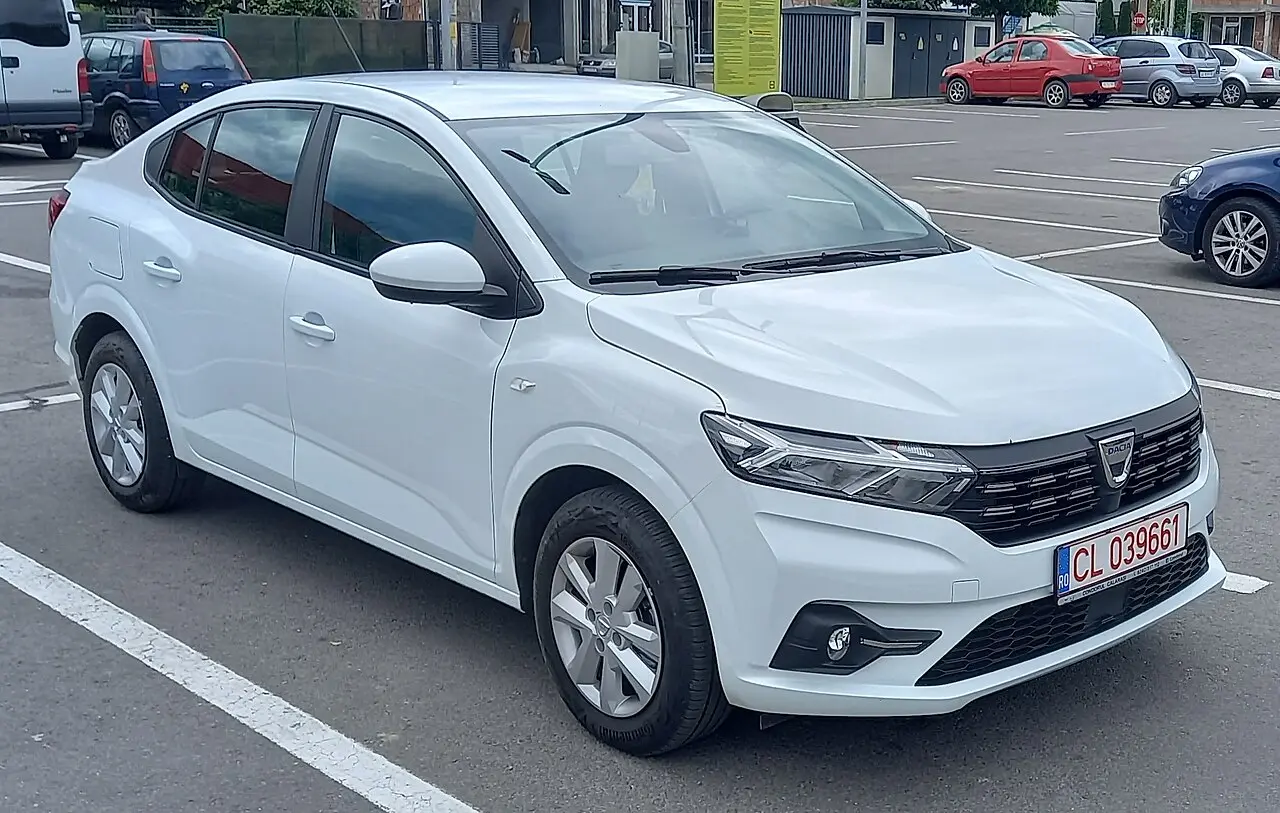
Dacia

Dacia Logan

Dacia Logan
Photo: ROCostiTheBunnyCZ / Wikimedia Commons · CC BY-SA 4.0

The official data lists 182 versions of the Dacia Logan (2010–2025), in the European Union, the United Kingdom, and France. Each market publishes its own figures, measured on its own test procedure.

At a glance

Years in the data
2010–2025
Markets
European Union, United Kingdom, France
Engines
0.9 L to 1.6 L
Power
49 kW (67 PS) to 99 kW (135 PS)
Fuels
Diesel, Petrol, LPG, Flex fuel (E85)
Lowest consumption (France)
3.8 L/100 km (NEDC)
Lowest consumption (United Kingdom)
3.8 L/100 km (NEDC)
Lowest consumption (European Union)
3.9 L/100 km (WLTP)
New registrations in the EU
1,122,675

What is the Dacia Logan?

The Logan is Dacia’s saloon, with a conventional three-box body and a practical, family-focused role. It sits alongside the Sandero hatchback and Duster SUV in the range. Dacia is a Romanian carmaker that became part of Renault Group in 1999; the Logan became a central model in the brand’s modern international range.

The first generation ran from 2010 to 2012, the second from 2012 to 2020, and the third from 2020 onwards. The third generation arrived with a new design as part of a broader renewal that also brought new Sandero models.

Engines and power

EU listings span petrol, diesel, LPG and flex-fuel E85, among other fuel classifications. Engine sizes range from 0.9 to 1.6 litres, with power from 49 kW (67 PS) to 99 kW (135 PS). A prominent listed combination is the 0.9-litre petrol version rated at 66 kW (90 PS), while a 1.5-litre diesel also features among the leading registrations.

UK listings cover 0.9- to 1.5-litre petrol and diesel engines. French listings show petrol, diesel, LPG and E85, with power from 55 kW (75 PS) to 77 kW (105 PS).

How economical is the Dacia Logan?

The lowest listed EU consumption is 3.9 L/100 km on WLTP for petrol, diesel and hybrid versions. UK and French listings each reach 3.8 L/100 km under NEDC. WLTP and NEDC are different test procedures, so these figures are not direct comparisons.

Official EU registration figures record 1,122,675 Logans from 2010 to 2025. Listed high-volume combinations include a 0.9-litre petrol rated at 66 kW (90 PS) in 2019, and a 1.5-litre diesel in 2010.

Where was the Logan sold?

The Logan appears in EU registration figures from 2010 to 2025, UK VCA listings from 2014 to 2015, and French ADEME listings from 2012 to 2015. Its saloon body and range of petrol, diesel and gas-fuelled versions varied by country and year.

Questions and answers

When did each Logan generation run?

The first generation ran from 2010 to 2012, the second from 2012 to 2020, and the third from 2020 onwards.

What fuel types were offered?

EU listings include petrol, diesel, LPG and flex-fuel E85, among other classifications. UK listings show petrol and diesel.

What is the Logan’s lowest listed consumption?

The lowest listed figure is 3.8 L/100 km under NEDC in the UK and France. The EU WLTP figure is 3.9 L/100 km.
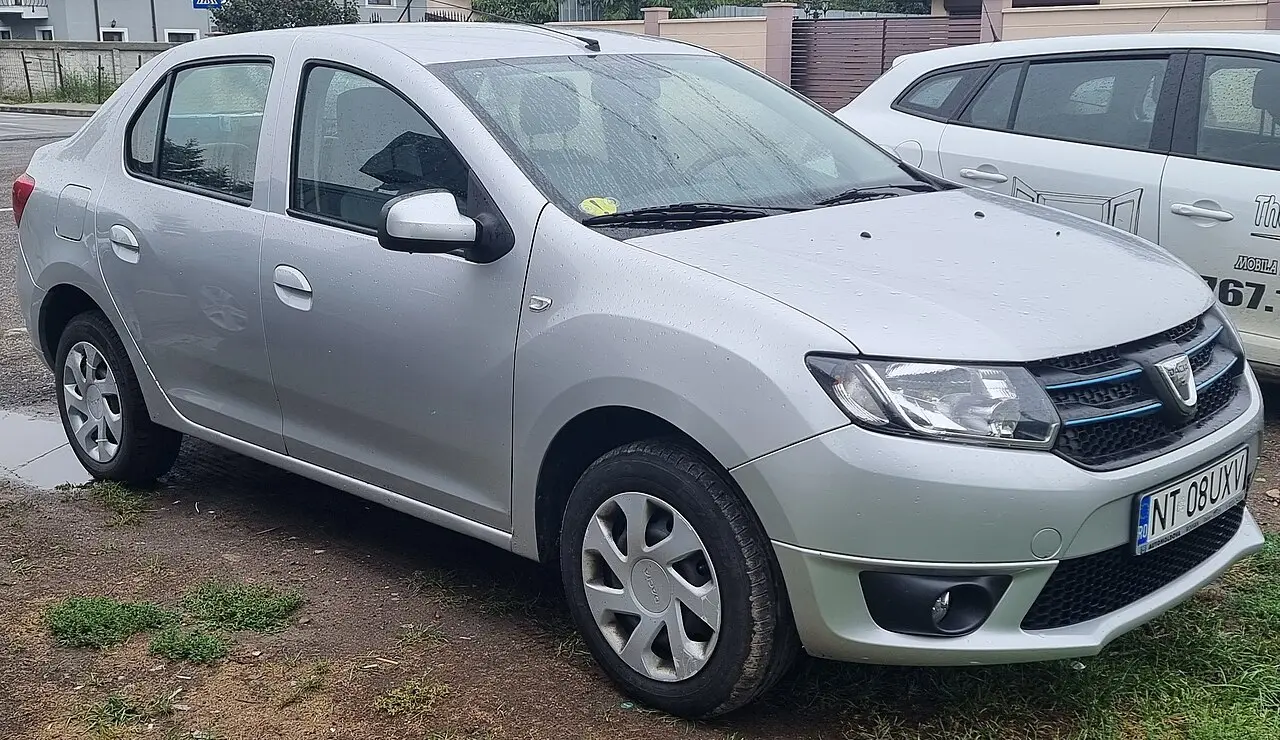
Logan first generation (2010–2012)

Model codes: L90 · References: en.wikipedia.org

Show all 56 versions

Logan second generation (2012–2020)

Dacia Logan second generation
Photo: (G)jabz / Wikimedia Commons · CC BY-SA 4.0

Model codes: L52 · References: en.wikipedia.org

Show all 134 versions

Logan third generation (since 2020)

Dacia Logan third generation
Photo: ROCostiTheBunnyCZ / Wikimedia Commons · CC BY-SA 4.0

Model codes: LJI · References: media.dacia.com, en.wikipedia.org

European Union 28 versions

New cars registered in the EU (plus Norway and Iceland), from the European Environment Agency. Figures on the NEDC procedure until 2020 and on WLTP from 2021; versions are grouped by engine and power, with their number of registrations.

Years and versionEnginePowerFuelConsumption (combined)CO₂Electric rangeEU registrations
20251.0 L67 kW (91 PS)LPG6.4 L/100 km WLTP105 g/km–11,185
20251.0 L67 kW (91 PS)Petrol5.3 L/100 km WLTP118 g/km–4,634
20251.0 L74 kW (101 PS)LPG6.4 L/100 km WLTP104 g/km–315
20241.0 L67 kW (91 PS)LPG6.5 L/100 km WLTP105 g/km–8,821
20241.0 L67 kW (91 PS)Petrol5.2 L/100 km WLTP119 g/km–7,558
20231.0 L67 kW (91 PS)LPG6.7 L/100 km WLTP106 g/km–9,079
20231.0 L67 kW (91 PS)Petrol5.2 L/100 km WLTP118 g/km–5,469
20231.0 L49 kW (67 PS)Petrol5.2 L/100 km WLTP118 g/km–53
20221.0 L67 kW (91 PS)LPG5.4 L/100 km WLTP107 g/km–7,937
20221.0 L67 kW (91 PS)Petrol5.2 L/100 km WLTP118 g/km–4,210
20221.0 L49 kW (67 PS)Petrol5.2 L/100 km WLTP118 g/km–701
20221.0 L74 kW (101 PS)LPG5.9 L/100 km WLTP108 g/km–48
20211.0 L67 kW (91 PS)LPG5.3 L/100 km WLTP109 g/km116 km17,465
20211.0 L67 kW (91 PS)Petrol5.3 L/100 km WLTP119 g/km–6,734
20211.0 L49 kW (67 PS)Petrol5.2 L/100 km WLTP118 g/km–2,243
20211.0 L74 kW (101 PS)LPG5.4 L/100 km WLTP121 g/km–2,001
20210.9 L66 kW (90 PS)Petrol5.6 L/100 km WLTP138 g/km–701
20211.5 L70 kW (95 PS)Diesel3.9 L/100 km WLTP120 g/km–688
20211.0 L54 kW (73 PS)Petrol5.3 L/100 km WLTP128 g/km–284
20211.5 L55 kW (75 PS)Diesel4.0 L/100 km WLTP114 g/km–150
20211.0 L74 kW (101 PS)Petrol–130 g/km–43
20200.9 L66 kW (90 PS)Petrol–121 g/km–27,507
20201.0 L54 kW (73 PS)Petrol–114 g/km–16,766
20201.0 L74 kW (101 PS)LPG–102 g/km–15,269
20201.5 L70 kW (95 PS)Diesel–99 g/km–9,830
20201.5 L55 kW (75 PS)Diesel–95 g/km–5,145
20201.0 L74 kW (101 PS)Petrol–109 g/km–763
20200.9 L66 kW (90 PS)LPG–120 g/km–77

Official figures are measured on standard test procedures and differ between markets. Your consumption depends on how, where and in what conditions you drive.