Citroën

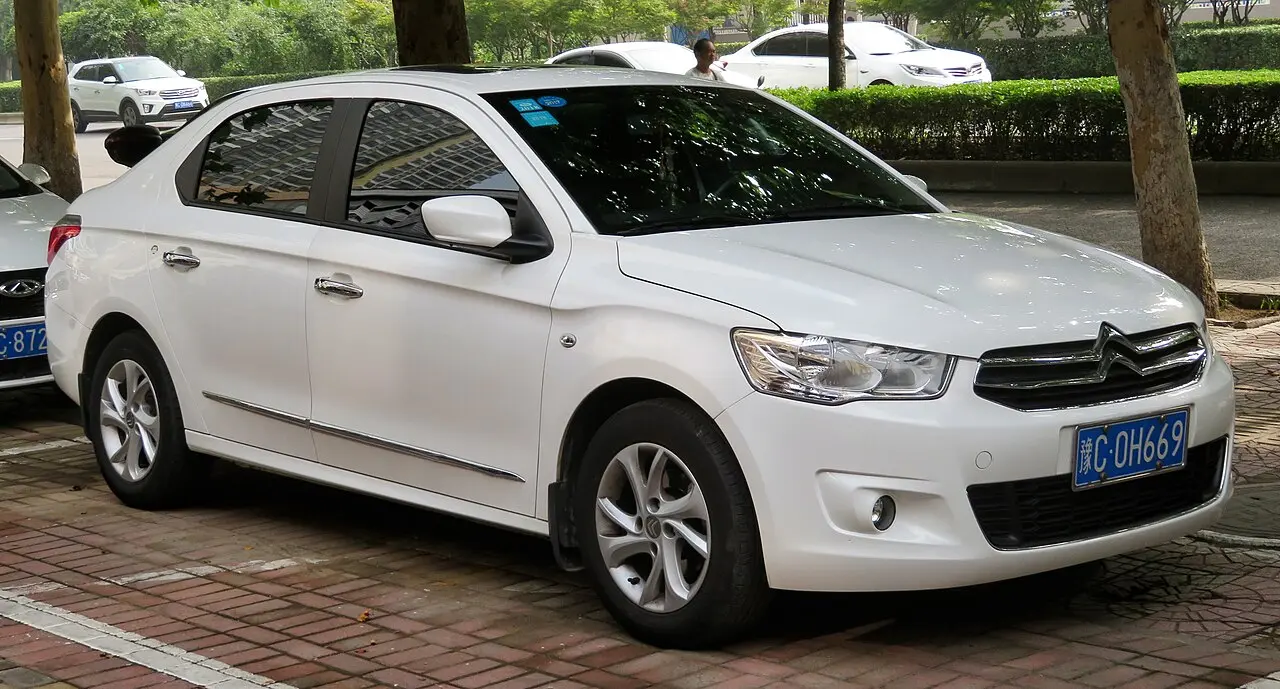
Citroën C-Elysée

Citroën C-Elysée
Photo: Kevauto / Wikimedia Commons · CC BY-SA 4.0

The official data lists 71 versions of the Citroën C-Elysée (2012–2022), in the European Union. Each market publishes its own figures, measured on its own test procedure.

At a glance

Years in the data
2012–2022
Markets
European Union
Engines
1.0 L to 2.0 L
Power
50 kW (68 PS) to 128 kW (174 PS)
Fuels
Diesel, Petrol, LPG, Electric
Lowest consumption (European Union)
4.4 L/100 km (WLTP)
New registrations in the EU
283,798

What is the Citroën C-Elysée?

The C-Elysée is a compact four-door saloon with a separate boot. Citroën developed it for international markets as a spacious family car in a conventional three-box shape. Its role extended the brand’s range beyond hatchbacks and larger comfort-focused models.

The listed generation, C-Elysée II, ran from 2012 to 2022. Citroën described the saloon as a car for international markets, and updated its styling and connected features during its run.

Engines and power

EU figures from 2012 to 2022 cover 1.0- to 2.0-litre engines and power from 50 kW (68 PS) to 128 kW (174 PS). Fuel entries include petrol, diesel, LPG, electric and other. Among the most registered configurations in 2018 were a 1.6-litre diesel rated at 73 kW (99 PS), and 1.2-litre petrol versions rated at 60 kW (82 PS) and 81 kW (110 PS).

How economical is the Citroën C-Elysée?

The lowest listed EU consumption for petrol, diesel and hybrid versions is 4.4 L/100 km on WLTP. EU registration figures total 283,798 C-Elysées from 2012 to 2022. Among the most registered configurations in 2018 were both diesel and petrol versions.

Where was the C-Elysée sold?

EU listings span 2012 to 2022 and include petrol, diesel, LPG, electric and other fuel categories. Citroën developed the C-Elysée for international markets. Its lowest listed consumption figure uses the WLTP test procedure.

Questions and answers

What type of car is the C-Elysée?

It is a compact four-door saloon with a separate boot.

When was the C-Elysée generation sold?

The listed second generation ran from 2012 to 2022.

What is the lowest listed consumption?

The EU listing gives 4.4 L/100 km on WLTP for petrol, diesel and hybrid versions.

How much power do EU-listed C-Elysée versions have?

The listed range is 50–128 kW, or 68–174 PS.

C-Elysée II (2012–2022)

Citroën C-Elysée II
Photo: Kevauto / Wikimedia Commons · CC BY-SA 4.0

Sold in: European Union · References: en.wikipedia.org, media.stellantis.com

European Union 71 versions

New cars registered in the EU (plus Norway and Iceland), from the European Environment Agency. Figures on the NEDC procedure until 2020 and on WLTP from 2021; versions are grouped by engine and power, with their number of registrations.

Years and versionEnginePowerFuelConsumption (combined)CO₂EU registrations
20221.5 L75 kW (102 PS)Diesel4.4 L/100 km WLTP117 g/km13
20211.5 L75 kW (102 PS)Diesel4.4 L/100 km WLTP116 g/km1,484
20201.5 L75 kW (102 PS)Diesel–100 g/km5,438
20201.2 L61 kW (83 PS)Petrol–115 g/km46
20191.2 L61 kW (83 PS)Petrol–113 g/km8,396
20191.5 L75 kW (102 PS)Diesel–104 g/km8,246
20191.6 L73 kW (99 PS)Diesel–98 g/km374
20191.2 L60 kW (82 PS)Petrol–111 g/km150
20191.6 L85 kW (116 PS)Petrol–149 g/km116
20181.6 L73 kW (99 PS)Diesel–104 g/km39,262
20181.2 L60 kW (82 PS)Petrol–109 g/km37,079
20181.2 L81 kW (110 PS)Petrol–112 g/km27,758
20181.6 L88 kW (120 PS)Diesel–105 g/km14,912
20181.2 L96 kW (131 PS)Petrol–116 g/km12,476
20181.2 L61 kW (83 PS)Petrol–112 g/km9,828
20181.6 L55 kW (75 PS)Diesel–100 g/km7,332
20181.5 L75 kW (102 PS)Diesel–101 g/km5,228
20181.6 L85 kW (116 PS)Petrol–149 g/km3,558
20182.0 L110 kW (150 PS)Diesel–123 g/km2,390
20181.0 L53 kW (72 PS)Petrol–93 g/km2,264
20181.5 L96 kW (131 PS)Diesel–106 g/km1,132
20181.2 L50 kW (68 PS)Petrol–109 g/km732
20181.5 L88 kW (120 PS)Diesel–112 g/km634
20181.2 L60 kW (82 PS)LPG–101 g/km600
20181.6 L121 kW (165 PS)Petrol–131 g/km572
20181.6 L85 kW (116 PS)Diesel–136 g/km518
20182.0 L120 kW (163 PS)Diesel–125 g/km256
20182.0 L130 kW (177 PS)Diesel–156 g/km250
2018Electric motor35 kW (48 PS)Electric15.7 kWh/100 km NEDC0 g/km216
20181.2 L59 kW (80 PS)Diesel–118 g/km164
20181.0 L51 kW (69 PS)Petrol–97 g/km82
20181.6 L85 kW (116 PS)LPG–142 g/km72
20181.6 L72 kW (98 PS)Petrol–148 g/km32
20182.0 L96 kW (131 PS)Diesel–155 g/km22
20181.2 L96 kW (131 PS)LPG–115 g/km10
20171.6 L73 kW (99 PS)Diesel–98 g/km9,150
20171.2 L60 kW (82 PS)Petrol–111 g/km7,992
20171.6 L128 kW (174 PS)Petrol–148 g/km1,480
20171.6 L85 kW (116 PS)Petrol–151 g/km1,250
20171.6 L110 kW (150 PS)Diesel–98 g/km182
20171.2 L90 kW (122 PS)Petrol–112 g/km56
20161.6 L73 kW (99 PS)Diesel–98 g/km15,730
20161.2 L60 kW (82 PS)Petrol–111 g/km9,208
20161.6 L85 kW (116 PS)Petrol–155 g/km1,750
20161.6 L85 kW (116 PS)LPG–150 g/km1,066
20161.6 L73 kW (99 PS)LPG–98 g/km884
20161.6 L68 kW (92 PS)Diesel–109 g/km116
20161.2 L53 kW (72 PS)Petrol–120 g/km20
2014–20151.6 L68 kW (92 PS)Diesel–108 g/km16,594
20151.6 L85 kW (116 PS)Petrol–154 g/km2,470
20151.2 L53 kW (72 PS)Petrol–123 g/km1,924
20151.2 L60 kW (82 PS)Petrol–110 g/km584
20151.6 L73 kW (99 PS)Diesel–98 g/km516
20141.2 L53 kW (72 PS)Petrol–123 g/km2,508
20141.6 L85 kW (116 PS)Petrol–154 g/km2,394
20141.6 L68 kW (92 PS)Petrol–108 g/km12
20131.6 L68 kW (92 PS)Diesel–109 g/km4,472
20131.6 L–Other fuel–108 g/km3,816
20131.2 L53 kW (72 PS)Petrol–123 g/km2,232
20131.6 L85 kW (116 PS)Petrol–154 g/km2,094
20131.2 L–Other fuel–119 g/km1,672
20131.6 L–Other fuel–149 g/km1,196
2012–2013––Diesel–108 g/km68
2013––Petrol–140 g/km68
20131.6 L85 kW (116 PS)LPG–151 g/km10
20132.7 L–Other fuel–108 g/km10
20121.6 L68 kW (92 PS)Diesel–115 g/km343
20121.6 L85 kW (116 PS)Petrol–154 g/km215
20121.2 L53 kW (72 PS)Petrol–121 g/km52
2012––Petrol–148 g/km12
20121.2 L–Diesel–119 g/km10

Official figures are measured on standard test procedures and differ between markets. Your consumption depends on how, where and in what conditions you drive.