Peugeot

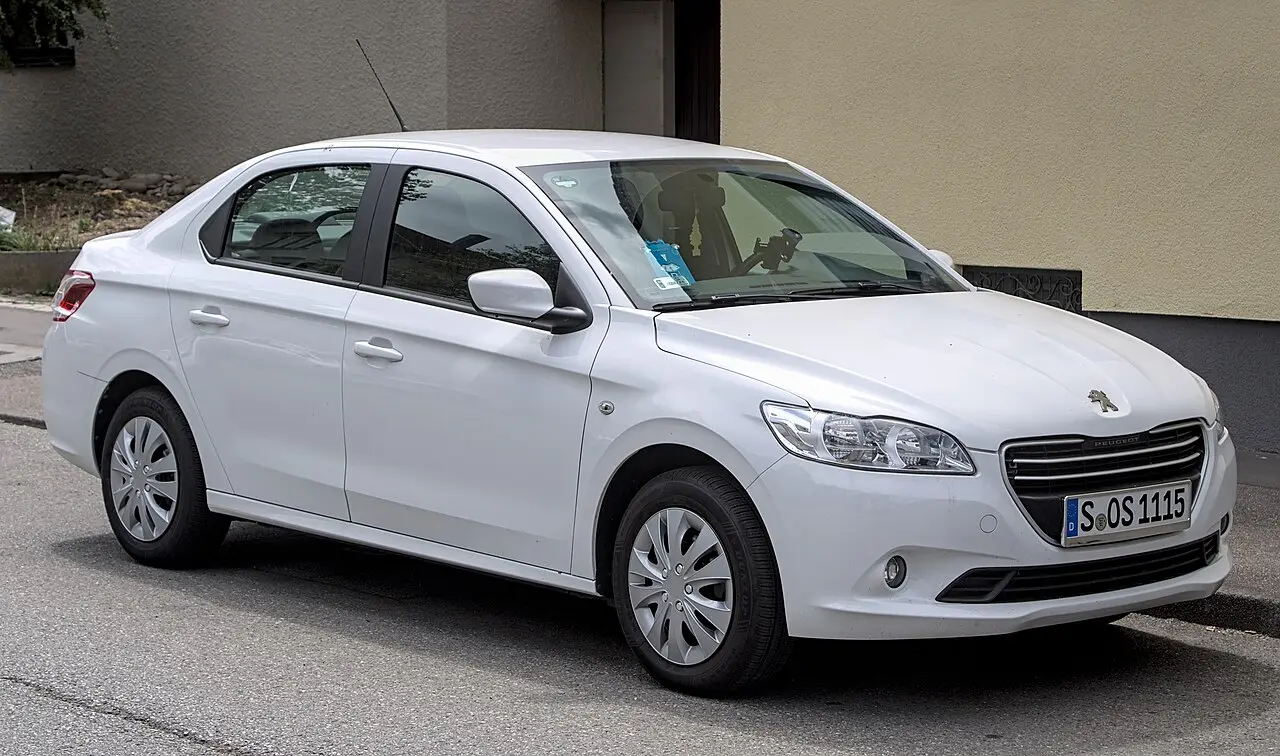
Peugeot 301

Peugeot 301
Photo: Alexander-93 / Wikimedia Commons · CC BY-SA 4.0

The official data lists 48 versions of the Peugeot 301 (2012–2022), in the European Union. Each market publishes its own figures, measured on its own test procedure.

At a glance

Years in the data
2012–2022
Markets
European Union
Engines
1.2 L to 1.6 L
Power
53 kW (72 PS) to 128 kW (174 PS)
Fuels
Diesel, Petrol, LPG
Lowest consumption (European Union)
4.4 L/100 km (WLTP)
New registrations in the EU
43,471

What is the Peugeot 301?

The Peugeot 301 is a compact four-door saloon with a separate boot. Peugeot developed it for international markets, where a traditional saloon can suit family use and everyday travel. It was positioned as an accessible model in the brand’s range.

Launched in 2012, the modern 301 was a new design, distinct from the earlier Peugeot that used the same name. Its listed generation ran from 2012 to 2021.

Engines and power

In the EU, the 301 was offered with engines from 1.2 L to 1.6 L and power from 53 kW (72 PS) to 128 kW (174 PS). Fuel types included petrol, diesel and LPG.

Among the leading EU registration entries were the 1.6 L diesel with 68 kW (92 PS) in 2013–2014 and the 1.2 L petrol with 53 kW (72 PS) in 2013 and 2014.

How economical is the Peugeot 301?

The lowest listed EU consumption is 4.4 L/100 km on the WLTP test. A particular car’s result depends on its engine and version. European figures may use WLTP or the older NEDC procedure; the USA uses EPA testing and Canada uses a 5-cycle procedure, so results from different markets are not directly comparable.

Official EU registration figures cover 2012–2022 and total 43,471 registrations. The registration period extends beyond the listed generation’s end in 2021.

Where was the Peugeot 301 sold?

Peugeot developed the 301 for international markets and launched it across regions including Europe, North Africa and the Middle East. Its four-door saloon body gave buyers in those markets a conventional boot and a family-sized cabin.

Questions and answers

What type of car is the Peugeot 301?

It is a compact four-door saloon with a separate boot, developed for international markets.

How many generations of the modern 301 are listed?

One: the 301 generation, running from 2012 to 2021.

What is the lowest official consumption figure shown for the 301?

The lowest listed EU figure is 4.4 L/100 km on the WLTP test.

Which 301 engine featured among the leading EU registration entries?

The 1.6 L diesel with 68 kW (92 PS) was among the leading entries in 2013–2014.

301 301 (2012–2021)

Peugeot 301 301
Photo: Alexander-93 / Wikimedia Commons · CC BY-SA 4.0

Model codes: M3 · Sold in: European Union · References: en.wikipedia.org, en.wikipedia.org

European Union 47 versions

New cars registered in the EU (plus Norway and Iceland), from the European Environment Agency. Figures on the NEDC procedure until 2020 and on WLTP from 2021; versions are grouped by engine and power, with their number of registrations.

Years and versionEnginePowerFuelConsumption (combined)CO₂EU registrations
20211.5 L75 kW (102 PS)Diesel4.4 L/100 km WLTP115 g/km1,244
20201.5 L75 kW (102 PS)Diesel–100 g/km1,094
20191.2 L61 kW (83 PS)Petrol–113 g/km1,942
20191.5 L75 kW (102 PS)Diesel–104 g/km870
20191.6 L73 kW (99 PS)Diesel–98 g/km90
20191.6 L85 kW (116 PS)Petrol–154 g/km90
20191.2 L60 kW (82 PS)Petrol–114 g/km34
20181.6 L85 kW (116 PS)Petrol–150 g/km1,752
20181.6 L73 kW (99 PS)Diesel–98 g/km1,500
20181.2 L60 kW (82 PS)Petrol–117 g/km1,277
20181.5 L75 kW (102 PS)Diesel–109 g/km206
20181.2 L61 kW (83 PS)Petrol–108 g/km190
20181.2 L60 kW (82 PS)LPG–114 g/km10
20171.2 L60 kW (82 PS)Petrol–110 g/km1,470
20171.6 L73 kW (99 PS)Diesel–98 g/km1,404
20171.6 L128 kW (174 PS)Petrol–148 g/km972
20171.6 L85 kW (116 PS)Petrol–150 g/km744
20171.6 L110 kW (150 PS)Diesel–98 g/km332
20171.2 L90 kW (122 PS)Petrol–114 g/km174
20161.6 L73 kW (99 PS)Diesel–98 g/km1,576
20161.2 L60 kW (82 PS)Petrol–110 g/km1,394
20161.2 L60 kW (82 PS)LPG–114 g/km1,178
20161.6 L85 kW (116 PS)Petrol–151 g/km620
20161.6 L73 kW (99 PS)LPG–98 g/km210
20161.2 L53 kW (72 PS)Petrol–121 g/km96
20161.6 L68 kW (92 PS)Diesel–110 g/km38
20161.6 L85 kW (116 PS)LPG–150 g/km28
20151.6 L68 kW (92 PS)Diesel–108 g/km1,800
20151.6 L85 kW (116 PS)Petrol–156 g/km1,534
20151.2 L53 kW (72 PS)Petrol–122 g/km1,132
20151.2 L60 kW (82 PS)Petrol–108 g/km564
20151.6 L73 kW (99 PS)Diesel–98 g/km544
2013–20141.6 L68 kW (92 PS)Diesel–109 g/km6,662
20141.2 L53 kW (72 PS)Petrol–123 g/km2,268
20141.6 L85 kW (116 PS)Petrol–155 g/km1,642
20141.2 L53 kW (72 PS)Diesel–124 g/km10
20131.2 L53 kW (72 PS)Petrol–124 g/km3,024
20131.6 L85 kW (116 PS)Petrol–156 g/km2,218
2013––Diesel–108 g/km264
2013––Petrol–143 g/km224
20131.6 L–Other fuel–108 g/km16
20131.6 L85 kW (116 PS)LPG–151 g/km10
20121.6 L68 kW (92 PS)Diesel–114 g/km400
20121.6 L85 kW (116 PS)Petrol–155 g/km351
2012––Diesel–108 g/km66
20121.2 L53 kW (72 PS)Petrol–123 g/km52
2012––Petrol–156 g/km14

Versions outside these generations

European Union 1 version

New cars registered in the EU (plus Norway and Iceland), from the European Environment Agency. Figures on the NEDC procedure until 2020 and on WLTP from 2021; versions are grouped by engine and power, with their number of registrations.

Years and versionEnginePowerFuelConsumption (combined)CO₂EU registrations
20221.5 L75 kW (102 PS)Diesel4.4 L/100 km WLTP115 g/km141

Official figures are measured on standard test procedures and differ between markets. Your consumption depends on how, where and in what conditions you drive.