

Audi Q7 4L
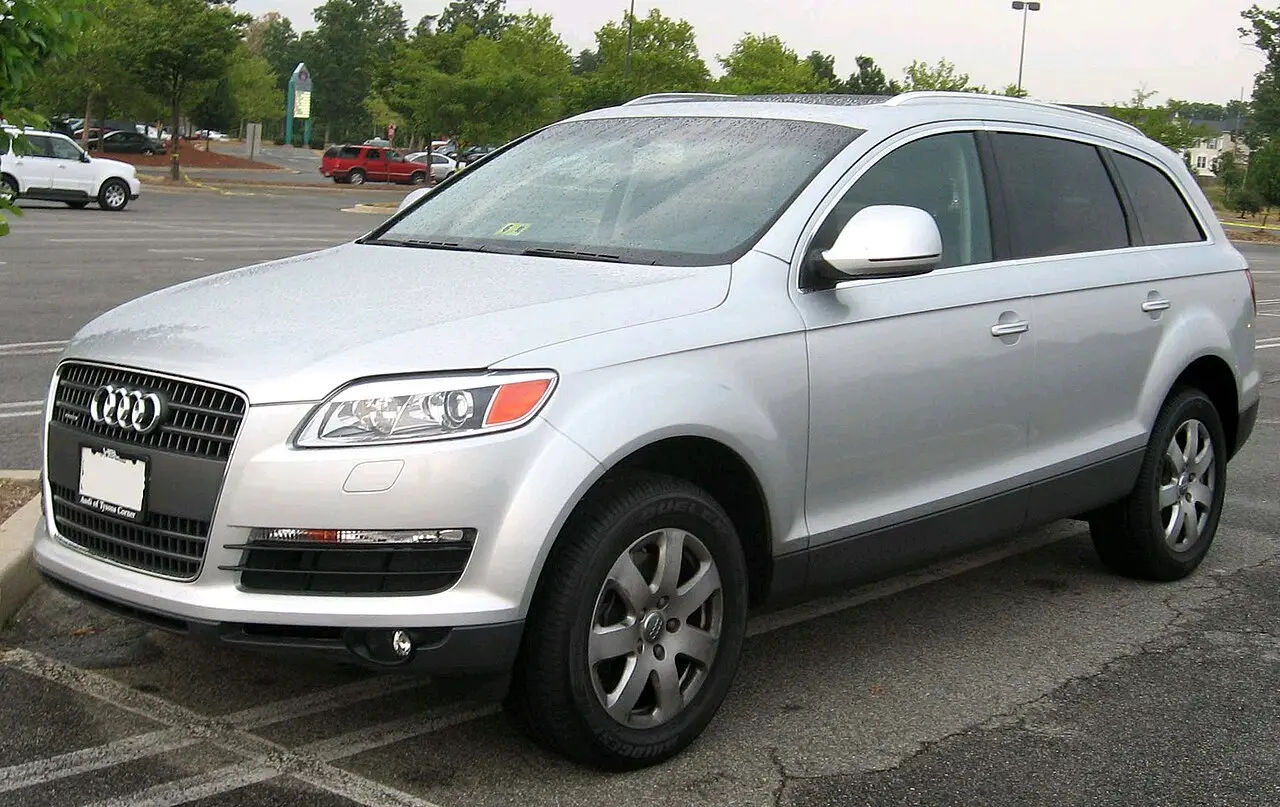
Audi Q7 4L (2005–2015): dimensioni, pesi, affidabilità e dati ufficiali delle versioni 79 nei mercati nell'Unione europea, nel Regno Unito, in Francia, negli Stati Uniti e in Canada.
Codici modello: 4L
Dimensioni, pesi e capacità
| Specifiche | Europa | America del Nord | Wikipedia |
|---|---|---|---|
| Dimensioni | |||
| Lunghezza | 5050–5090 mm RDW | 5090 mm TC | 5085 mm |
| Larghezza | 1970–2000 mm RDW | 1980 mm TC | 1984 mm |
| Altezza | 1670–1740 mm RDW | 1740 mm TC | 1737 mm |
| Passo | 3000–3010 mm RDW | 3000 mm TC | 3002 mm |
| Carreggiata anteriore | 1635–1671 mm ASTRA | 1630 mm TC | – |
| Carreggiata posteriore | 1677–1713 mm ASTRA | 1650 mm TC | – |
| Pesi e traino | |||
| Massa a vuoto | 1970–2415 kg RDW | 2355–2525 kg TC | 2205–2605 kg |
| Massa in ordine di marcia | 2070–2515 kg RDW | – | – |
| Massa complessiva del veicolo | 2765–3245 kg RDW | – | – |
| Trainabile, rimorchio con freni | 3000–3500 kg RDW | – | – |
| Trainabile, rimorchio senza freni | 750 kg RDW | – | – |
| Posti e spazio | |||
| Posti | 5–7 RDW | – | – |
| Porte | 4 RDW | – | – |
| Prestazioni | |||
| Velocità massima | 216–250 km/h RDW | – | – |
| Coppia | 400–800 Nm ASTRA | – | – |
Misure degli pneumatici (dalle più comuni alle meno comuni): 285/45R20, 235/60R18, 255/55R18, 275/45R20, 265/50R19, 275/40R21, 255/55R19, 255/60R18
Gli intervalli comprendono le versioni e le carrozzerie della generazione; le versioni europee e nordamericane possono differire. Fonti: Omologazioni di tipo RDW (Paesi Bassi), Specifiche dei veicoli di Transport Canada, Wikipedia, Omologazioni del tipo ASTRA (Svizzera), Omologazioni di tipo Traficom (Finlandia). I dati di Wikipedia sono utilizzati con licenza CC BY-SA 4.0.
Affidabilità e segnalazioni dei proprietari
Regno Unito: percentuale di superamento della revisione MOT al primo tentativo, per età
| Età al momento della revisione | Percentuale di superamento | Media del Regno Unito | Revisioni |
|---|---|---|---|
| 6–8 anni | 87,6% (86,9–88,3) | 86,4% | 9118 |
| 9–12 anni | 87,0% (86,6–87,4) | 77,9% | 29.383 |
| 13 anni e oltre | 80,2% (79,7–80,7) | 69,2% | 26.790 |
Cosa rileva il test MOT
| Area | Questo modello | Media del Regno Unito, stessa età |
|---|---|---|
| Pneumatici | 30,1% | 30,8% |
| Freni | 22,7% | 30,2% |
| Sospensioni | 14,7% | 31,1% |
| Rumore, emissioni e perdite | 14,0% | 10,9% |
| Luci e impianto elettrico | 13,1% | 20,9% |
| Visibilità (vetri, specchietti, tergicristalli) | 7,5% | 9,6% |
Primo test MOT di ogni auto per anno in 2022–2024, basato sui risultati anonimi dei test della DVSA; sono mostrate solo le fasce d’età con almeno 500 test. La cifra tra parentesi è l’intervallo di confidenza al 95%; il verde o il rosso indicano un risultato chiaramente superiore o inferiore alla media del Regno Unito. La seconda tabella mostra con quale frequenza è stato rilevato un elemento (difetto o segnalazione) in ciascuna area, rispetto alla media del Regno Unito per auto della stessa età. Test MOT anonimizzati della DVSA (Open Government Licence)
Segnalazioni dei proprietari alla NHTSA (USA)
362 segnalazioni per gli anni modello 2007–2015. 12 incidenti · 3 incendi · 73 lesioni
- Impianto di alimentazione 127
- Motore 73
- Impianto elettrico 60
- Visibilità e tergicristalli 32
Le segnalazioni sono inviate dai proprietari e non vengono verificate dalla NHTSA; non sono rapportate al numero di auto vendute, quindi i modelli più diffusi ne ricevono di più. Segnalazioni dei proprietari alla NHTSA
Tutte le versioni 79 di Audi Q7 4L
Mostra tutte le 79 versioni
Unione europea 23 versioni
Auto nuove immatricolate nell'UE (oltre che in Norvegia e Islanda), dati dell'Agenzia europea dell'ambiente. Cifre secondo la procedura NEDC fino al 2020 e WLTP dal 2021; le versioni sono raggruppate per motore e potenza, con il relativo numero di immatricolazioni.
| Anni e versione | Motore | Potenza | Carburante | Consumo (combinato) | CO₂ | Immatricolazioni UE |
|---|---|---|---|---|---|---|
| 2015 | 3,0 L | 200 kW (272 PS) | Diesel | – | 155 g/km | 30.121 |
| 2011–2015 | 3,0 L | 180 kW (245 PS) | Diesel | – | 194–195 g/km | 54.495 |
| 2011–2015 | 3,0 L | 245 kW (333 PS) | Benzina | – | 190–249 g/km | 2962 |
| 2011–2015 | 4,1 L | 250 kW (340 PS) | Diesel | – | 241–247 g/km | 8696 |
| 2011–2015 | 3,0 L | 150 kW (204 PS) | Diesel | – | 189–191 g/km | 4925 |
| 2015 | 3,0 L | 160 kW (218 PS) | Diesel | – | 149 g/km | 572 |
| 2015 | 3,0 L | 155 kW (211 PS) | Diesel | – | 149 g/km | 48 |
| 2011–2015 | 3,0 L | 200 kW (272 PS) | Benzina | – | 249 g/km | 268 |
| 2015 | 3,0 L | 190 kW (258 PS) | Ibrida | 18,6 kWh/100 km NEDC | 49 g/km | 12 |
| 2011–2014 | 3,0 L | 176 kW (239 PS) | Diesel | – | 208–238 g/km | 14.838 |
| 2013 | 3,0 L | – | Altro carburante | – | 202 g/km | 834 |
| 2010–2013 | – | – | Diesel | – | 210–238 g/km | 408 |
| 2013 | 4,1 L | – | Altro carburante | – | 242 g/km | 20 |
| 2011–2012 | 5,9 L | 368 kW (500 PS) | Diesel | – | 296–298 g/km | 641 |
| 2010–2011 | – | – | Benzina | – | 249–257 g/km | 24 |
| 2010 | 3,0 L | – | Diesel | – | 224 g/km | 19.320 |
| 2010 | 4,1 L | – | Diesel | – | 254 g/km | 2330 |
| 2010 | 5,9 L | – | Diesel | – | 298 g/km | 448 |
| 2010 | 3,0 L | – | Benzina | – | 249 g/km | 218 |
| 2010 | 4,2 L | – | Benzina | – | 307 g/km | 126 |
| 2010 | 3,6 L | – | Benzina | – | 290 g/km | 124 |
| 2010 | – | – | Altro carburante | – | 238 g/km | 120 |
| 2010 | 4,2 L | – | Diesel | – | 262 g/km | 80 |
Regno Unito 30 versioni
Auto nuove in vendita nel Regno Unito, dati della Vehicle Certification Agency. Cifre NEDC fino al 2018 e WLTP in seguito; gli anni indicano le edizioni in cui è comparsa una versione.
| Anni e versione | Motore | Potenza | Carburante | Cambio | Consumo (combinato) | CO₂ |
|---|---|---|---|---|---|---|
| 2015–20163.0 V6 TDi quattro 272PS 8speed Tiptronic with 19'' wheels · 3.0 V6 TDI quattro 272PS 8speed Tiptronic with 19'' & 20'' wheels | 3,0 L | 200 kW (272 PS) | Diesel | – | 5,9 L/100 km NEDC | 153 g/km |
| 2015–20163.0 V6 TDi quattro 272PS 8speed Tiptronic with 20'' wheels · 3.0 V6 TDI quattro 272PS 8speed Tiptronic with 21'' & 22'' wheels | 3,0 L | 200 kW (272 PS) | Diesel | – | 6,2 L/100 km NEDC | 163 g/km |
| 20153.0 TDI quattro 204PS 8speed Tiptronic | 3,0 L | 150 kW (204 PS) | Diesel | – | 7,2 L/100 km NEDC | 189 g/km |
| 20153.0 V6 TDI quattro 245PS 8speed Tiptronic | 3,0 L | 180 kW (245 PS) | Diesel | – | 7,4 L/100 km NEDC | 195 g/km |
| 20153.0 V6 TDI quattro 245PS 8speed Tiptronic Clean Diesel | 3,0 L | 180 kW (245 PS) | Diesel | – | 7,4 L/100 km NEDC | 195 g/km |
| 20153.0 V6 TFSI quattro 272PS 8speed Tiptronic | 3,0 L | 200 kW (272 PS) | Benzina | – | 10,7 L/100 km NEDC | 249 g/km |
| 20153.0 V6 TFSI quattro 333PS 8speed Tiptronic | 3,0 L | 245 kW (333 PS) | Benzina | – | 10,7 L/100 km NEDC | 249 g/km |
| 20154.2 V8 TDI quattro 340PS 8speed Tiptronic | 4,1 L | 250 kW (340 PS) | Diesel | – | 9,2 L/100 km NEDC | 242 g/km |
| 2013–20143.0 TDI quattro 204PS 8speed Tiptronic | 3,0 L | 150 kW (204 PS) | Diesel | Automatica | 7,2 L/100 km NEDC | 189 g/km |
| 2013–20143.0 V6 TDI quattro 245PS 8speed Tiptronic | 3,0 L | 180 kW (245 PS) | Diesel | Automatica | 7,4 L/100 km NEDC | 195 g/km |
| 2013–20143.0 V6 TDI quattro 245PS 8speed Tiptronic Clean Diesel | 3,0 L | 180 kW (245 PS) | Diesel | Automatica | 7,4 L/100 km NEDC | 195 g/km |
| 2013–20143.0 V6 TFSI 272PS quattro 8speed Tiptronic | 3,0 L | 200 kW (272 PS) | Benzina | Automatica | 10,7 L/100 km NEDC | 249 g/km |
| 2013–20143.0 V6 TFSI quattro 333PS 8speed Tiptronic | 3,0 L | 245 kW (333 PS) | Benzina | Automatica | 10,7 L/100 km NEDC | 249 g/km |
| 2013–20144.2 V8 TDI 340PS quattro 8speed Tiptronic | 4,1 L | 250 kW (340 PS) | Diesel | Automatica | 9,2 L/100 km NEDC | 242 g/km |
| 20123.0 TDI quattro 204PS 8speed Tiptronic | 3,0 L | 150 kW (204 PS) | Diesel | Automatica a 8 marce | 7,2 L/100 km NEDC | 189 g/km |
| 20123.0 V6 TDI quattro 245PS 8speed Tiptronic | 3,0 L | 180 kW (245 PS) | Diesel | Automatica a 8 marce | 7,4 L/100 km NEDC | 195 g/km |
| 20123.0 V6 TDI quattro 245PS 8speed Tiptronic Clean Diesel | 3,0 L | 180 kW (245 PS) | Diesel | Automatica a 8 marce | 7,4 L/100 km NEDC | 195 g/km |
| 20123.0 V6 TFSI 272PS quattro 8speed Tiptronic | 3,0 L | 200 kW (272 PS) | Benzina | Automatica a 8 marce | 10,7 L/100 km NEDC | 249 g/km |
| 20123.0 V6 TFSI quattro 333PS 8speed Tiptronic | 3,0 L | 245 kW (333 PS) | Benzina | Automatica a 8 marce | 10,7 L/100 km NEDC | 249 g/km |
| 20124.2 V8 TDI 340PS quattro 8speed Tiptronic | 4,1 L | 250 kW (340 PS) | Diesel | Automatica a 8 marce | 9,2 L/100 km NEDC | 242 g/km |
| 2009–20103.0 V6 TDI quattro 240PS Tiptronic with DPF · 3.0 V6 TDI quattro 240ps Tiptronic · 3.0 V6 TDI quattro 240ps Tiptronic with DPF | 3,0 L | 177 kW (240 PS) | Diesel | – | 9,1 L/100 km NEDC | 239 g/km |
| 20103.0 V6 CR TDI quattro 240ps Tiptronic | 3,0 L | 177 kW (240 PS) | Diesel | – | 8,9 L/100 km NEDC | 234 g/km |
| 20103.0 V6 TDI quattro 240ps Tiptronic Clean-Diesel | 3,0 L | 177 kW (240 PS) | Diesel | – | 8,9 L/100 km NEDC | 234 g/km |
| 20103.6 V6 FSI 280ps quattro Tiptronic | 3,6 L | 206 kW (280 PS) | Benzina | – | 12,1 L/100 km NEDC | 289 g/km |
| 2008–20104.2 V8 TDI 326ps quattro Tiptronic with DPF · 4.2 V8 TDI quattro 326PS Tiptronic with DPF | 4,1 L | 240 kW (326 PS) | Diesel | – | 11,1 L/100 km NEDC | 294 g/km |
| 2007–20104.2 V8 FSI 350ps quattro Tiptronic | 4,2 L | 257 kW (350 PS) | Benzina | – | 12,7–13,6 L/100 km NEDC | 304–326 g/km |
| 20106.0 V12 TDI quattro 500ps Tiptronic | 5,9 L | 368 kW (500 PS) | Diesel | – | 11,3 L/100 km NEDC | 298 g/km |
| 2007–20093.6 V6 FSI 280ps quattro Tiptronic · 3.6 V6 FSI quattro 280PS Tiptronic | 3,6 L | 206 kW (280 PS) | Benzina | – | 12,7 L/100 km NEDC | 304 g/km |
| 20094.2 V8 FSI quattro 350PS Tiptronic | 4,2 L | 257 kW (350 PS) | Benzina | – | 13,3 L/100 km NEDC | 317 g/km |
| 2007–20083.0 V6 TDI 233ps quattro Tiptronic | 3,0 L | 171 kW (233 PS) | Diesel | – | 10,4 L/100 km NEDC | 279 g/km |
Francia 12 versioni
Auto nuove in vendita in Francia, dati di ADEME Car Labelling. Cifre NEDC fino al 2015 e WLTP nel catalogo attuale.
| Anni e versione | Motore | Potenza | Carburante | Cambio | Consumo (combinato) | CO₂ |
|---|---|---|---|---|---|---|
| 2015Q7 V6 3.0 TFSI (333ch) 5PL tiptronic 8 | – | 150 kW (204 PS) | Diesel | Automatica a 8 marce | 7,2 L/100 km NEDC | 189 g/km |
| 2015Q7 V6 3.0 TFSI (333ch) 7PL tiptronic 8 | – | 180 kW (245 PS) | Diesel | Automatica a 8 marce | 7,4 L/100 km NEDC | 195 g/km |
| 2015Q7 V6 3.0 TFSI (333ch) 7PL tiptronic 8 | – | 200 kW (272 PS) | Benzina | Automatica a 8 marce | 10,7 L/100 km NEDC | 249 g/km |
| 2015Q7 V6 3.0 TFSI (333ch) 7PL tiptronic 8 | – | 245 kW (333 PS) | Benzina | Automatica a 8 marce | 10,7 L/100 km NEDC | 249 g/km |
| 2015Q7 V6 3.0 TFSI (333ch) 5PL tiptronic 8 | – | 250 kW (340 PS) | Diesel | Automatica a 8 marce | 9,2 L/100 km NEDC | 242 g/km |
| 2012–2014Q7 V6 3.0 TDI (204ch) QUATTRO TIPTRONIC | – | 150 kW (204 PS) | Diesel | Automatica a 8 marce | 7,2–7,4 L/100 km NEDC | 189–195 g/km |
| 2012–2014Q7 V6 3.0 TDI clean diesel (245ch) QUATTRO TIPTRONIC | – | 180 kW (245 PS) | Diesel | Automatica a 8 marce | 7,4 L/100 km NEDC | 195 g/km |
| 2012–2014Q7 V6 3.0 TFSI (272ch) QUATTRO TIPTRONIC | – | 200 kW (272 PS) | Benzina | Automatica a 8 marce | 10,7 L/100 km NEDC | 249 g/km |
| 2012–2014Q7 V6 3.0 TFSI (333ch) QUATTRO TIPTRONIC | – | 245 kW (333 PS) | Benzina | Automatica a 8 marce | 10,7 L/100 km NEDC | 249 g/km |
| 2012–2014Q7 V8 4.2 TDI (340ch) QUATTRO TIPTRONIC | – | 250 kW (340 PS) | Diesel | Automatica a 8 marce | 9,2 L/100 km NEDC | 242 g/km |
| 2012–2013Q7 V6 3.0 TDI (245ch) QUATTRO TIPTRONIC · Q7 V6 3.0 TDI clean diesel (245ch) QUATTRO TIPTRONIC | – | 180 kW (245 PS) | Diesel | Automatica a 8 marce | 7,4 L/100 km NEDC | 195 g/km |
| 2012Audi Q7 V12 6.0 TDI (500ch) QUATTRO TIPTRONIC | – | 368 kW (500 PS) | Diesel | Automatica a 6 marce | 11,3 L/100 km NEDC | 298 g/km |
Stati Uniti 7 versioni
Anni modello venduti negli USA, dati dell'EPA e del Department of Energy (fueleconomy.gov). MPG calcolati secondo il test EPA; litri per 100 km = 235.215 ÷ MPG.
| Anni e versione | Motore | Carburante | Cambio | Trazione | Consumo (combinato) | CO₂ |
|---|---|---|---|---|---|---|
| 2011–2015 | 3,0 L | Diesel | Automatica a 8 marce | Trazione integrale permanente | 20–22 MPG (10,7–11,8 L/100 km) EPA | 290–316 g/km |
| 2011–2015SIDI | 3,0 L | Benzina | Automatica a 8 marce | Trazione integrale permanente | 18 MPG (13,1 L/100 km) EPA | 307–310 g/km |
| 2009–2010 | 3,0 L | Diesel | Automatica a 6 marce | Trazione integrale permanente | 20 MPG (11,8 L/100 km) EPA | 316 g/km |
| 2010 | 3,6 L | Benzina | Automatica a 6 marce | Trazione integrale permanente | 16 MPG (14,7 L/100 km) EPA | 345 g/km |
| 2010 | 4,2 L | Benzina | Automatica a 6 marce | Trazione integrale permanente | 15 MPG (15,7 L/100 km) EPA | 368 g/km |
| 2007–20093MODE CLKUP | 3,6 L | Benzina | Automatica a 6 marce | Trazione integrale o permanente | 16 MPG (14,7 L/100 km) EPA | 345 g/km |
| 2007–20093MODE CLKUP | 4,2 L | Benzina | Automatica a 6 marce | Trazione integrale o permanente | 14–15 MPG (15,7–16,8 L/100 km) EPA | 368–394 g/km |
Canada 7 versioni
Anni modello venduti in Canada, dati delle valutazioni dei consumi di carburante di Natural Resources Canada (test a 5 cicli).
| Anni e versione | Motore | Carburante | Cambio | Consumo (combinato) | CO₂ |
|---|---|---|---|---|---|
| 2014–2015Sport utility vehicle: Standard | 3,0 L | Benzina | Automatica a 8 marce | 13,2–13,3 L/100 km 5 cicli | 304–306 g/km |
| 2013–2015Sport utility vehicle: Standard | 3,0 L | Diesel | Automatica a 8 marce | 10,7 L/100 km 5 cicli | 290 g/km |
| 2011–2013Sport utility vehicle · Sport utility vehicle: Standard | 3,0 L | Benzina | Automatica a 8 marce | 13,3 L/100 km 5 cicli | 306 g/km |
| 2011–2012Sport utility vehicle | 3,0 L | Diesel | Automatica a 8 marce | 11,7 L/100 km 5 cicli | 316 g/km |
| 2010Sport utility vehicle | 3,0 L | Diesel | Automatica a 6 marce | 11,7 L/100 km 5 cicli | 316 g/km |
| 2007–2010Sport utility vehicle | 3,6 L | Benzina | Automatica a 6 marce | 14,5–15,1 L/100 km 5 cicli | 334–347 g/km |
| 2007–2010Sport utility vehicle | 4,2 L | Benzina | Automatica a 6 marce | 15,7–16,8 L/100 km 5 cicli | 361–386 g/km |
Modelli simili di altre marche




I dati ufficiali sono misurati secondo procedure di prova standard e variano da un mercato all'altro. Il consumo dipende da come, dove e in quali condizioni guidi.