What is the Saab 95?
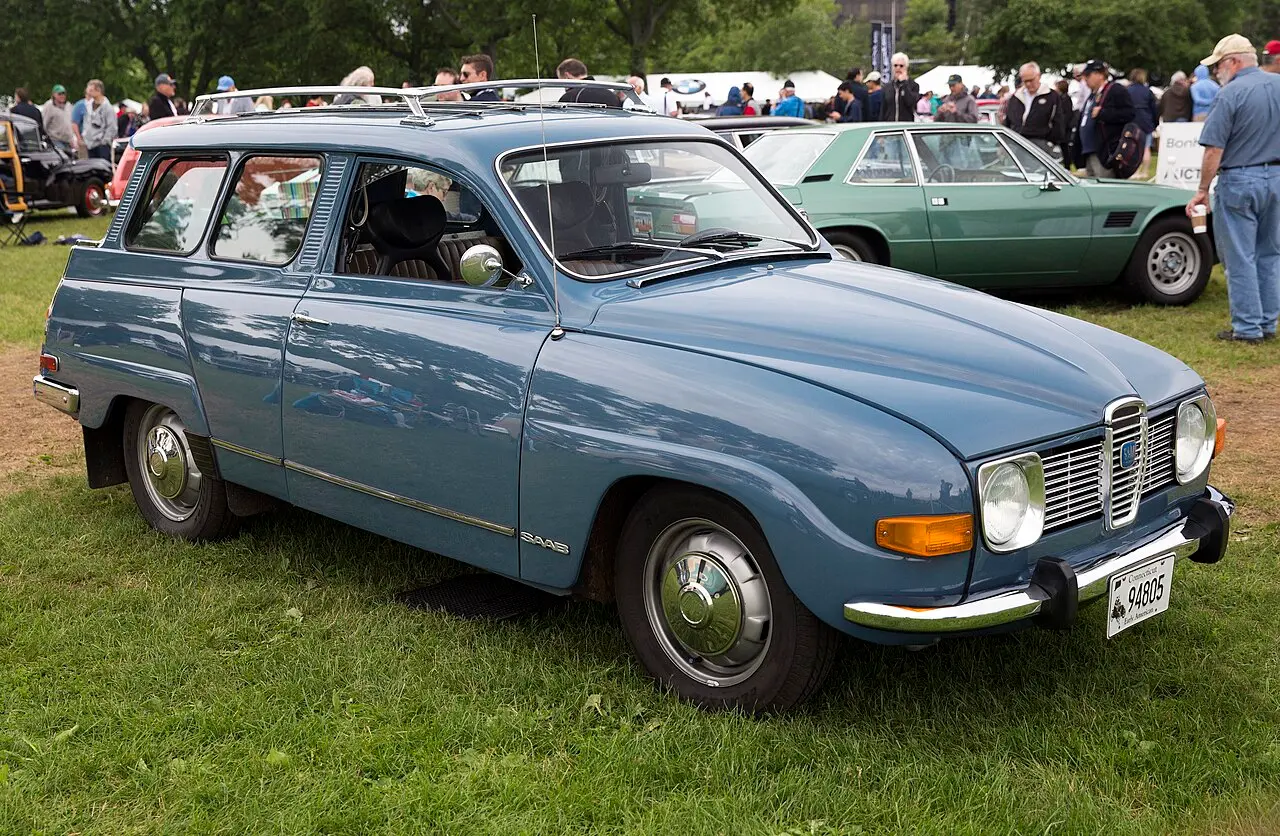
The Saab 95 was a station wagon built around the practical needs of family travel and carrying luggage. Its long roof and foldaway rear-facing bench gave the cabin extra flexibility, while its design shared much with the Saab 96.
Saab began as an aircraft maker before entering the car business. The 95 brought the company’s compact-car approach to an estate, pairing everyday usefulness with an unusual rear-facing seat.
Engines and design
The 95 started with a two-stroke petrol engine. Saab later introduced a V4 petrol engine, changing the car’s character while keeping it part of the same family as the 96.
The foldaway rear-facing bench was a distinctive feature, allowing some versions to carry extra passengers when needed. The 95 remained a practical estate throughout its production life.
Fuel consumption and emissions
The Saab 95’s two-stroke and V4 engines reflect a period when car makers were exploring different ways to balance everyday use with compact design.
Questions and answers
What kind of car was the Saab 95?
It was a practical station wagon related to the Saab 96, with a foldaway rear-facing bench on some versions.
What engines did the Saab 95 use?
It began with a two-stroke petrol engine and later gained a V4 petrol engine.
What was distinctive about the Saab 95’s interior?
Some versions had a foldaway rear-facing bench that could provide extra passenger space.