

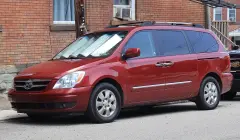
Plymouth Grand Voyager third generation
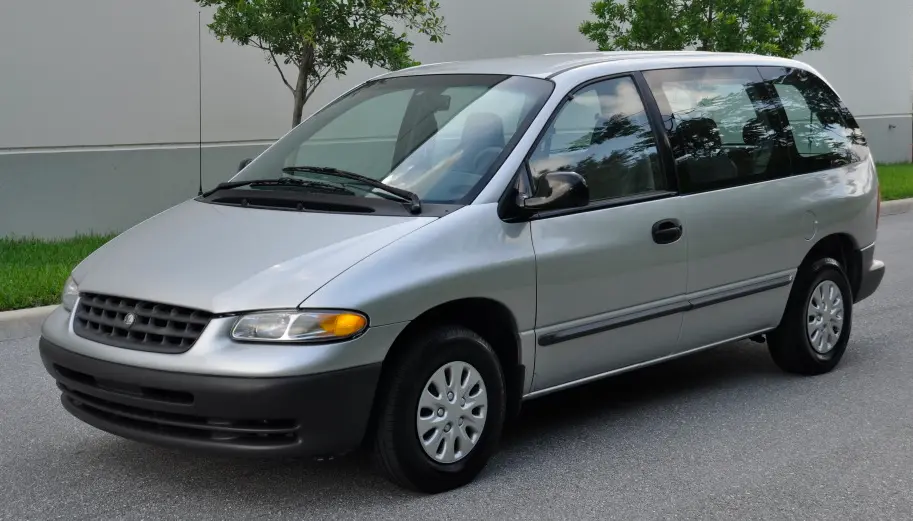
The Plymouth Grand Voyager third generation (1996–2000): dimensions, weights, reliability and the official figures of its 16 versions in the United States and Canada.
Model codes: NS · Sold in: United States and Canada
Dimensions, weights and capacity
| Specification | North America | Wikipedia |
|---|---|---|
| Dimensions | ||
| Length | – | 4,732–5,072 mm |
| Width | – | 1,951 mm |
| Height | – | 1,740–1,745 mm |
| Wheelbase | – | 2,878–3,030 mm |
| Weights and towing | ||
| Kerb weight | – | 1,600–1,669 kg |
| Electric | ||
| Range (EPA/NRCan) | 113 km EPA | – |
Ranges cover the generation’s versions and body styles; European and North American versions can differ. Sources: Wikipedia, US EPA fuel economy data. Wikipedia figures are used under CC BY-SA 4.0.
Reliability and owner reports
Owner complaints to NHTSA (US)
1,424 complaints for model years 1996–2000. 57 crashes · 68 fires · 57 injuries · 3 deaths
- Airbags 212
- Transmission and drivetrain 197
- Engine 151
- Electrical system 141
- Speed control 67
- Fuel system 58
Complaints are reported by owners and not checked by NHTSA; they are not adjusted for how many cars were sold, so popular models have more. NHTSA owner complaints
All 16 versions of the Plymouth Grand Voyager third generation
Show all 16 versions
United States 10 versions
Model years sold in the USA, from the EPA and the Department of Energy (fueleconomy.gov). MPG on the EPA test; litres per 100 km = 235.215 ÷ MPG.
| Years and version | Engine | Fuel | Gearbox | Drive | Consumption (combined) | CO₂ | Electric range |
|---|---|---|---|---|---|---|---|
| 1998–2000 | 2.4 L | Petrol | 3-speed automatic | Front-wheel drive | 20 MPG (11.8 L/100 km) EPA | 276 g/km | – |
| 1998–2000CLKUP | 3.0 L | Petrol | 4-speed automatic | Front-wheel drive | 19 MPG (12.4 L/100 km) EPA | 291 g/km | – |
| 2000CLKUP | 3.3 L | Petrol | 4-speed automatic | Front-wheel drive | 19 MPG (12.4 L/100 km) EPA | 291 g/km | – |
| 2000FLEX-FUEL, CLKUP | 3.3 L | Flex fuel (E85) | 4-speed automatic | Front-wheel drive | 19 MPG (12.4 L/100 km) EPA | 291 g/km | – |
| 1998–2000(FFS), CLKUP · CLKUP | 3.8 L | Petrol | 4-speed automatic | Front-wheel drive | 18 MPG (13.1 L/100 km) EPA | 307 g/km | – |
| 1999 | Electric motor | Electric | Automatic | Front-wheel drive | 35 MPGe EPA | 0 g/km | 113 km |
| 1996–1998(FFS) | 3.0 L | Petrol | 3-speed automatic | Front-wheel drive | 19 MPG (12.4 L/100 km) EPA | 291 g/km | – |
| 1996–1997(FFS), CLKUP | 2.4 L | Petrol | 4-speed automatic | Front-wheel drive | 19 MPG (12.4 L/100 km) EPA | 291 g/km | – |
| 1996–1997(FFS) | 2.4 L | Petrol | 3-speed automatic | Front-wheel drive | 20 MPG (11.8 L/100 km) EPA | 276 g/km | – |
| 1996(FFS), CLKUP | 3.8 L | Petrol | 4-speed automatic | Four- or all-wheel drive | 16 MPG (14.7 L/100 km) EPA | 345 g/km | – |
Canada 6 versions
Model years sold in Canada, from Natural Resources Canada fuel consumption ratings (5-cycle test).
| Years and version | Engine | Fuel | Gearbox | Consumption (combined) | CO₂ |
|---|---|---|---|---|---|
| 1998–1999Minivan | 3.0 L | Petrol | 4-speed automatic | 12.3 L/100 km 5-cycle | 283 g/km |
| 1996–1999Minivan | 3.3 L | Petrol | 4-speed automatic | 12.8–13.0 L/100 km 5-cycle | 294–299 g/km |
| 1996–1999Minivan | 3.8 L | Petrol | 4-speed automatic | 13.3–14.6 L/100 km 5-cycle | 306–336 g/km |
| 1996–1998Minivan | 2.4 L | Petrol | 3-speed automatic | 11.6–12.1 L/100 km 5-cycle | 267–278 g/km |
| 1996–1998Minivan | 3.0 L | Petrol | 3-speed automatic | 12.4–12.8 L/100 km 5-cycle | 285–294 g/km |
| 1996–1997Minivan | 2.4 L | Petrol | 4-speed automatic | 12.5–12.7 L/100 km 5-cycle | 288–292 g/km |
Similar models from other brands


Official figures are measured on standard test procedures and differ between markets. Your consumption depends on how, where and in what conditions you drive.