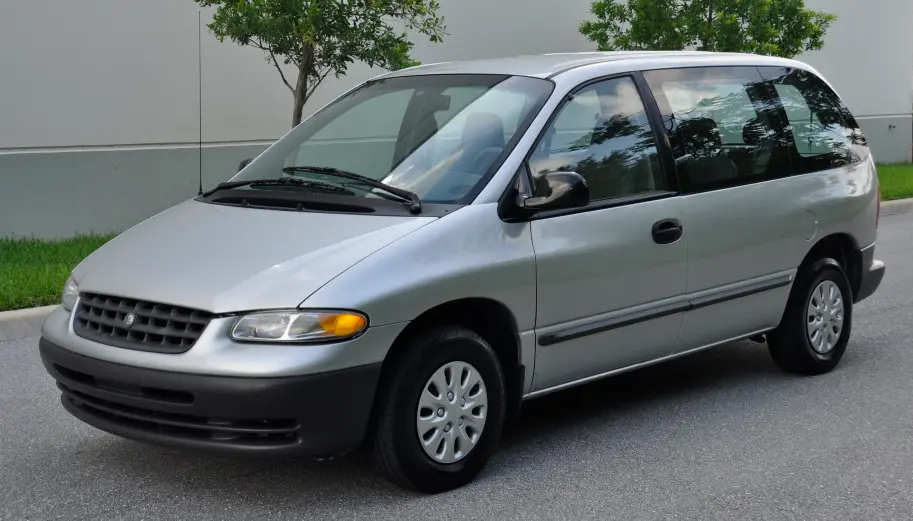
Plymouth

Plymouth Grand Voyager

Plymouth Grand Voyager
Photo: TheMercMan / Wikimedia Commons · CC BY-SA 3.0

The official data lists 83 versions of the Plymouth Grand Voyager (1987–2000), in the United States and Canada. Each market publishes its own figures, measured on its own test procedure.

At a glance

Years in the data
1987–2000
Markets
United States, Canada
Engines
2.2 L to 3.8 L
Fuels
Petrol, Flex fuel (E85), Electric
Lowest consumption (United States)
10.7 L/100 km (EPA)
Lowest consumption (Canada)
11.6 L/100 km (5-cycle)

What is the Plymouth Grand Voyager?

The Plymouth Grand Voyager was the long-wheelbase version of Chrysler’s family minivan, with extra room for passengers and cargo. It sat alongside the Voyager in Plymouth’s range. Chrysler’s early minivans helped bring the compact, car-based family van into the mainstream.

Generations

The first generation ran from 1987 to 1990. A redesigned second generation followed for 1991–1995, then a rounder third generation for 1996–2000. Together, those three generations carried the Plymouth Grand Voyager through the end of its run.

Engines and fuel consumption

In the United States, EPA listings span engines from 2.2 L to 3.8 L and include petrol, E85 flex-fuel and electric versions. The best combined EPA rating is 22 MPG; the lowest stated consumption is 10.7 L/100 km. In Canada, NRCan listings for 1995–1999 cover petrol engines from 2.4 L to 3.8 L, with a lowest stated figure of 11.6 L/100 km on the 5-cycle test. The EPA and Canadian 5-cycle procedures differ, so their results are best read within their respective markets.

Where was it sold?

The Plymouth Grand Voyager was sold in the United States across all three generations. Canadian listings cover the second and third generations.

Questions and answers

What years was the Plymouth Grand Voyager sold?

Its three generations ran from 1987 to 2000: 1987–1990, 1991–1995 and 1996–2000.

What engines were available?

US listings span 2.2 L to 3.8 L engines; Canadian petrol listings span 2.4 L to 3.8 L.

What is its best official fuel economy figure?

The best combined US EPA rating is 22 MPG. The lowest stated Canadian figure is 11.6 L/100 km on the NRCan 5-cycle test.
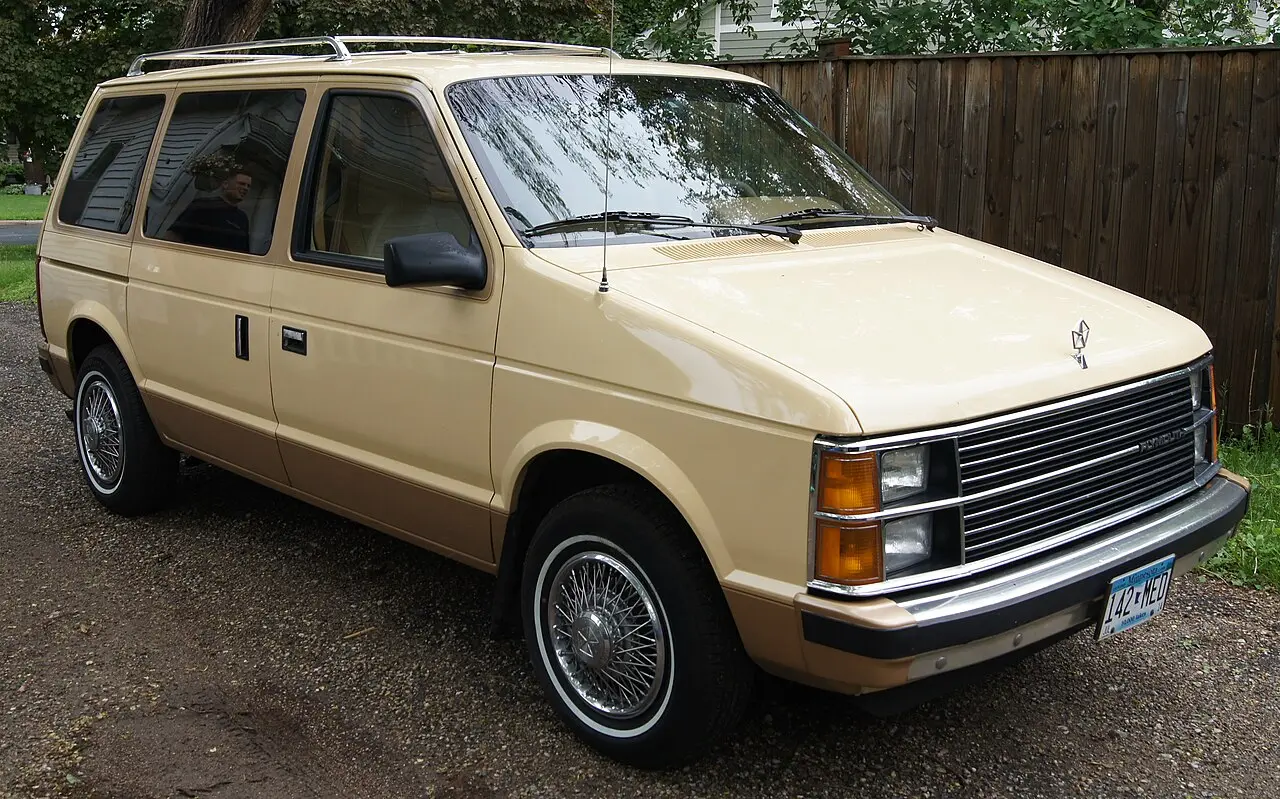
Grand Voyager first generation (1987–1990)

Plymouth Grand Voyager first generation
Photo: Greg Gjerdingen from Willmar, USA / Wikimedia Commons · CC BY 2.0

Model codes: S · Sold in: United States · References: en.wikipedia.org, chrysler.com

Show all 20 versions

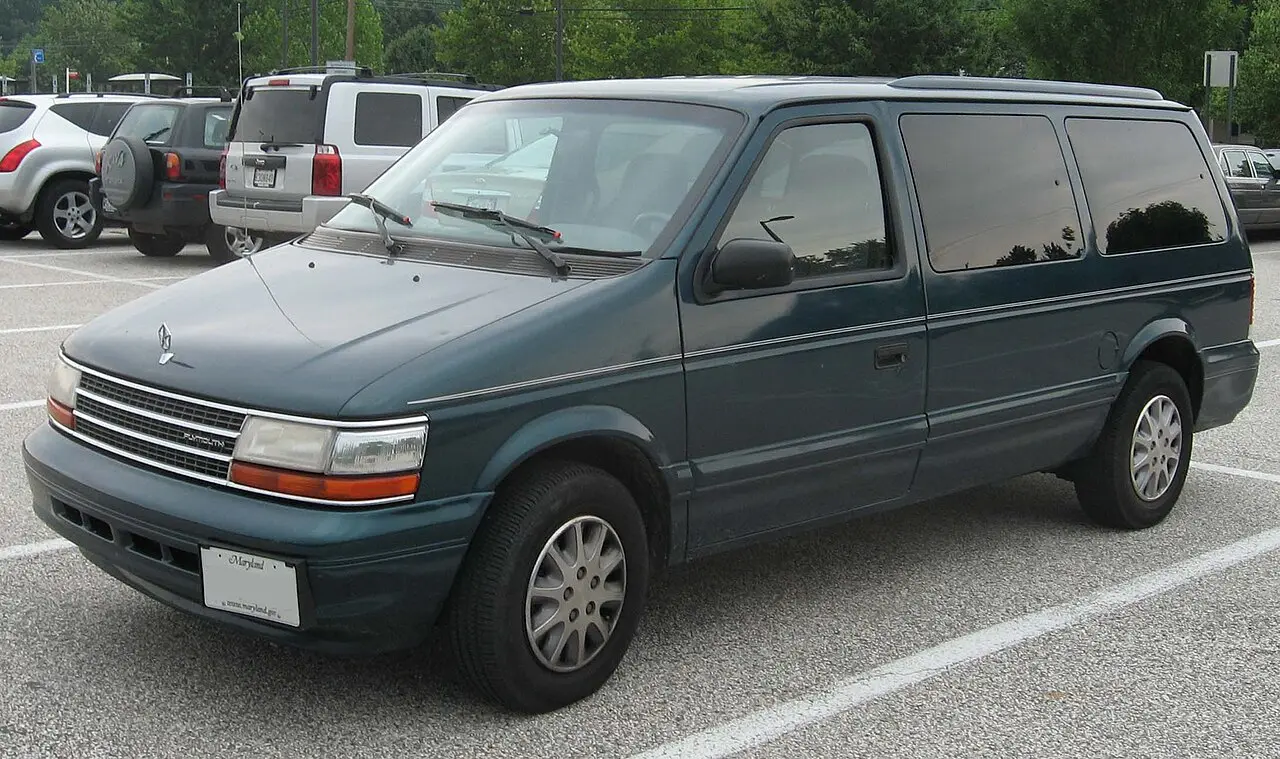
Grand Voyager second generation (1991–1995)

Plymouth Grand Voyager second generation
Photo: IFCAR / Wikimedia Commons · Public domain

Model codes: AS · Sold in: United States and Canada · References: en.wikipedia.org, cars.com

Show all 31 versions

Grand Voyager third generation (1996–2000)

Plymouth Grand Voyager third generation
Photo: TheMercMan / Wikimedia Commons · CC BY-SA 3.0

Model codes: NS · Sold in: United States and Canada · References: en.wikipedia.org, cars.com

United States 13 versions

Model years sold in the USA, from the EPA and the Department of Energy (fueleconomy.gov). MPG on the EPA test; litres per 100 km = 235.215 ÷ MPG.

Years and versionEngineFuelGearboxDriveConsumption (combined)CO₂Electric range
1998–20002.4 LPetrol3-speed automaticFront-wheel drive20 MPG (11.8 L/100 km) EPA276 g/km–
2000CLKUP3.0 LPetrol4-speed automaticFront-wheel drive19 MPG (12.4 L/100 km) EPA291 g/km–
2000CLKUP3.3 LPetrol4-speed automaticFront-wheel drive19 MPG (12.4 L/100 km) EPA291 g/km–
2000FLEX-FUEL, CLKUP3.3 LFlex fuel (E85)4-speed automaticFront-wheel drive19 MPG (12.4 L/100 km) EPA291 g/km–
1998–2000(FFS), CLKUP · CLKUP3.8 LPetrol4-speed automaticFront-wheel drive18 MPG (13.1 L/100 km) EPA307 g/km–
1999Electric motorElectricAutomaticFront-wheel drive35 MPGe EPA0 g/km113 km
1998–1999CLKUP3.0 LPetrol4-speed automaticFront-wheel drive19 MPG (12.4 L/100 km) EPA291 g/km–
1997–1998(FFS)3.0 LPetrol3-speed automaticFront-wheel drive19 MPG (12.4 L/100 km) EPA291 g/km–
1996–1997(FFS), CLKUP2.4 LPetrol4-speed automaticFront-wheel drive19 MPG (12.4 L/100 km) EPA291 g/km–
1997(FFS)2.4 LPetrol3-speed automaticFront-wheel drive20 MPG (11.8 L/100 km) EPA276 g/km–
1996(FFS)2.4 LPetrol3-speed automaticFront-wheel drive20 MPG (11.8 L/100 km) EPA276 g/km–
1996(FFS)3.0 LPetrol3-speed automaticFront-wheel drive19 MPG (12.4 L/100 km) EPA291 g/km–
1996(FFS), CLKUP3.8 LPetrol4-speed automaticFour- or all-wheel drive16 MPG (14.7 L/100 km) EPA345 g/km–

Canada 19 versions

Model years sold in Canada, from Natural Resources Canada fuel consumption ratings (5-cycle test).

Years and versionEngineFuelGearboxConsumption (combined)CO₂
1998–1999Minivan3.0 LPetrol4-speed automatic12.3 L/100 km 5-cycle283 g/km
1999Minivan3.3 LPetrol4-speed automatic13.0 L/100 km 5-cycle299 g/km
1998–1999Minivan3.8 LPetrol4-speed automatic14.0 L/100 km 5-cycle322 g/km
1999Minivan3.8 LPetrol4-speed automatic13.4 L/100 km 5-cycle308 g/km
1998Minivan2.4 LPetrol3-speed automatic11.7 L/100 km 5-cycle269 g/km
1998Minivan3.0 LPetrol3-speed automatic12.7 L/100 km 5-cycle292 g/km
1998Minivan3.3 LPetrol4-speed automatic12.9 L/100 km 5-cycle297 g/km
1998Minivan3.8 LPetrol4-speed automatic13.3 L/100 km 5-cycle306 g/km
1997Minivan2.4 LPetrol3-speed automatic12.1 L/100 km 5-cycle278 g/km
1997Minivan2.4 LPetrol4-speed automatic12.7 L/100 km 5-cycle292 g/km
1997Minivan3.0 LPetrol3-speed automatic12.4 L/100 km 5-cycle285 g/km
1997Minivan3.3 LPetrol4-speed automatic12.9 L/100 km 5-cycle297 g/km
1996–1997Minivan3.8 LPetrol4-speed automatic13.3 L/100 km 5-cycle306 g/km
1997Minivan3.8 LPetrol4-speed automatic14.6 L/100 km 5-cycle336 g/km
1996Minivan2.4 LPetrol3-speed automatic11.6 L/100 km 5-cycle267 g/km
1996Minivan2.4 LPetrol4-speed automatic12.5 L/100 km 5-cycle288 g/km
1996Minivan3.0 LPetrol3-speed automatic12.8 L/100 km 5-cycle294 g/km
1996Minivan3.3 LPetrol4-speed automatic12.8 L/100 km 5-cycle294 g/km
1996Minivan3.8 LPetrol4-speed automatic14.4 L/100 km 5-cycle331 g/km

Official figures are measured on standard test procedures and differ between markets. Your consumption depends on how, where and in what conditions you drive.