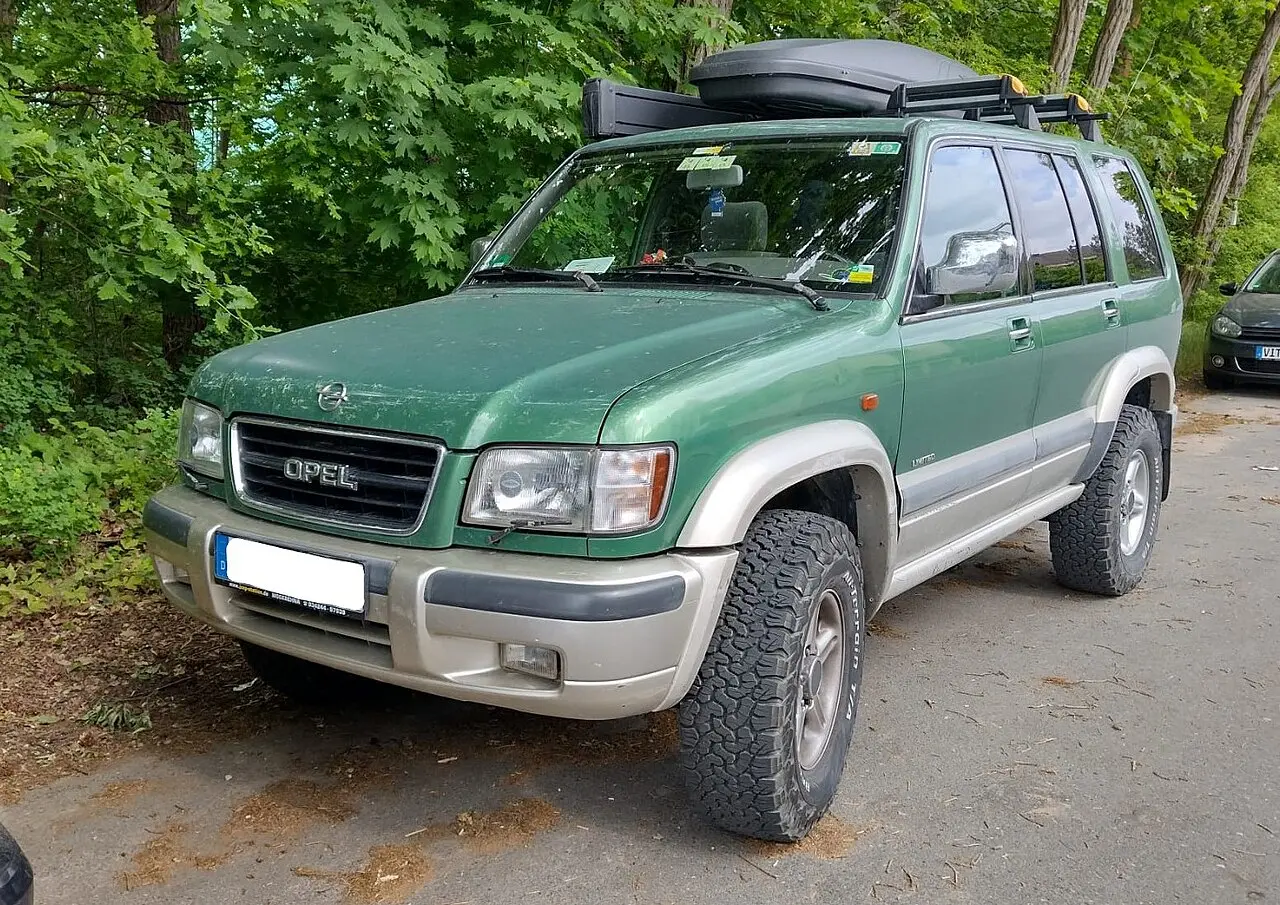
What is the Opel Monterey?
The Monterey was Opel’s large off-road vehicle, sold in Europe during the 1990s. It paired the shape and ability of a traditional four-wheel-drive vehicle with a cabin intended to suit everyday passenger-car use. It sat toward the rugged end of Opel’s range, alongside the smaller Frontera.
The Monterey was developed with Isuzu and based on the Isuzu Trooper. Opel adapted it for European buyers, while Isuzu built the vehicle.
Generations and engines
The Monterey was offered in one generation, from 1992 to 1999. It shared its basic design with the Trooper, so the model’s story is less about successive generations and more about Opel’s European-market version of an established Isuzu off-roader.
Engine and power details vary by version. The figures shown for each Monterey version are the guide to its official output; the model’s off-road role and substantial body set it apart from Opel’s passenger cars.
Fuel consumption and CO₂
Official consumption and CO₂ figures depend on the engine and the market’s test procedure. European figures may use NEDC or WLTP, while the USA uses EPA testing and Canada uses its five-cycle procedure. Those methods are different, so figures from separate markets should not be treated as directly equivalent.
The Monterey’s official figures are listed by version, allowing a closer look at the particular engine and specification rather than relying on a single figure for the whole model.
Where was the Monterey sold?
Opel sold the Monterey in European markets. Its close relationship to the Isuzu Trooper reflects Opel’s cooperation with Isuzu at the time, and the vehicle was tailored for European use.
Questions and answers
What kind of vehicle is the Opel Monterey?
It is a large off-road vehicle developed with Isuzu and based on the Isuzu Trooper.
When was the Opel Monterey sold?
The Monterey’s single generation ran from 1992 to 1999.
How do I compare its official fuel figures across markets?
Check the market and test procedure: Europe uses NEDC or WLTP, the USA uses EPA, and Canada uses a five-cycle test.