Opel

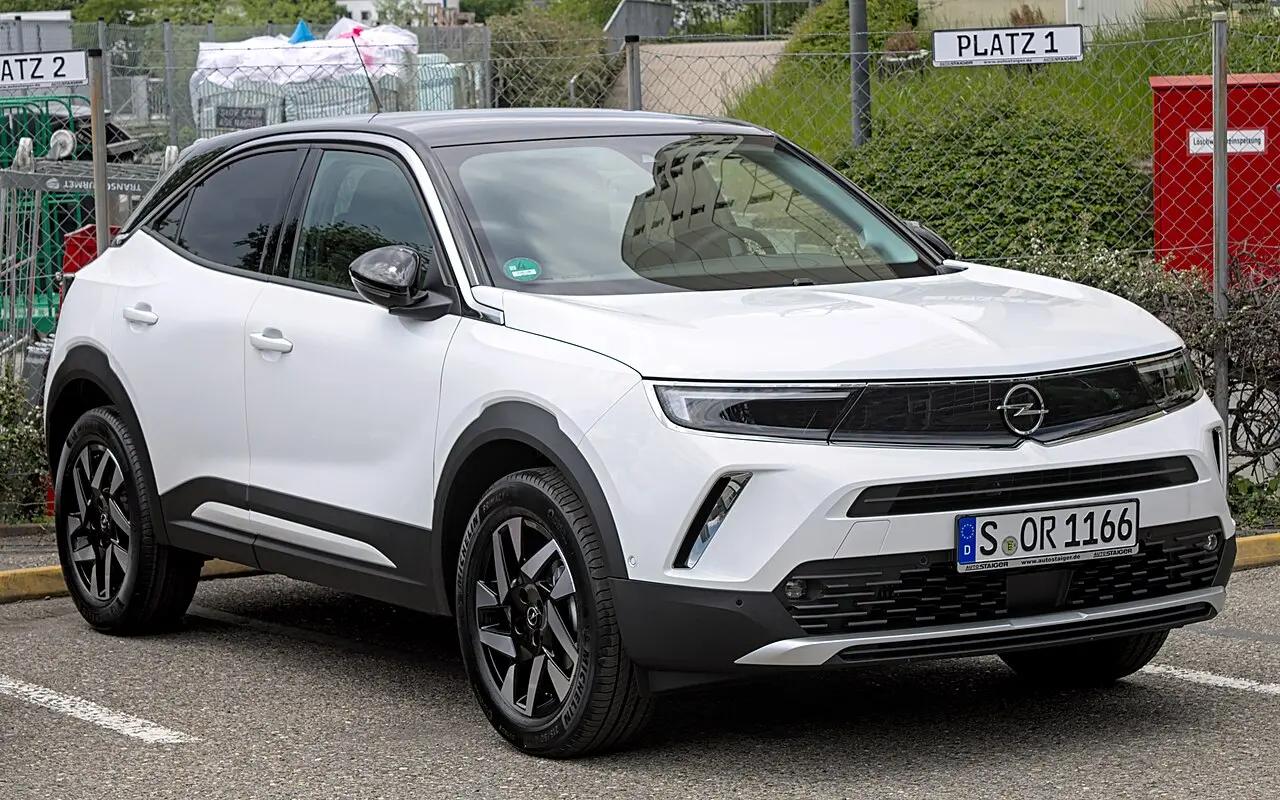
Opel Mokka

Opel Mokka
Photo: Alexander Migl / Wikimedia Commons · CC BY-SA 4.0

The official data lists 150 versions of the Opel Mokka (2012–2026), in the European Union and France. Each market publishes its own figures, measured on its own test procedure.

At a glance

Years in the data
2012–2026
Markets
European Union, France
Engines
1.2 L to 1.7 L
Power
57 kW (77 PS) to 155 kW (211 PS)
Fuels
Electric, Petrol, Diesel, LPG, Hybrid, Plug-in hybrid
Lowest consumption (France)
4.1 L/100 km (NEDC)
Lowest consumption (European Union)
4.5 L/100 km (WLTP)
Plug-in hybrid, weighted (European Union)
4.8 L/100 km (WLTP)
New registrations in the EU
1,665,269

What kind of car is the Opel Mokka?

The Mokka is Opel’s small SUV, combining a raised driving position with a compact footprint. Its shape suits urban driving, while the cabin makes it a crossover option in Opel’s range. The current generation is offered with electric and petrol power.

Mokka generations

The first-generation Mokka A ran from 2012 to 2019. The Mokka B began in 2020. The newer generation brought a more sharply defined design and an electric version, alongside petrol options. Across its market history, the Mokka has also been available with diesel and LPG power.

Engines and power

Across EU registrations from 2012 to 2025, Mokka versions span 1.2-litre to 1.7-litre engines and 57 kW (77 PS) to 168 kW (228 PS). The range includes petrol, diesel, hybrid and electric models, as well as plug-in hybrid and LPG versions. France’s ADEME listings include electric, petrol, diesel and LPG versions, with outputs from 57 kW (77 PS) to 103 kW (140 PS).

How economical is the Opel Mokka?

The lowest listed EU consumption is 4.5 L/100 km under WLTP for petrol, diesel or hybrid versions. The separate plug-in hybrid weighted figure is 4.8 L/100 km under WLTP and assumes that part of the driving is electric. France’s ADEME listings show a low of 4.1 L/100 km under NEDC. WLTP and NEDC are different European test procedures, so these figures are not directly comparable. EU registrations totalled 1,665,269 from 2012 to 2025.

Questions and answers

When did the two Mokka generations run?

The Mokka A ran from 2012 to 2019, and the Mokka B began in 2020.

What is the Mokka’s EU power range?

Recorded versions range from 57 kW (77 PS) to 168 kW (228 PS), with engine sizes from 1.2 to 1.7 litres.

What is the lowest listed Mokka consumption?

The EU WLTP low is 4.5 L/100 km for petrol, diesel or hybrid versions; the weighted plug-in hybrid figure is 4.8 L/100 km.
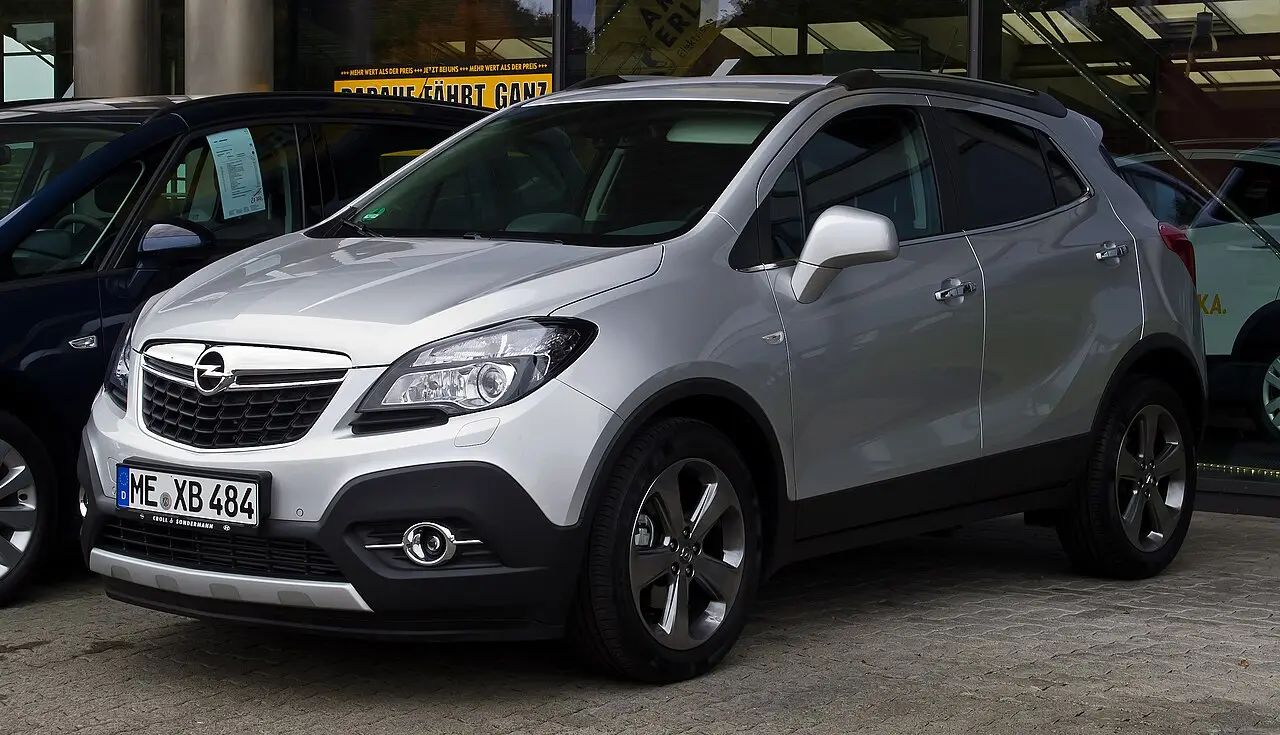
Mokka A (2012–2019)

Opel Mokka A
Photo: M 93 / Wikimedia Commons · CC BY-SA 3.0 de

Model codes: J13 · References: en.wikipedia.org

Show all 102 versions

Mokka B (since 2020)

Opel Mokka B
Photo: Alexander Migl / Wikimedia Commons · CC BY-SA 4.0

References: adac.de

European Union 44 versions

New cars registered in the EU (plus Norway and Iceland), from the European Environment Agency. Figures on the NEDC procedure until 2020 and on WLTP from 2021; versions are grouped by engine and power, with their number of registrations.

Years and versionEnginePowerFuelConsumption (combined)CO₂Electric rangeEU registrations
20251.2 L96 kW (131 PS)Petrol6.1 L/100 km WLTP139 g/km–19,002
20251.2 L100 kW (136 PS)Petrol5.7 L/100 km WLTP128 g/km–14,726
20251.2 L100 kW (136 PS)Hybrid4.8 L/100 km WLTP109 g/km–12,470
2023–20251.5 L81 kW (110 PS)Diesel4.5 L/100 km WLTP118 g/km–6,997
2025Electric motor115 kW (156 PS)Electric15.9 kWh/100 km WLTP0 g/km397 km4,039
20251.2 L74 kW (101 PS)Petrol5.7 L/100 km WLTP128 g/km–2,038
2025Electric motor100 kW (136 PS)Electric16.6 kWh/100 km WLTP0 g/km330 km940
2024–2025Electric motor57 kW (77 PS)Electric16.0 kWh/100 km WLTP0 g/km334 km718
2025Electric motor62 kW (84 PS)Electric15.4 kWh/100 km WLTP0 g/km403 km503
20251.2 L100 kW (136 PS)Plug-in hybrid4.8 L/100 km WLTP108 g/km–137
2025Electric motor207 kW (281 PS)Electric18.5 kWh/100 km WLTP0 g/km324 km55
20241.2 L96 kW (131 PS)Petrol6.0 L/100 km WLTP135 g/km–18,935
20241.2 L74 kW (101 PS)Petrol5.6 L/100 km WLTP126 g/km–15,756
20241.2 L100 kW (136 PS)Petrol5.6 L/100 km WLTP126 g/km–9,603
2024Electric motor100 kW (136 PS)Electric15.9 kWh/100 km WLTP0 g/km338 km5,783
20241.2 L100 kW (136 PS)Hybrid4.8 L/100 km WLTP109 g/km–2,564
2024Electric motor115 kW (156 PS)Electric15.2 kWh/100 km WLTP0 g/km406 km812
2024Electric motor62 kW (84 PS)Electric15.3 kWh/100 km WLTP0 g/km405 km36
2022–20231.2 L74 kW (101 PS)Petrol5.5 L/100 km WLTP125 g/km–29,569
20231.2 L96 kW (131 PS)Petrol5.9 L/100 km WLTP132 g/km–23,575
2023Electric motor100 kW (136 PS)Electric16.0 kWh/100 km WLTP0 g/km334 km19,841
2022–20231.2 L100 kW (136 PS)Petrol5.5 L/100 km WLTP124 g/km–9,189
2022–2023Electric motor57 kW (77 PS)Electric16.1 kWh/100 km WLTP0 g/km333 km5,906
2023Electric motor115 kW (156 PS)Electric15.3 kWh/100 km WLTP0 g/km405 km69
20231.2 L67 kW (91 PS)Petrol5.8 L/100 km WLTP130 g/km–51
20231.2 L110 kW (150 PS)Petrol5.8 L/100 km WLTP130 g/km–19
20231.2 L81 kW (110 PS)Petrol5.8 L/100 km WLTP130 g/km–12
20221.2 L96 kW (131 PS)Petrol5.7 L/100 km WLTP131 g/km–31,032
2022Electric motor100 kW (136 PS)Electric16.3 kWh/100 km WLTP0 g/km323 km16,151
20221.5 L81 kW (110 PS)Diesel4.5 L/100 km WLTP117 g/km–7,380
20211.2 L96 kW (131 PS)Petrol5.8 L/100 km WLTP132 g/km–62,986
20211.2 L74 kW (101 PS)Petrol5.4 L/100 km WLTP126 g/km–21,287
2021Electric motor57 kW (77 PS)Electric16.9 kWh/100 km WLTP0 g/km325 km18,126
20211.5 L81 kW (110 PS)Diesel4.5 L/100 km WLTP118 g/km–8,867
2021Electric motor100 kW (136 PS)Electric17.1 kWh/100 km WLTP0 g/km324 km6,325
2021–100 kW (136 PS)Other fuel17.6 kWh/100 km WLTP124 g/km320 km234
20211.2 L–Diesel4.9 L/100 km WLTP129 g/km–60
2021––Petrol5.5 L/100 km WLTP124 g/km–45
2021––Diesel4.7 L/100 km WLTP123 g/km–17
20201.2 L96 kW (131 PS)Petrol–133 g/km–168
2020Electric motor57 kW (77 PS)Electric17.7 kWh/100 km NEDC0 g/km318 km130
20201.5 L81 kW (110 PS)Diesel–114 g/km–48
20201.2 L74 kW (101 PS)Petrol–127 g/km–40
20201.4 L103 kW (140 PS)Petrol–152 g/km–10

France 4 versions

New cars on sale in France, from ADEME Car Labelling. NEDC figures until 2015, WLTP figures in the current catalogue.

Years and versionEnginePowerFuelGearboxConsumption (combined)CO₂Electric range
2026MOKKA-E (57Kw)Electric motor57 kW (77 PS)ElectricContinuously variable (CVT)14.3 kWh/100 km WLTP–374 km
2026MOKKA-E (57Kw)Electric motor57 kW (77 PS)ElectricContinuously variable (CVT)14.5 kWh/100 km WLTP–363 km
2026MOKKA (130ch)1.2 L96 kW (131 PS)Petrol6-speed manual5.4 L/100 km WLTP121 g/km–
2026MOKKA (136ch)1.2 L100 kW (136 PS)Petrol6-speed manual5.3 L/100 km WLTP119 g/km–

Official figures are measured on standard test procedures and differ between markets. Your consumption depends on how, where and in what conditions you drive.