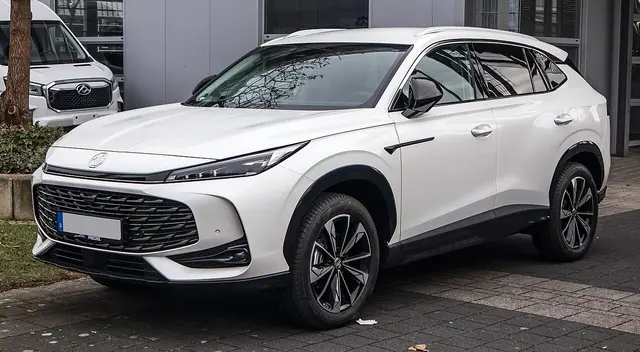
The official data lists 10 versions of the Omoda 5 (2023 - 2026), in the European Union and the United Kingdom. Each market publishes its own figures, measured on its own test procedure.
At a glance
Years in the data
2023 - 2026
Markets
European Union, United Kingdom
Engines
1.5 L to 1.6 L
Power
105 kW (143 PS) to 165 kW (224 PS)
Fuels
Petrol, Hybrid, Electric
Lowest consumption (European Union)
5.3 L/100 km (WLTP)
Lowest consumption (United Kingdom)
5.3 L/100 km (WLTP)
New registrations in the EU
30,463
What is the Omoda 5?
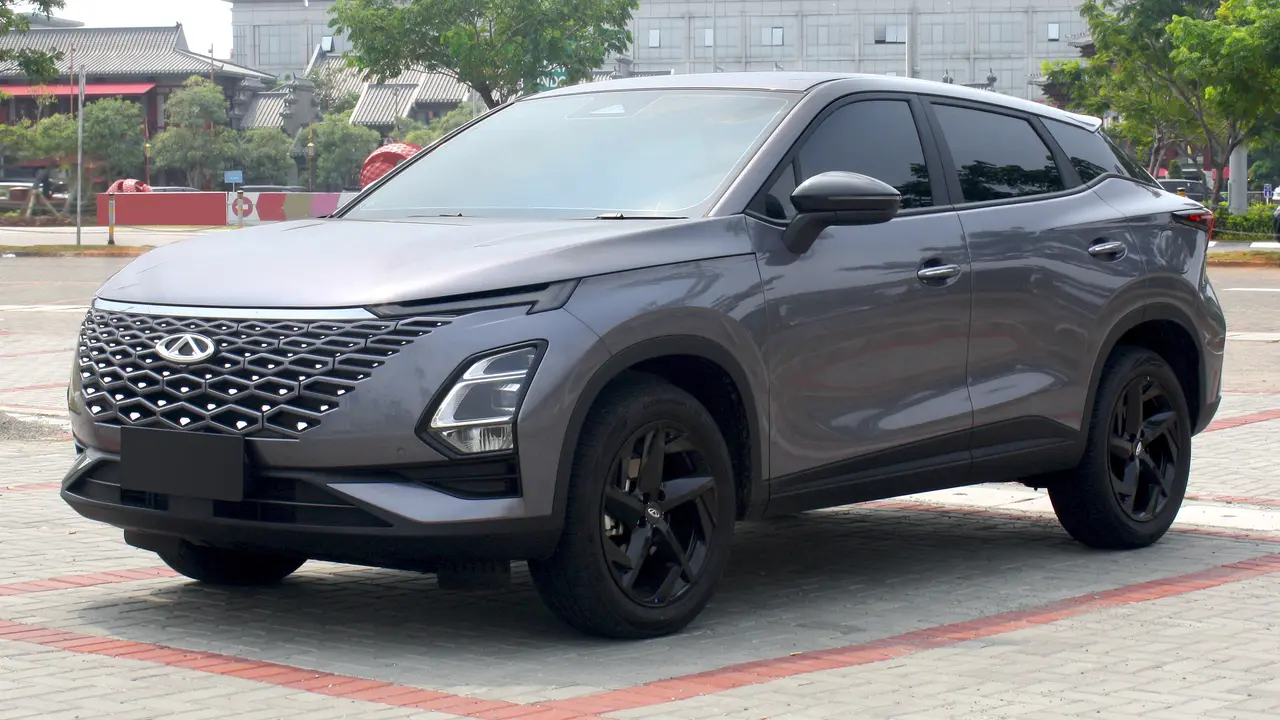
The Omoda 5 is a compact crossover SUV from Chery’s Omoda brand. It was the first global vehicle developed under the Omoda name, and introduced Chery’s “Art in Motion” design language. The first generation began in 2023 and continues today. Petrol, hybrid and electric versions appear in the range, depending on market and year.
Engines and power
In the EU, the Omoda 5 range spans 1.5- and 1.6-litre engines, with power from 105 kW (143 PS) to 150 kW (204 PS). The UK range listed for 2026 has 1.5- and 1.6-litre engines, with power from 108 kW (147 PS) to 165 kW (224 PS). The electric version is sold as the Omoda E5.
How economical is the Omoda 5?
The lowest listed official fuel consumption is 5.3 L/100 km on the WLTP test for a hybrid version. It does not apply to the electric Omoda E5.
Where was the Omoda 5 sold?
The Omoda 5 recorded 30,463 registrations in the EU from 2023 to 2025. Its most registered configuration from 2024 to 2025 was the 1.6-litre petrol version rated at 108 kW (147 PS), with 22,905 registrations.
Questions and answers
What kind of car is the Omoda 5?
It is a compact crossover SUV, offered with petrol, hybrid and electric power depending on market and year.
What is the Omoda 5’s lowest listed fuel consumption?
The lowest listed figure is 5.3 L/100 km on the WLTP test for a hybrid version.
How powerful is the Omoda 5?
The EU range is listed from 105 kW (143 PS) to 150 kW (204 PS); the UK 2026 range is listed from 108 kW (147 PS) to 165 kW (224 PS).
New cars registered in the EU (plus Norway and Iceland), from the European Environment Agency. Figures on the NEDC procedure until 2020 and on WLTP from 2021; versions are grouped by engine and power, with their number of registrations.
Years and version
Engine
Power
Fuel
Consumption (combined)
CO₂
Electric range
EU registrations
2024 - 2025
1.6 L
108 kW (147 PS)
Petrol
7.0 - 7.1 L/100 km WLTP
159 - 163 g/km
-
22,905
2025
1.5 L
105 kW (143 PS)
Hybrid
5.3 L/100 km WLTP
120 g/km
-
1,942
2025
Electric motor
150 kW (204 PS)
Electric
40.2 kWh/100 km WLTP
0 g/km
169 km
117
2024
1.6 L
136 kW (185 PS)
Petrol
7.5 L/100 km WLTP
170 g/km
-
4,973
2024
1.6 L
137 kW (186 PS)
Petrol
7.3 L/100 km WLTP
134 g/km
-
323
2024
1.6 L
136 kW (185 PS)
Petrol
-
102 g/km
-
22
2024
1.5 L
137 kW (186 PS)
Petrol
-
102 g/km
-
10
2023
1.6 L
136 kW (185 PS)
Petrol
-
170 g/km
-
171
United Kingdom 2 versions
New cars on sale in the UK, from the Vehicle Certification Agency. NEDC figures until 2018 and WLTP figures after; years are the editions a version appeared in.
Years and version
Engine
Power
Fuel
Gearbox
Consumption (combined)
CO₂
2026Knight 1.5T HEV · Noble 1.5T HEV
1.5 L
165 kW (224 PS)
Hybrid
Automatic
5.3 L/100 km WLTP
120 g/km
2026Knight 1.6T Petrol · Noble 1.6T Petrol
1.6 L
108 kW (147 PS)
Petrol
7-speed automatic
7.4 L/100 km WLTP
168 g/km
Omoda 5 recalls
1 official safety recall for the Omoda 5, from NHTSA (United States), DVSA (United Kingdom) or the EU Safety Gate. Recall repairs are normally free at the maker’s dealers.
Driveshaft nut may be improperly locked2023 - 2026
Official figures are measured on standard test procedures and differ between markets. Your consumption depends on how, where and in what conditions you drive.