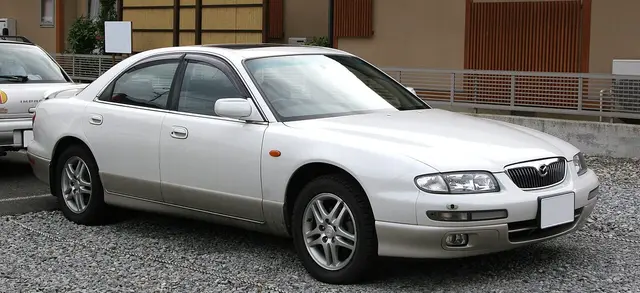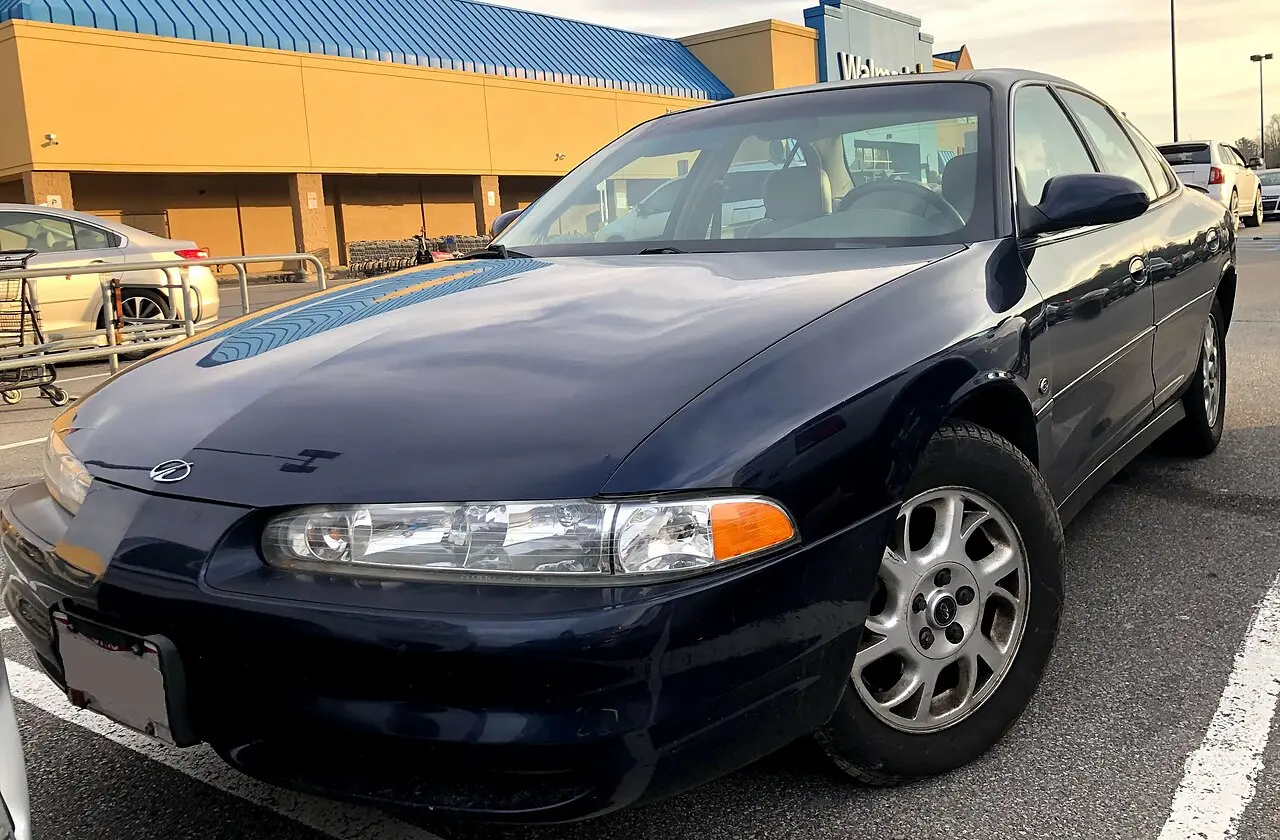
Oldsmobile Intrigue

Oldsmobile Intrigue
Photo: IFCAR / Wikimedia Commons · Public domain

The official data lists 4 versions of the Oldsmobile Intrigue (1998 - 2002), in the United States and Canada. Each market publishes its own figures, measured on its own test procedure.

At a glance

Years in the data
1998 - 2002
Markets
United States, Canada
Engines
3.5 L to 3.8 L
Fuels
Petrol
Lowest consumption (United States)
11.2 L/100 km (EPA)
Lowest consumption (Canada)
11.3 L/100 km (5-cycle)

What is the Oldsmobile Intrigue?

The Intrigue was a mid-size, four-door sedan sold for the 1998-2002 model years. It replaced the Cutlass Supreme in Oldsmobile’s range and sat below the larger Aurora. Inspired by the Aurora, its smooth styling gave the brand’s traditional family sedan a more contemporary look.

Oldsmobile was an American marque within General Motors. The Intrigue was part of the company’s effort to give the brand a fresh identity, with a distinct front end and flowing lines.

Generations and engines

The Intrigue had one generation, sold from 1998 to 2002. It used GM’s W-body platform, with the model code GMX170, and was offered only as a sedan.

Petrol V6 engines ranged from 3.5 L to 3.8 L. The larger V6 was available from the start, and a 3.5 L V6 joined the range.

How economical is the Oldsmobile Intrigue?

In the United States, EPA figures cover model years 1998-2002 and 2 versions. The best combined rating is 21 MPG, while the lowest listed consumption is 11.2 L/100 km. In Canada, NRCan figures cover the same model years and 2 versions, with lowest listed consumption of 11.3 L/100 km on the 5-cycle test.

These results are specific to each market’s test procedure. EPA testing differs from Canada’s 5-cycle method and from Europe’s WLTP and NEDC procedures, so the figures are not direct equivalents.

Where was the Intrigue sold?

The Intrigue was sold in the United States and Canada. In both markets, the listed model years are 1998-2002, with petrol engines from 3.5 L to 3.8 L.

Questions and answers

What body style was the Oldsmobile Intrigue?

It was a four-door, mid-size sedan sold for the 1998-2002 model years.

What engines did the Intrigue use?

Its petrol V6 engine range ran from 3.5 L to 3.8 L.

What is the Intrigue’s best combined EPA fuel economy?

The best combined EPA rating is 21 MPG.

Was the Intrigue sold in Canada?

Yes. NRCan figures cover model years 1998-2002.
Intrigue first generation (1998 - 2002)

Oldsmobile Intrigue first generation
Photo: IFCAR / Wikimedia Commons · Public domain

Model codes: W-body, GMX170 · References: en.wikipedia.org

At a glance: Length 4,976 mm · Kerb weight 1,567 - 1,624 kg Specifications, reliability and all versions

United States 2 versions

Model years sold in the USA, from the EPA and the Department of Energy (fueleconomy.gov). MPG on the EPA test; litres per 100 km = 235.215 ÷ MPG.

Years and versionEngineFuelGearboxDriveConsumption (combined)CO₂
1999 - 2002CLKUP3.5 LPetrol4-speed automaticFront-wheel drive19 - 21 MPG (11.2 - 12.4 L/100 km) EPA263 - 291 g/km
1998 - 1999CLKUP3.8 LPetrol4-speed automaticFront-wheel drive21 MPG (11.2 L/100 km) EPA263 g/km

Canada 2 versions

Model years sold in Canada, from Natural Resources Canada fuel consumption ratings (5-cycle test).

Years and versionEngineFuelGearboxConsumption (combined)CO₂
1999 - 2002Mid-size3.5 LPetrol4-speed automatic11.3 - 12.3 L/100 km 5-cycle260 - 283 g/km
1998 - 1999Mid-size3.8 LPetrol4-speed automatic11.7 L/100 km 5-cycle269 g/km

Oldsmobile Intrigue recalls

11 official safety recalls for the Oldsmobile Intrigue from NHTSA (United States), DVSA (United Kingdom) and the EU Safety Gate, newest first. Recall repairs are normally free at the maker’s dealers.

  • Engine oil may drip onto the hot exhaust manifold1998 - 1999
  • Ignition switch may move out of run position1998 - 2002
  • Engine oil may ignite on exhaust manifold1998 - 1999
  • Power steering pinion bearing retainer may fail1998
  • Airbag warning label does not meet requirements2000 - 2001

See all 11 recalls

Official figures are measured on standard test procedures and differ between markets. Your consumption depends on how, where and in what conditions you drive.