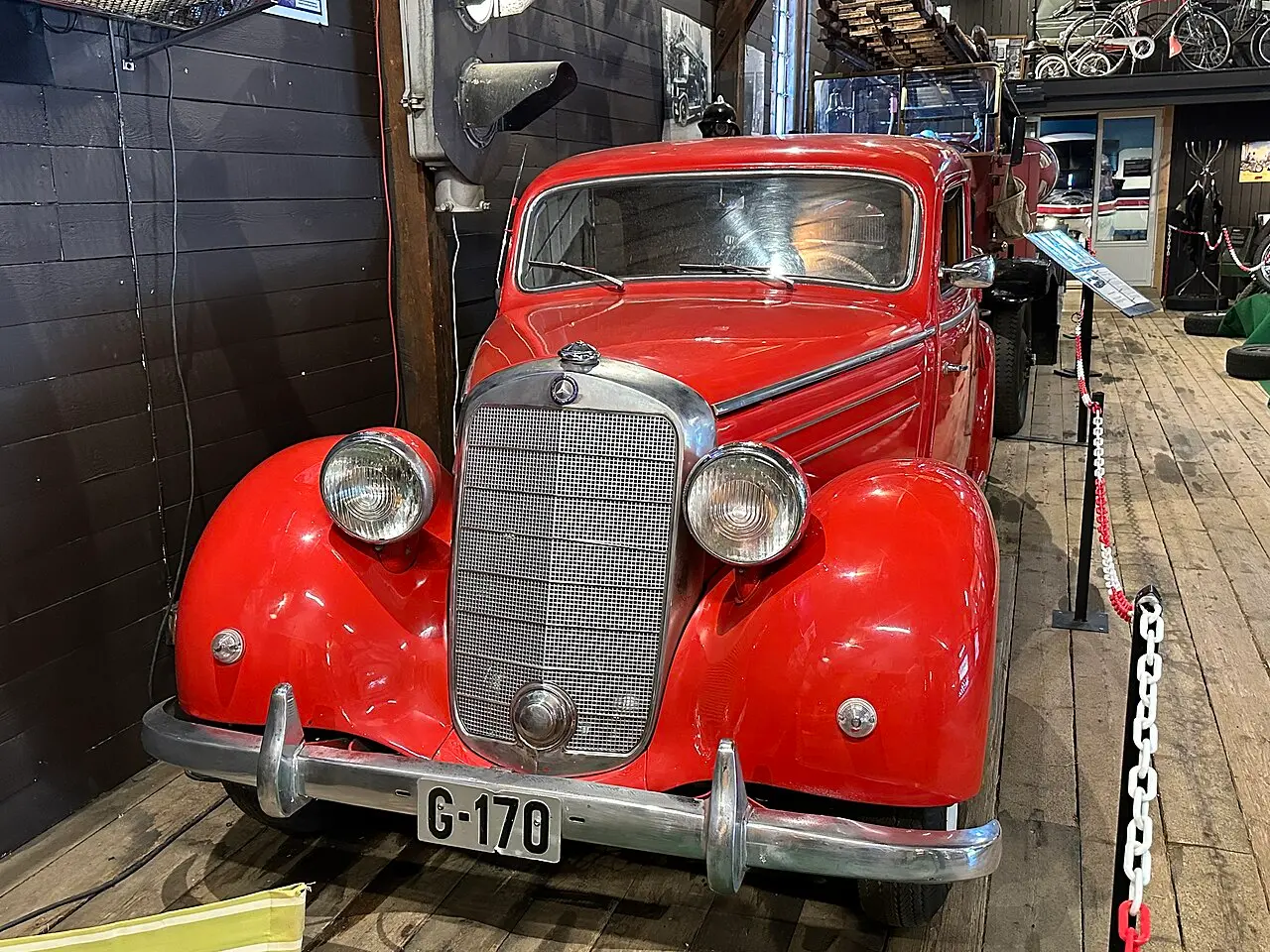
What is the Mercedes-Benz 170?
The Mercedes-Benz 170 was a family of passenger cars offered in several body styles, including saloons and open-top models. Its range also extended to practical commercial vehicles based on the 170 V, giving the name a role in both private motoring and everyday work.
The 170 V became a central model in Mercedes-Benz’s passenger-car range. After the Second World War, it helped the company resume passenger-car production. The more spacious 170 S added a more comfortable character, while the range also included diesel versions.
Engines and body styles
The 170 name covered more than one design. The 170 V was a distinct successor to the earlier 170, and Mercedes-Benz brought the 170 V back after the Second World War. The range later included the roomier 170 S, as well as diesel models.
Engine and body style depended on the version. The 170 V and 170 S-V used petrol engines; the 170 D and 170 S-D were diesel models. The 170 V was available in passenger-car forms and also served as the basis for working vehicles such as vans and ambulances.
Fuel consumption, CO₂ and markets
The 170 predates the modern official fuel-consumption and CO₂ testing systems, so current test procedures do not describe these historic cars. Figures from European WLTP or NEDC tests, the US EPA procedure and Canada’s five-cycle test are not directly interchangeable because the methods differ.
The 170 V’s range of uses reflected its place in Mercedes-Benz’s post-war production. Alongside passenger cars, the model formed the basis for commercial vehicles, including vans and ambulances. The 170 name therefore refers to a varied family rather than one body style or specification.
Questions and answers
Was the Mercedes-Benz 170 one specific car?
No. The name covers the earlier 170 and later models including the 170 V, 170 D and 170 S versions.
Did the 170 come with a diesel engine?
Yes. The 170 D and 170 S-D were diesel versions; the 170 V and 170 S-V used petrol engines.
Were all Mercedes-Benz 170s saloons?
No. The range included open-top body styles, and the 170 V also served as the basis for commercial vehicles.
How were fuel consumption and CO₂ measured for the 170?
The 170 predates modern official testing systems. WLTP and NEDC procedures in Europe, the US EPA procedure and Canada’s five-cycle test use different methods and do not describe these historic cars.