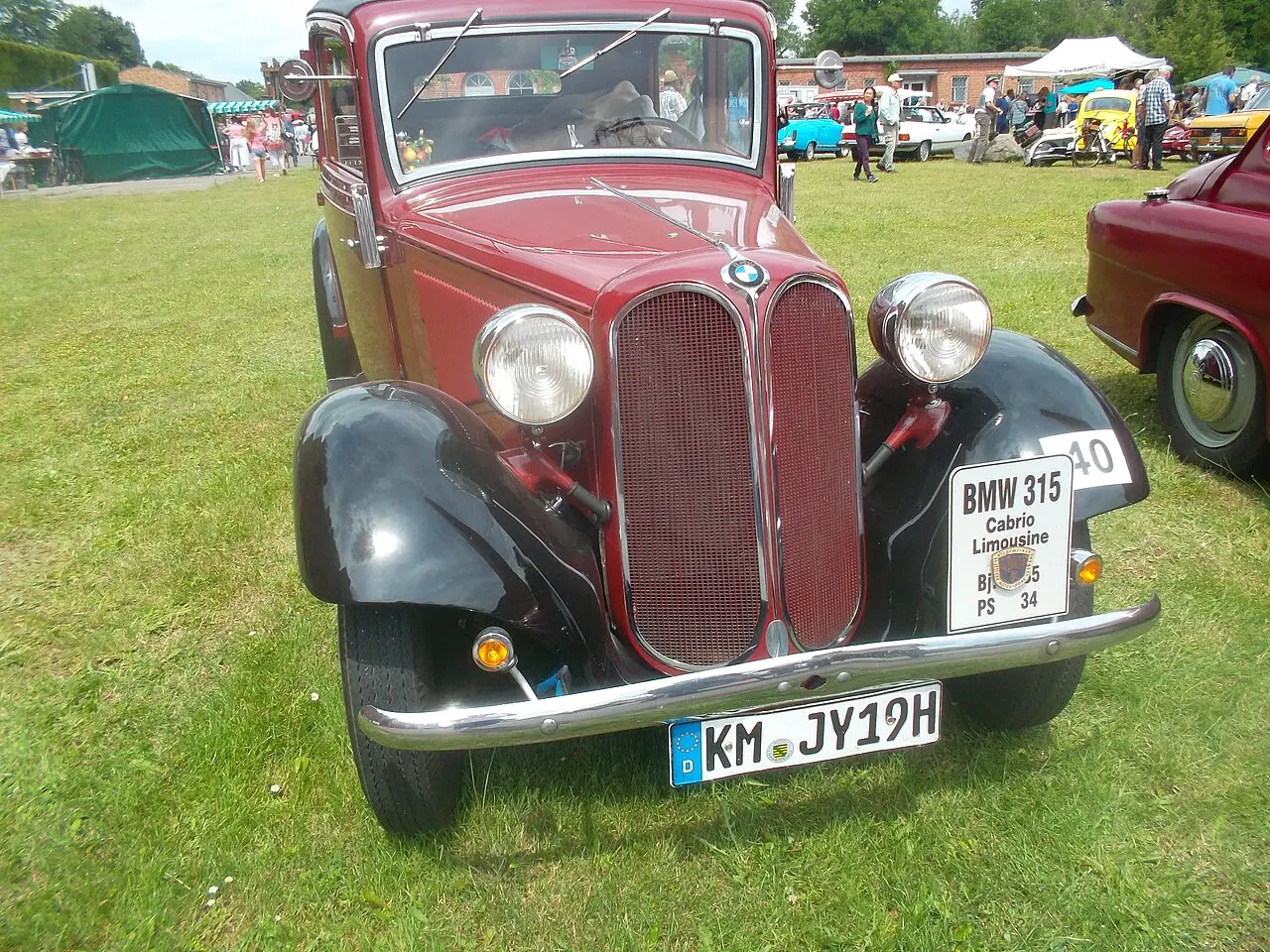
What is the BMW 315?
The BMW 315 was a small saloon from the marque’s early car-making years. As the successor to the BMW 303, it carried forward that model’s chassis and body while refining its engine. Its upright shape and separate bonnet gave it the formal look of a pre-war family car.
BMW also made the 315/1, a separate open sports car with a sporting focus. The saloon brought the 315 name and its six-cylinder engine to a more practical, enclosed body.
Engine and character
The saloon used a straight-six engine developed from the BMW 303’s unit. That engine layout became a familiar part of BMW’s identity, and the 315 offered six-cylinder character in a conventional saloon.
The 315/1 roadster had a different body and purpose. BMW described its light construction and handling as suited to motorsport; the saloon was the more everyday-shaped car.
Fuel consumption and CO₂
The BMW 315 predates modern official fuel economy and CO₂ testing. It has no comparable WLTP or NEDC rating for Europe, EPA rating for the USA, or Canadian five-cycle result. Period consumption figures used different methods and conditions.
Where was it sold?
The 315 was part of BMW’s early passenger-car range in Germany. The name is also used for the related 315/1 roadster, so historical references to the 315 can describe more than one body style.
Questions and answers
Was the BMW 315 a saloon or a roadster?
The BMW 315 was a saloon. The related 315/1 was a separate roadster.
What kind of engine did the BMW 315 have?
The saloon used a straight-six engine developed from the BMW 303’s unit.
Does the BMW 315 have an official modern fuel economy rating?
No. It predates WLTP and NEDC testing in Europe, EPA testing in the USA, and Canada’s five-cycle procedure.