

Isuzu D-Max second generation
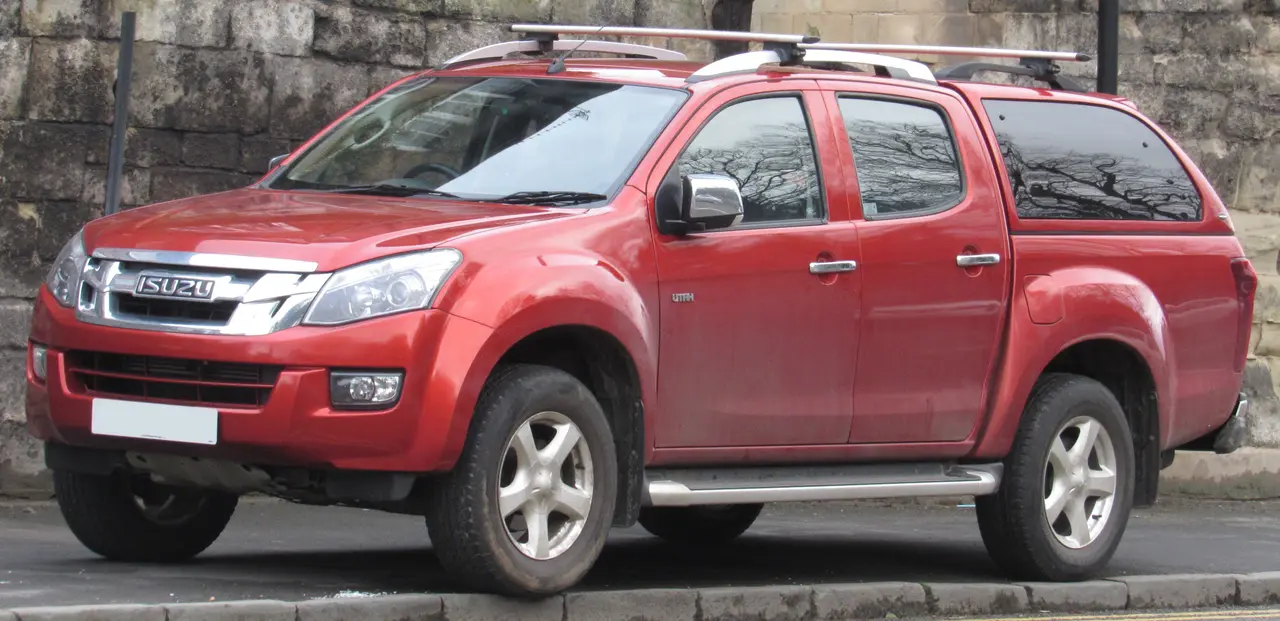
The Isuzu D-Max second generation (2012–2020): dimensions, weights, reliability and the official figures of its 1 version in the European Union.
Model codes: RT · Sold in: European Union
Dimensions, weights and capacity
| Specification | Europe | Wikipedia |
|---|---|---|
| Dimensions | ||
| Length | 5,295 mm Traficom | 5,215–5,295 mm |
| Width | 1,860 mm Traficom | 1,775–1,860 mm |
| Height | 1,780 mm Traficom | 1,690–1,785 mm |
| Wheelbase | – | 3,095 mm |
| Weights and towing | ||
| Kerb weight | – | 1,870 kg |
| Mass in running order | 1,950–2,046 kg Traficom | – |
| Gross vehicle weight | 3,000 kg Traficom | – |
| Towing, braked trailer | 3,000 kg Traficom | – |
| Towing, unbraked trailer | 750 kg Traficom | – |
| Seats and space | ||
| Seats | 2 Traficom | – |
| Doors | 4 Traficom | – |
| Fuel tank | – | 76 L |
| Performance | ||
| Top speed | 170–180 km/h Traficom | 180 km/h |
| Torque | – | 360 Nm |
Tyre sizes (most common first): 255/65R17, 245/70R16
Ranges cover the generation’s versions and body styles; European and North American versions can differ. Sources: Traficom type approvals (Finland), Wikipedia (en, de). Wikipedia figures are used under CC BY-SA 4.0.
The Isuzu D-Max second generation’s 1 version
European Union 1 version
New cars registered in the EU (plus Norway and Iceland), from the European Environment Agency. Figures on the NEDC procedure until 2020 and on WLTP from 2021; versions are grouped by engine and power, with their number of registrations.
| Years and version | Engine | Power | Fuel | CO₂ | EU registrations |
|---|---|---|---|---|---|
| 2013–2016 | 2.5 L | 120 kW (163 PS) | Diesel | 199–210 g/km | 270 |
Similar models from other brands



Official figures are measured on standard test procedures and differ between markets. Your consumption depends on how, where and in what conditions you drive.