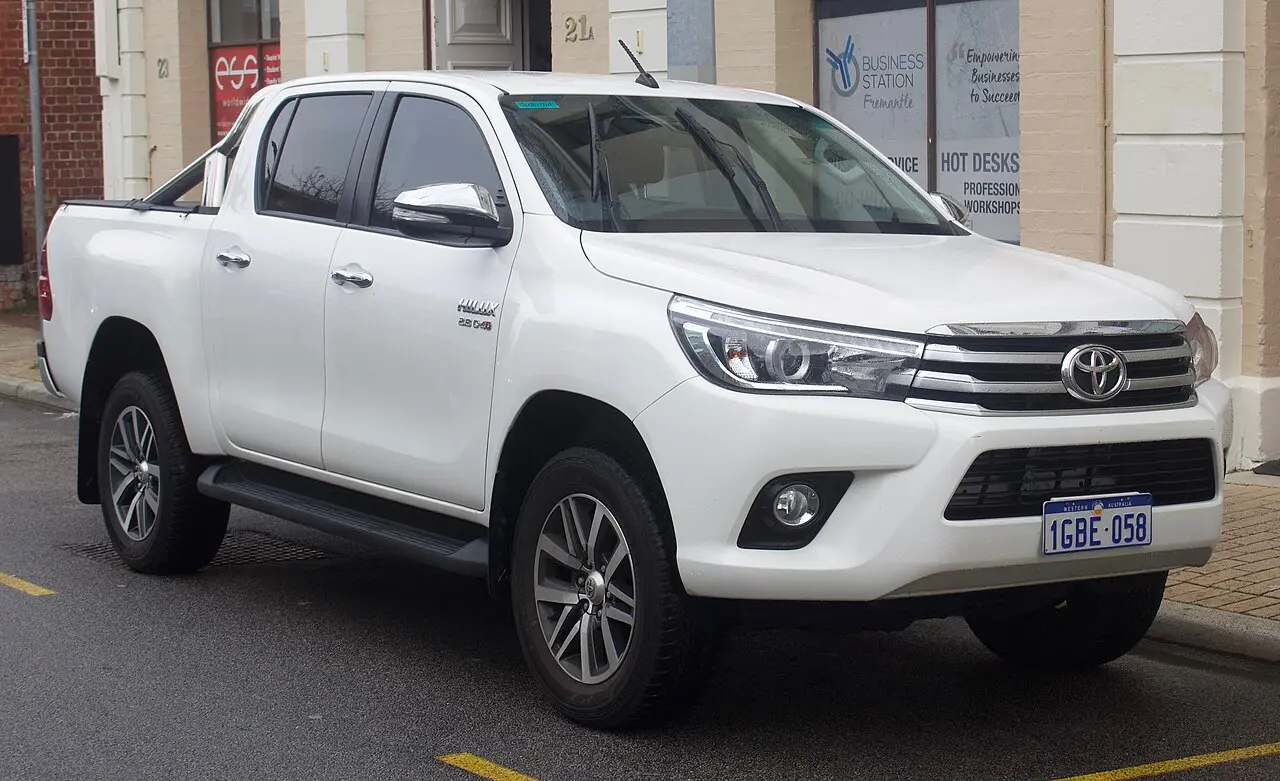
What is the Toyota Hilux?
The Hilux is Toyota’s pickup, with an open load bed and cab layouts for carrying passengers as well as equipment. It serves drivers who need a vehicle for work and hauling, and is part of Toyota’s global lineup. In Europe, diesel versions appear in official registration figures from 2010 to 2020.
Toyota has developed the Hilux for drivers around the world. Its pickup layout gives it a practical role, while different cab styles let owners choose how to balance passenger room and load space.
Hilux generations
The seventh generation (AN10, AN20 and AN30) ran from 2010 to 2015 in Europe. Toyota’s UK archive notes its revised 2.5-litre D-4D diesel and new front suspension.
The eighth generation (AN120 and AN130) began in 2016. Toyota introduced a stronger ladder-frame chassis and a new 2.4-litre D-4D diesel, with changes aimed at improving the Hilux’s structure and off-road capability.
Engines and registrations
European Union registration figures list diesel Hilux versions from 2010 through 2020. The 2.4-litre diesel accounted for 48 registrations in 2020; 2.5-litre versions accounted for 20 in 2016 and 20 in 2010. The total is 140 registrations across seven versions.
Where was the Hilux sold?
Toyota sells the Hilux in markets around the world. In the European Economic Area, official registration figures list diesel versions from 2010 to 2020.
Questions and answers
What type of vehicle is the Toyota Hilux?
It is a pickup with an open load bed and cab layouts for different passenger and work needs.
Which Hilux generations appear in European registration figures?
The seventh generation (2010–2015) and eighth generation (from 2016) appear in the European figures.
What fuel did the European Hilux versions use?
The listed versions use diesel.