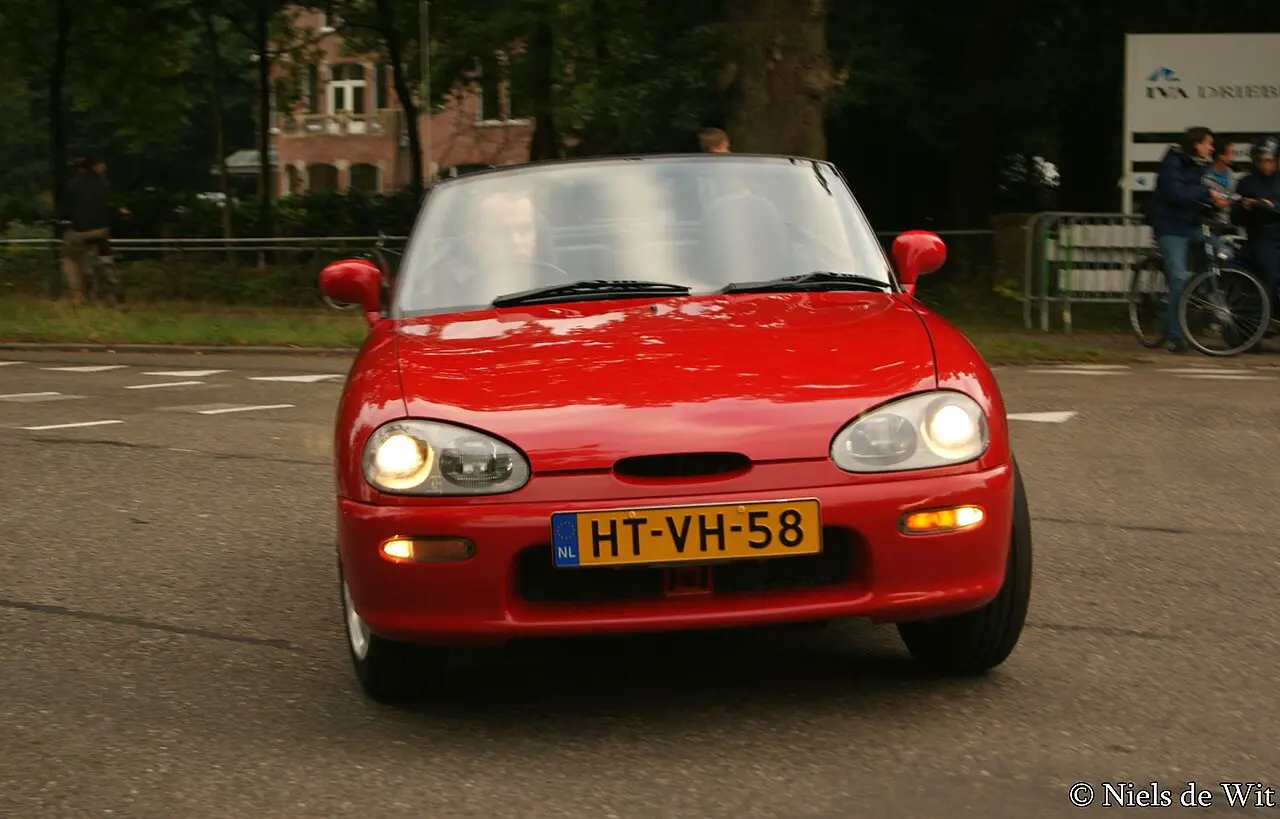
What is the Suzuki Cappuccino?
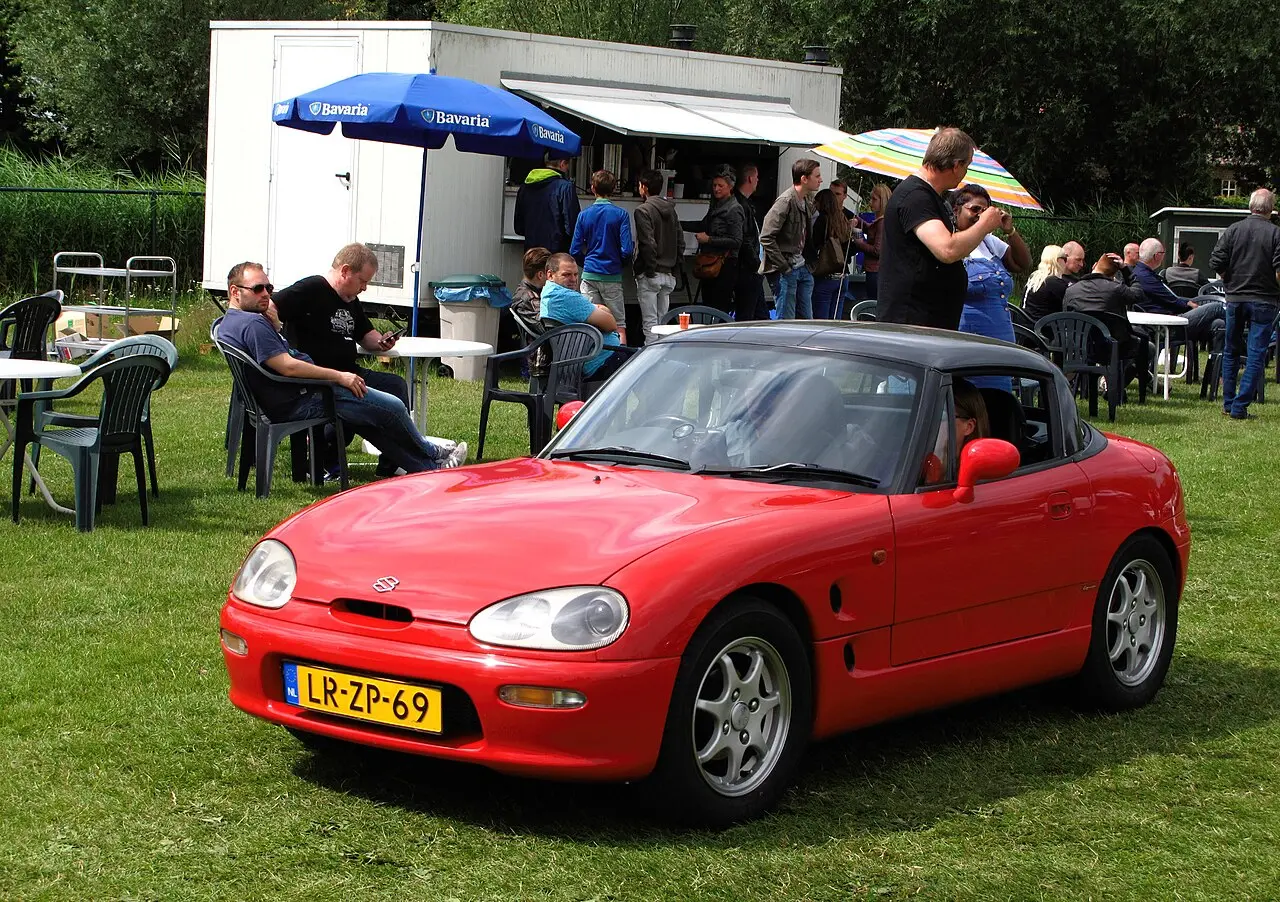
The Suzuki Cappuccino is a two-seat open sports car built for Japan’s kei-car class. Its compact roadster body and removable roof suit drivers who enjoy open-air motoring, with little room devoted to passengers or luggage. Suzuki designed it around the fun of driving, giving the brand’s range a distinctive sports car alongside its practical small cars.
The roof can be set up as a hardtop, T-bar, targa or fully open. Suzuki used aluminium for parts including the bonnet and rear pillars to keep weight down. Rear-wheel drive and double-wishbone suspension at all four corners give the Cappuccino a purposeful sporting layout.
Engines and power
The Cappuccino uses a turbocharged three-cylinder engine and rear-wheel drive. Its F6A engine has electronic fuel injection, double overhead camshafts and an intercooler. Suzuki later introduced the all-aluminium K6A engine and offered an automatic transmission alongside the manual.
The compact engine reflects the Cappuccino’s origins in Japan’s kei class. Suzuki built a distinctive lightweight sports car around a small powertrain, rather than adapting a larger passenger car into a convertible.
Fuel consumption, CO₂ and where it was sold
Official fuel-consumption and CO₂ ratings vary by market and test procedure. European WLTP and older NEDC tests, US EPA ratings and Canada’s 5-cycle test use different methods, so their results are not directly comparable.
The Cappuccino was designed for Japan’s domestic kei-car market. Its compact proportions and versatile roof suited that brief, while its two-seat layout and rear-wheel drive gave it the character of a focused open sports car.
Questions and answers
How many generations of Suzuki Cappuccino are listed?
No generations are listed.
What kind of car is the Cappuccino?
It is a two-seat, rear-wheel-drive open sports car designed for Japan’s kei-car class.
What engine did the Cappuccino use?
It used a turbocharged three-cylinder F6A engine, followed later by the all-aluminium K6A.
What are its official fuel-consumption and CO₂ figures?
No official fuel-consumption or CO₂ figures are available to quote.