What is the Marcos Mantara?
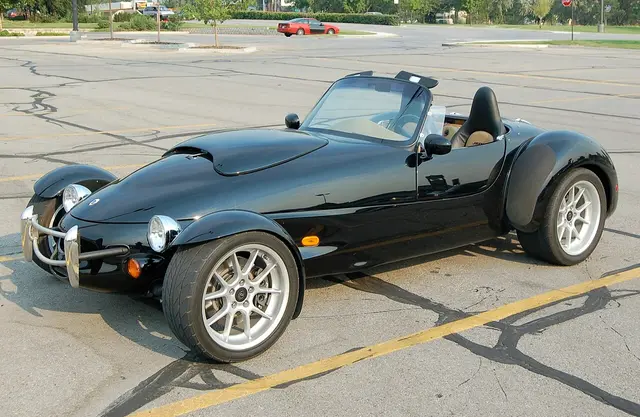
The Marcos Mantara is a British sports car from a specialist marque known for distinctive shapes and a motorsport-minded approach. Its low body and snug cabin give it the character of a focused grand tourer: a car for drivers who value an unusual design and an involving road-car feel. It occupied a more contemporary place in the Marcos line-up than the company’s earlier GT models while carrying forward the brand’s individual style.
Marcos was founded by Jem Marsh and Frank Costin. Costin’s engineering outlook, shaped in part by aircraft design, helped establish a company identity built around unusual construction and compact sports cars. The Mantara belongs to that tradition, but it also reflects Marcos’s effort to make a more developed road car with a distinctive presence of its own.
Design and place in the Marcos range
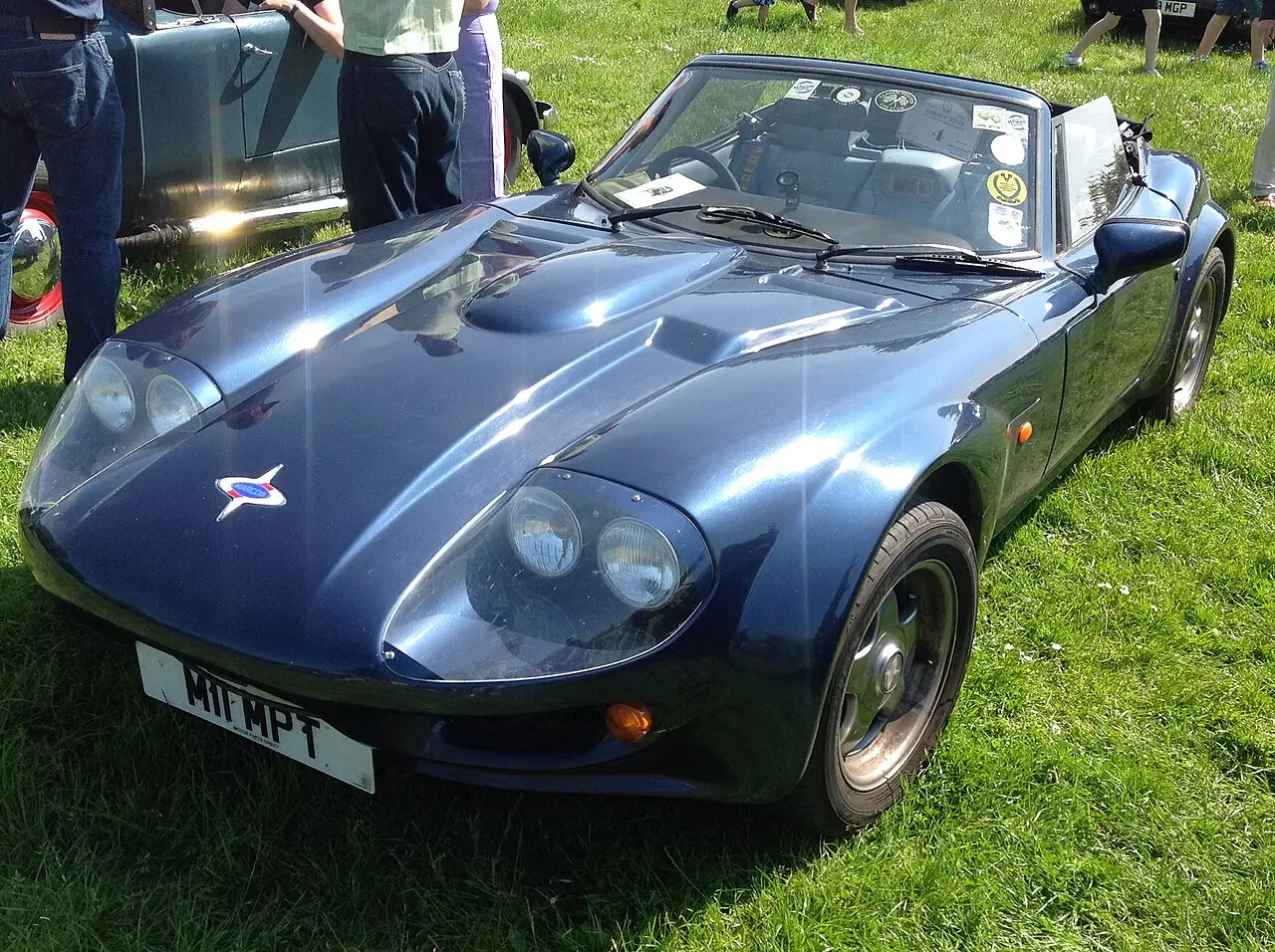
The Mantara’s proportions are unmistakably those of a Marcos: a very low nose, a close-set cabin and a flowing roofline. Its shape gives it a purposeful look without relying on the familiar styling of a mainstream coupe. The interior is designed around the driver, making it better suited to people who enjoy the act of driving than those seeking the space and convenience of a family car.
The model also sits at an important point in the company’s story. Marcos used the Mantara as a basis for competition-oriented cars, connecting its road-car identity with the marque’s long interest in racing. That dual role captures the company’s character: road cars and motorsport were closely linked, and the engineering choices were made for a distinctive specialist product.
Engines, economy and where it was sold
Mantara versions were offered with different engine specifications, so power and driving character depend on the particular car. The model’s role was that of a purposeful sports car, with a more developed road-going presentation than a stripped-back competition machine. Buyers and owners should identify the exact version when considering its mechanical specification.
Fuel consumption and CO₂ vary with engine and version, and there is no single official rating that describes every Mantara. European test procedures such as NEDC and WLTP differ from the EPA method in the United States and the five-cycle test used in Canada, so figures from different markets cannot be treated as directly equivalent. Marcos was a British specialist manufacturer, and the Mantara was sold through a limited, enthusiast-focused network rather than as a mass-market car.
Questions and answers
What kind of car is the Marcos Mantara?
It is a low-slung British sports car with a driver-focused cabin and a distinctive coupe-like profile.
Was the Mantara connected to Marcos racing cars?
Yes. Marcos used the road car as a basis for competition-oriented models.
Did Mantara versions share one power figure?
No. Engine specifications varied, so power depends on the specific version.