What kind of car was the Peugeot 305?
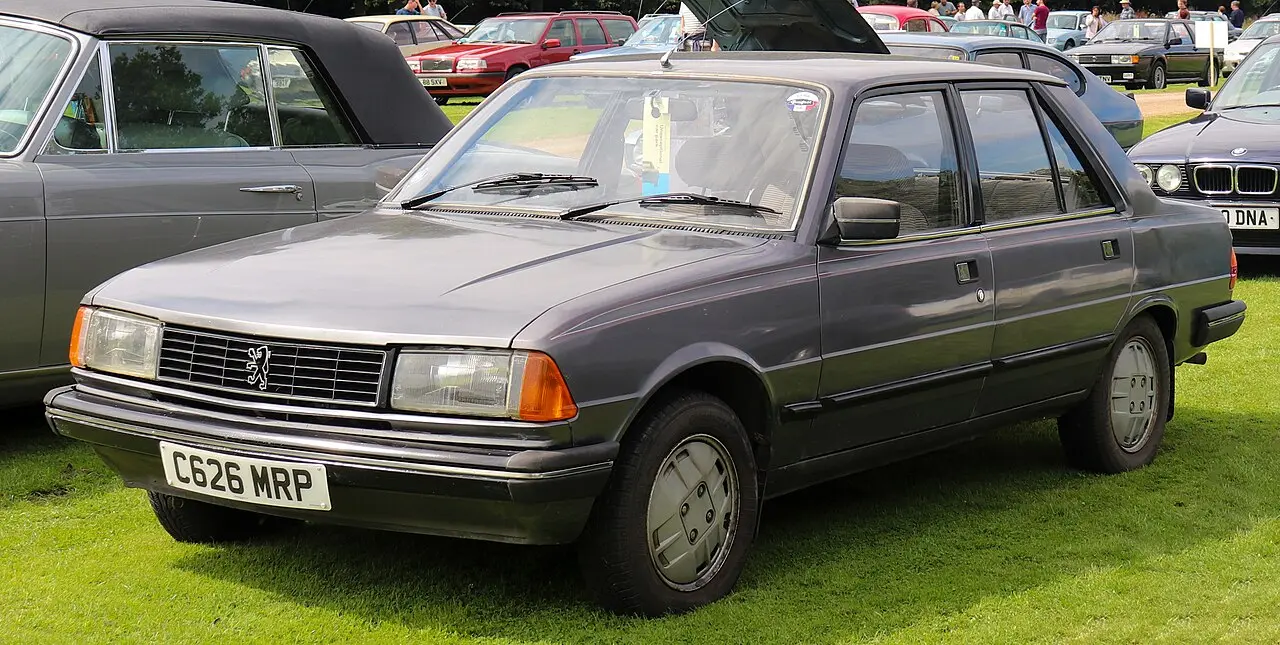
The Peugeot 305 was a family car offered as a saloon and an estate. The estate’s folding rear seat made it useful for carrying passengers and luggage, and Peugeot also offered a commercial version for goods.
The 305 had a conventional saloon shape and front-wheel drive, with the engine mounted across the front of the car. Its independent suspension was part of a layout designed to balance cabin space and comfort.
Generations, engines and power
The Peugeot 305 was developed during its production run, including through work connected with VERA, Peugeot’s programme exploring ways to make cars more efficient. A saloon provided the basis for one of the programme’s experimental vehicles.
The engine range included petrol and diesel options. The original petrol engine came from the Peugeot 304, while the range later developed. Power varied by engine and version.
Fuel consumption and where it was sold
There is no official fuel-consumption or CO₂ figure to quote. Test procedures differ by market: European ratings may use WLTP or the earlier NEDC test, the United States uses EPA testing, and Canada uses a five-cycle procedure. Results from these methods are not directly equivalent.
Peugeot offered the 305 in Europe as a saloon and estate, with a commercial estate derivative for carrying goods.
Questions and answers
What body styles did the Peugeot 305 have?
It was offered as a saloon and an estate, including a commercial version of the estate.
Was the Peugeot 305 front-wheel drive?
Yes. It had front-wheel drive, a transversely mounted engine and independent suspension.
What engines were available in the Peugeot 305?
The range included petrol and diesel engines. Power varied by engine and version.
Where was the Peugeot 305 sold?
Peugeot offered it in Europe as a saloon and estate.