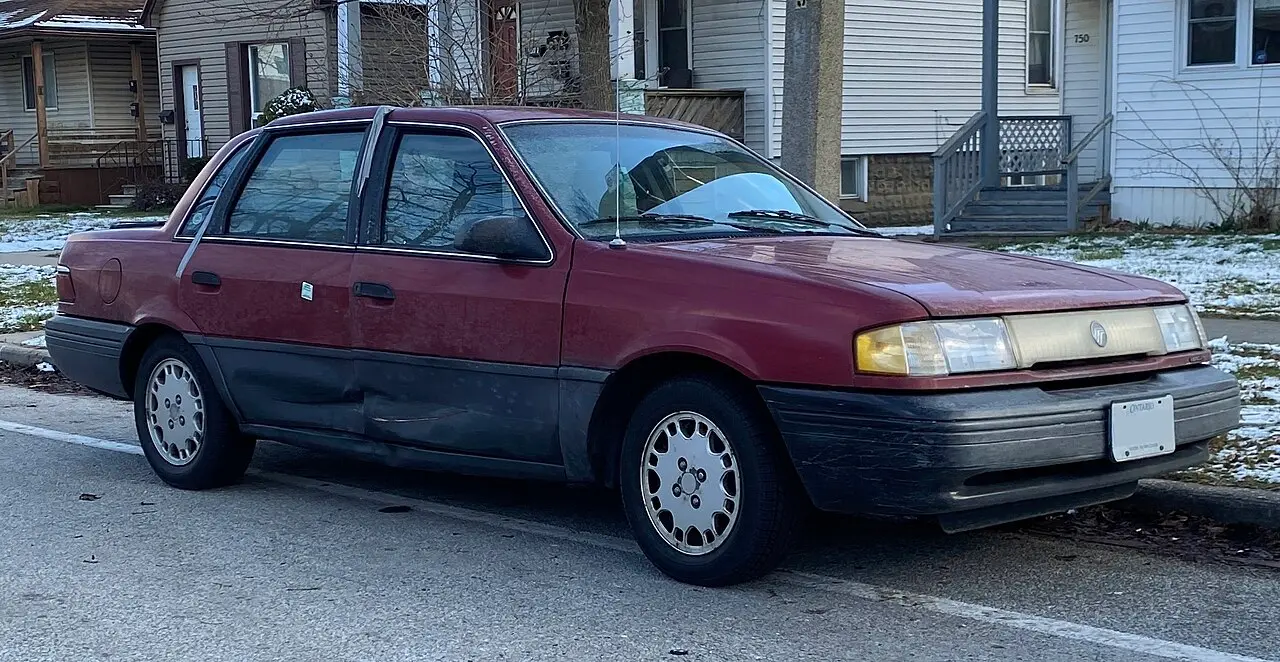
Mercury

Mercury Topaz

Mercury Topaz
Photo: Cutlass / Wikimedia Commons · CC0

The official data lists 32 versions of the Mercury Topaz (1984–1994), in the United States. Each market publishes its own figures, measured on its own test procedure.

At a glance

Years in the data
1984–1994
Markets
United States
Engines
2.0 L to 3.0 L
Fuels
Petrol, Diesel
Lowest consumption (United States)
6.9 L/100 km (EPA)

What kind of car was the Mercury Topaz?

The Mercury Topaz was a compact car sold in North America from 1984 to 1994. Offered as a sedan and coupe, it brought Mercury’s take on the Ford Tempo into the compact class. Mercury was Ford’s mid-priced brand, and the Topaz gave buyers a smaller, practical option within its range.

Generations and engines

The first generation ran from 1984 to 1987, followed by the second from 1988 to 1994. Both generations were derived from Ford’s Fox platform. The later Topaz received a redesigned body while keeping its compact-car role.

United States versions used engines from 2.0 to 3.0 litres, with petrol and diesel choices. The EPA figures span 32 versions from 1984 to 1994.

How economical was the Mercury Topaz?

The best combined EPA rating was 34 MPG, and the lowest listed consumption was 6.9 L/100 km. These are United States EPA ratings; test procedures differ from Europe’s WLTP or NEDC and Canada’s 5-cycle method.

Where was the Topaz sold?

The Topaz was sold in the United States and Canada. Its compact size and familiar sedan and coupe shapes made it a practical part of Mercury’s range.

Questions and answers

When was the Mercury Topaz sold?

The generations ran from 1984 to 1994: the first from 1984 to 1987 and the second from 1988 to 1994.

What engines did the Topaz have?

United States versions ranged from 2.0 to 3.0 litres, with petrol and diesel fuels.

What was the Topaz’s best EPA fuel economy?

The best combined EPA rating was 34 MPG; the lowest listed EPA consumption was 6.9 L/100 km.

Was the Topaz sold in Canada?

Yes. The Topaz was sold in both the United States and Canada.
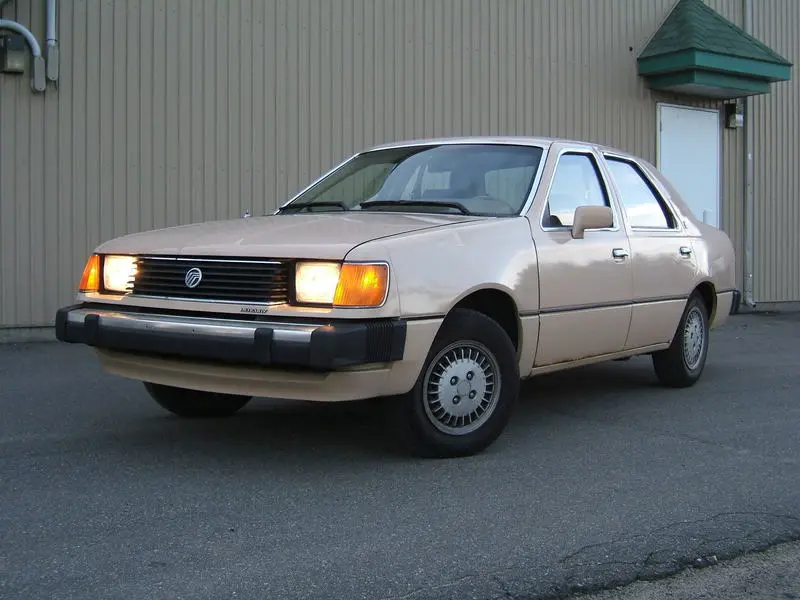
Topaz first generation (1984–1987)

Mercury Topaz first generation
Photo: Explorer4x4 at en.wikipedia / Wikimedia Commons · Public domain

Model codes: Fox-derived · Sold in: United States and Canada · References: en.wikipedia.org, automobile-catalog.com

Show all 19 versions

Topaz second generation (1988–1994)

Mercury Topaz second generation
Photo: Cutlass / Wikimedia Commons · CC0

Model codes: Fox-derived · Sold in: United States and Canada · References: en.wikipedia.org, supermotors.net

United States 13 versions

Model years sold in the USA, from the EPA and the Department of Energy (fueleconomy.gov). MPG on the EPA test; litres per 100 km = 235.215 ÷ MPG.

Years and versionEngineFuelGearboxDriveConsumption (combined)CO₂
1993–1994(FFS)2.3 LPetrol3-speed automaticFront-wheel drive21 MPG (11.2 L/100 km) EPA263 g/km
1992–1994(FFS), SIL2.3 LPetrol5-speed manualFront-wheel drive24 MPG (9.8 L/100 km) EPA230 g/km
1992–1994(FFS)3.0 LPetrol3-speed automaticFront-wheel drive19 MPG (12.4 L/100 km) EPA291 g/km
1994(FFS)3.0 LPetrol5-speed manualFront-wheel drive21 MPG (11.2 L/100 km) EPA263 g/km
1992–1993(FFS)3.0 LPetrol5-speed manualFront-wheel drive21 MPG (11.2 L/100 km) EPA263 g/km
1992(FFS)2.3 LPetrol3-speed automaticFront-wheel drive20 MPG (11.8 L/100 km) EPA276 g/km
1991(FFS)2.3 LPetrol3-speed automaticFour- or all-wheel drive19 MPG (12.4 L/100 km) EPA291 g/km
1991(FFS), SIL2.3 LPetrol5-speed manualFront-wheel drive23 MPG (10.2 L/100 km) EPA240 g/km
1991(FFS)2.3 LPetrol5-speed manualFront-wheel drive21 MPG (11.2 L/100 km) EPA263 g/km
1990(FFS), SIL2.3 LPetrol5-speed manualFront-wheel drive24 MPG (9.8 L/100 km) EPA230 g/km
1988–1990(FFS)2.3 LPetrol5-speed manualFront-wheel drive21 MPG (11.2 L/100 km) EPA263 g/km
1988–1990(FFS)2.3 LPetrol3-speed automaticFour- or all-wheel drive19 MPG (12.4 L/100 km) EPA291 g/km
1988–1989(FFS), SIL2.3 LPetrol5-speed manualFront-wheel drive24 MPG (9.8 L/100 km) EPA230 g/km

Official figures are measured on standard test procedures and differ between markets. Your consumption depends on how, where and in what conditions you drive.