What kind of car was the Peugeot 203?
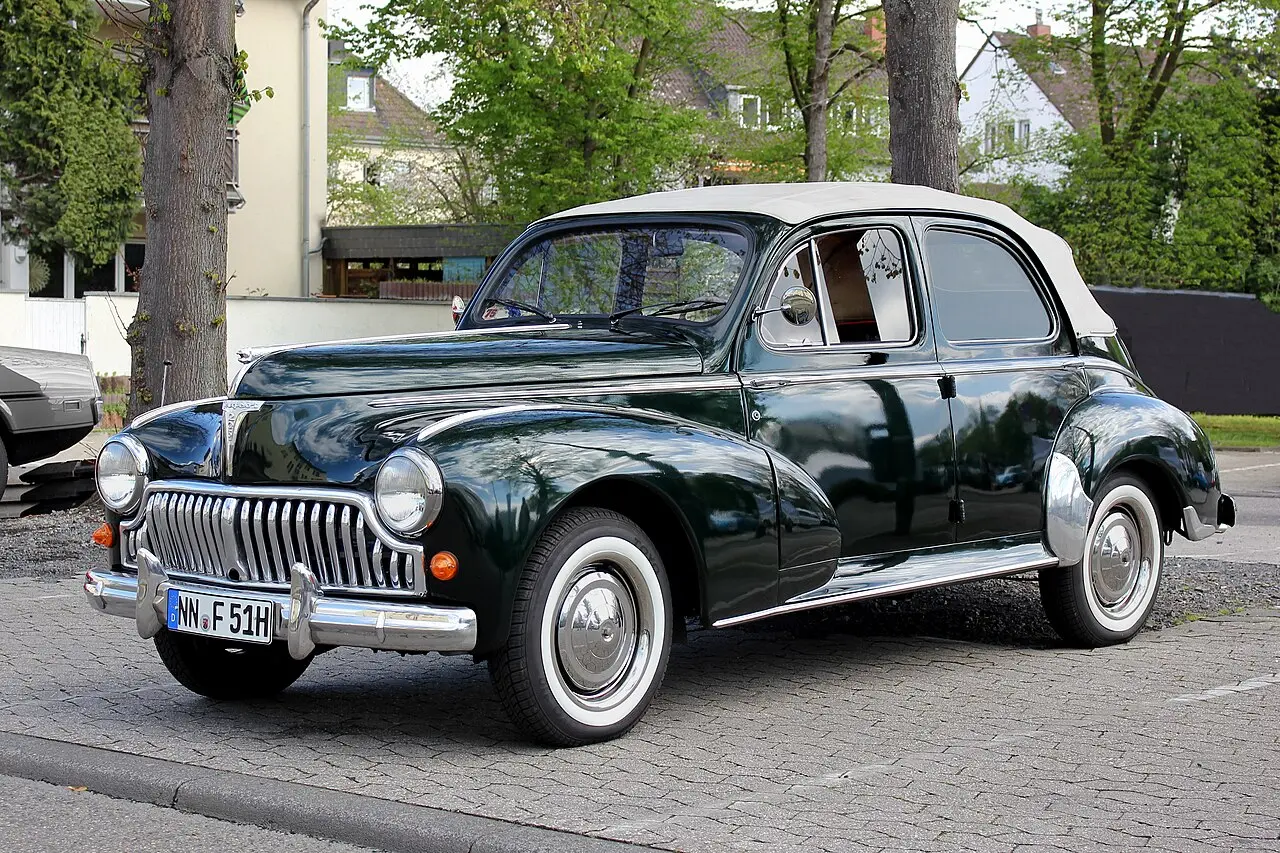
The Peugeot 203 was a family car that helped the French maker resume car production after the Second World War. Its rounded saloon shape and prominent front badge gave it a distinctive look. Peugeot also offered it in other body styles, including a cabriolet and estate, as well as commercial versions.
For a time, the 203 was Peugeot’s only passenger car. It was the first Peugeot model developed from the ground up after the war, and its range of body styles gave it both family and working roles.
Engines and design
The 203 had a four-cylinder petrol engine and rear-wheel drive. Its design included a self-supporting steel body and independent front suspension. Peugeot developed the car’s handling and cabin comfort during its production run.
Different versions served different needs. The estate offered more room for passengers and luggage, while commercial derivatives were made for carrying goods. Peugeot also offered the 203 as a coupé and cabriolet.
Fuel consumption and where it was sold
There is no official fuel-consumption or CO₂ figure to quote. Test procedures also differ by market: European figures may use WLTP or the older NEDC procedure, while the United States uses EPA testing and Canada uses its five-cycle method. Ratings from these tests are not directly interchangeable.
The 203 was sold in France and exported to markets including northern Europe and the Maghreb. Its range of body styles helped it serve private motorists and commercial users.
Questions and answers
Was the Peugeot 203 only a saloon?
No. Peugeot also offered it as a coupé, cabriolet and estate, along with commercial versions.
What engine did the Peugeot 203 use?
It had a four-cylinder petrol engine and rear-wheel drive.
Where was the Peugeot 203 sold?
It was sold in France and exported to places including northern Europe and the Maghreb.
What was distinctive about the Peugeot 203’s place in the range?
For a time, it was Peugeot’s only passenger car. The range of body styles gave it several roles.