DS Automobiles

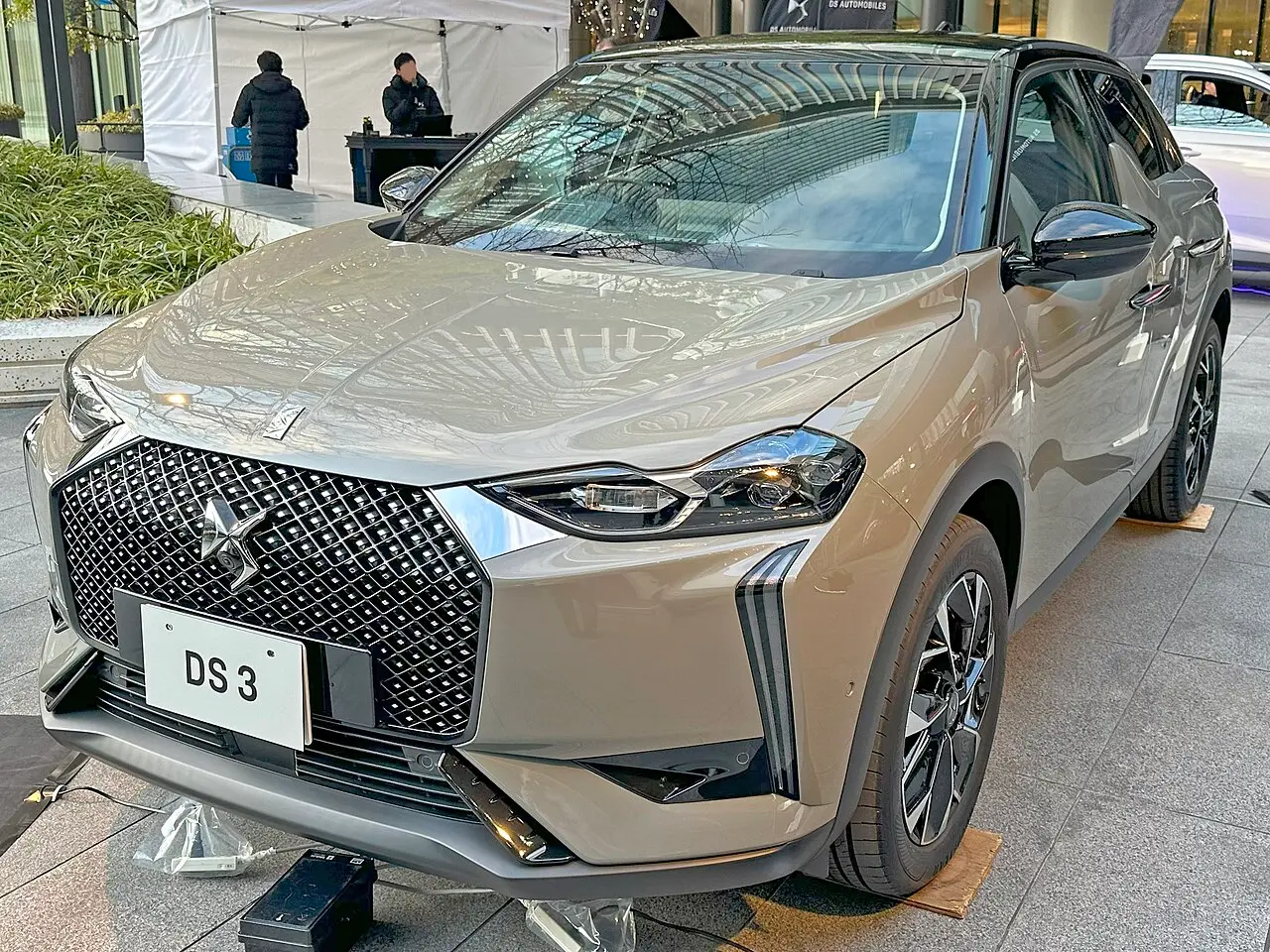
DS Automobiles DS 3

DS Automobiles DS 3
Photo: Tokumeigakarinoaoshima / Wikimedia Commons · CC0

The official data lists 114 versions of the DS Automobiles DS 3 (2015–2026), in the European Union and the United Kingdom. Each market publishes its own figures, measured on its own test procedure.

At a glance

Years in the data
2015–2026
Markets
European Union, United Kingdom
Engines
1.2 L to 1.6 L
Power
55 kW (75 PS) to 156 kW (212 PS)
Fuels
Hybrid, Electric, Diesel, Petrol
Lowest consumption (United Kingdom)
3.4 L/100 km (NEDC)
Lowest consumption (European Union)
5.0 L/100 km (WLTP)
New registrations in the EU
236,245

What is the DS 3?

The DS 3 began as a small hatchback, with a convertible version also offered. It brought distinctive styling and detailed finishes to the small-car class. The name later moved to a compact crossover, giving the model a taller shape and a more upright cabin. The change reflects two different roles in the DS range: a city-friendly hatchback, followed by a small SUV with a more practical layout.

DS Automobiles became a standalone brand in 2014, inspired by the original DS unveiled at the Paris Motor Show in 1955. French design, comfort and distinctive details remain central to the brand’s character.

Generations and engines

The first generation ran from 2015 to 2019. The second generation began in 2018 and received an update in 2023; the name changed from DS 3 Crossback to DS 3. In the EU, petrol and diesel engines ranged from 1.2 to 1.6 litres, and power across versions spanned 55 kW (75 PS) to 153 kW (208 PS). The UK range spanned 74 kW (101 PS) to 156 kW (212 PS).

Later versions added electrified choices. Depending on market and model year, the DS 3 was offered with petrol, diesel, hybrid or fully electric power. The electric version is known as E-TENSE.

Fuel consumption and CO₂

For petrol, diesel and hybrid versions, the lowest EU figure is 5 L/100 km on the WLTP test. In the UK, the lowest listed figure is 3.4 L/100 km under NEDC. These procedures differ, so the results are not directly comparable.

Where was the DS 3 sold?

EU registration figures span 2015–2025, and UK figures span 2015–2026. EU registrations total 236,245. Over its two generations, the DS 3 changed from a small hatchback and cabriolet into a compact crossover, while keeping its distinctive styling.

Questions and answers

Is the DS 3 a hatchback or an SUV?

The first generation was a small hatchback, also offered as a cabriolet. The second generation is a compact crossover.

When did the second generation arrive?

It began in 2018 and received an update in 2023.

What fuels were available?

Depending on market and year, petrol, diesel, hybrid and fully electric versions were offered.

What is the lowest official fuel consumption?

The lowest EU petrol, diesel or hybrid figure is 5 L/100 km WLTP; the UK low is 3.4 L/100 km NEDC.
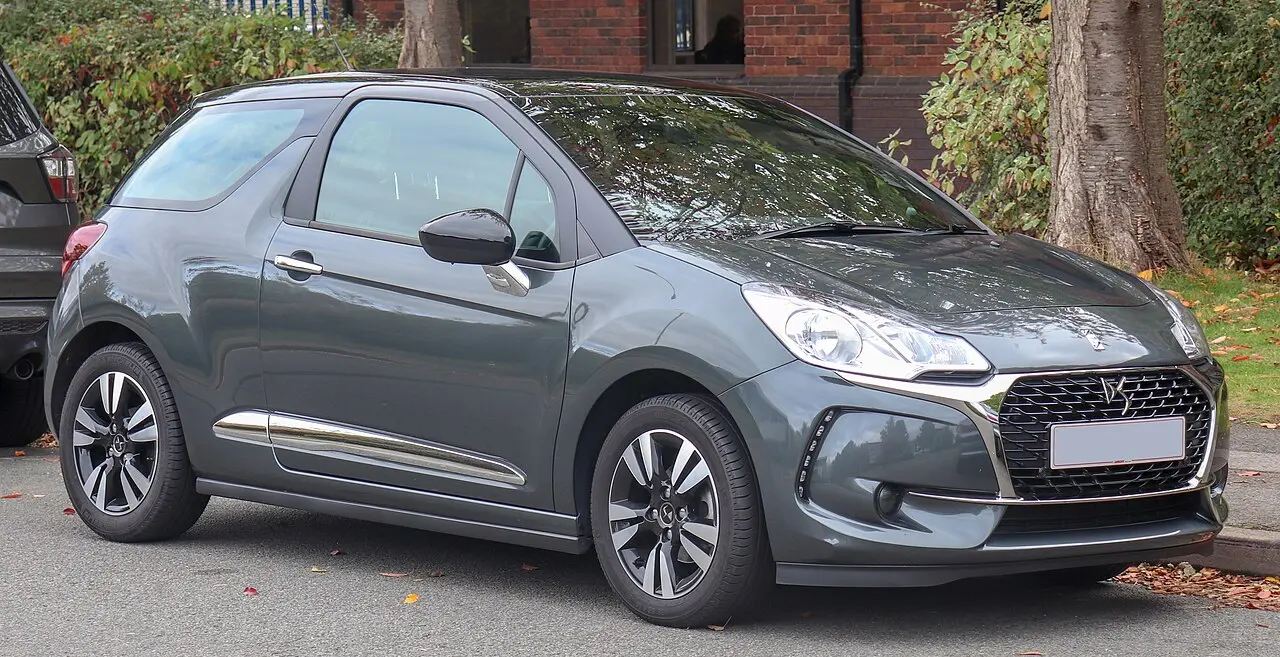
DS 3 first generation (2015–2019)

DS Automobiles DS 3 first generation
Photo: Vauxford / Wikimedia Commons · CC BY-SA 4.0

Sold in: European Union and United Kingdom · References: en.wikipedia.org, media.stellantis.com

Show all 77 versions

DS 3 second generation (2018–2022)

DS Automobiles DS 3 second generation
Photo: Tokumeigakarinoaoshima / Wikimedia Commons · CC0

Sold in: European Union and United Kingdom · References: en.wikipedia.org, autoexpress.co.uk

Show all 24 versions

DS 3 second generation (since 2023)

Sold in: European Union and United Kingdom · References: media.stellantis.com, autoexpress.co.uk

European Union 14 versions

New cars registered in the EU (plus Norway and Iceland), from the European Environment Agency. Figures on the NEDC procedure until 2020 and on WLTP from 2021; versions are grouped by engine and power, with their number of registrations.

Years and versionEnginePowerFuelConsumption (combined)CO₂Electric rangeEU registrations
2024–20251.2 L100 kW (136 PS)Hybrid5.0 L/100 km WLTP112 g/km–5,030
2025Electric motor115 kW (156 PS)Electric15.6 kWh/100 km WLTP0 g/km397 km829
20251.5 L96 kW (131 PS)Diesel5.2 L/100 km WLTP136 g/km–286
20251.2 L96 kW (131 PS)Petrol6.1 L/100 km WLTP138 g/km–149
20251.2 L74 kW (101 PS)Petrol5.7 L/100 km WLTP129 g/km–51
2024–2025Electric motor62 kW (84 PS)Electric15.6 kWh/100 km WLTP0 g/km396 km49
20241.2 L96 kW (131 PS)Petrol6.1 L/100 km WLTP137 g/km–2,736
2024Electric motor115 kW (156 PS)Electric15.5 kWh/100 km WLTP0 g/km398 km1,438
20241.5 L96 kW (131 PS)Diesel5.2 L/100 km WLTP135 g/km–1,032
20241.2 L74 kW (101 PS)Petrol5.6 L/100 km WLTP127 g/km–892
2023Electric motor115 kW (156 PS)Electric15.5 kWh/100 km WLTP0 g/km399 km2,747
20231.5 L96 kW (131 PS)Diesel5.1 L/100 km WLTP133 g/km–967
20231.2 L74 kW (101 PS)Petrol5.6 L/100 km WLTP125 g/km–514
2023Electric motor62 kW (84 PS)Electric15.5 kWh/100 km WLTP0 g/km397 km33

United Kingdom 18 versions

New cars on sale in the UK, from the Vehicle Certification Agency. NEDC figures until 2018 and WLTP figures after; years are the editions a version appeared in.

Years and versionEnginePowerFuelGearboxConsumption (combined)CO₂Electric range
2025–2026E-TENSE · E-TENSE (VL)Electric motor115 kW (156 PS)ElectricAutomatic14.2 kWh/100 km WLTP0 g/km436 km
2025–2026E-TENSE · E-TENSE (VH)Electric motor115 kW (156 PS)ElectricAutomatic16.7 kWh/100 km WLTP0 g/km366 km
2025–2026Hybrid 1451.2 L100 kW (136 PS)Hybrid6-speed automatic5.5 L/100 km WLTP125 g/km–
2025–2026Hybrid 1451.2 L100 kW (136 PS)Hybrid6-speed automatic4.5 L/100 km WLTP102 g/km–
2026Hybrid 145 (VL)1.2 L107 kW (145 PS)Hybrid6-speed automatic4.5 L/100 km WLTP102 g/km–
2026Hybrid 145 (VH)1.2 L107 kW (145 PS)Hybrid6-speed automatic5.5 L/100 km WLTP125 g/km–
2024E-TENSE (VH)Electric motor156 kW (212 PS)ElectricAutomatic16.4 kWh/100 km WLTP0 g/km374 km
2024E-TENSE (VH)Electric motor156 kW (212 PS)ElectricAutomatic16.7 kWh/100 km WLTP0 g/km366 km
2024E-TENSE (VL)Electric motor156 kW (212 PS)ElectricAutomatic14.2 kWh/100 km WLTP0 g/km434 km
2024E-TENSE (VL)Electric motor156 kW (212 PS)ElectricAutomatic14.2 kWh/100 km WLTP0 g/km436 km
2024Hybrid 136 (VL)1.2 L136 kW (185 PS)Hybrid6-speed automatic4.5 L/100 km WLTP102 g/km–
2024Hybrid 136 (VH)1.2 L136 kW (185 PS)Hybrid6-speed automatic5.5 L/100 km WLTP125 g/km–
2023E-TENSE (VL)Electric motor115 kW (156 PS)ElectricAutomatic14.2 kWh/100 km WLTP0 g/km434 km
2023E-TENSE (VH)Electric motor115 kW (156 PS)ElectricAutomatic16.4 kWh/100 km WLTP0 g/km374 km
2023Pure Tech 100 (VL)1.2 L74 kW (101 PS)Petrol6-speed manual5.2 L/100 km WLTP117 g/km–
2023Pure Tech 100 (VH)1.2 L74 kW (101 PS)Petrol8-speed automatic6.2 L/100 km WLTP141 g/km–
2023PureTech 130 (VL)1.2 L96 kW (131 PS)Petrol8-speed automatic5.8 L/100 km WLTP130 g/km–
2023PureTech 130 (VH)1.2 L96 kW (131 PS)Petrol8-speed automatic6.2 L/100 km WLTP140 g/km–

Official figures are measured on standard test procedures and differ between markets. Your consumption depends on how, where and in what conditions you drive.