

BAIC BJ30 second generation
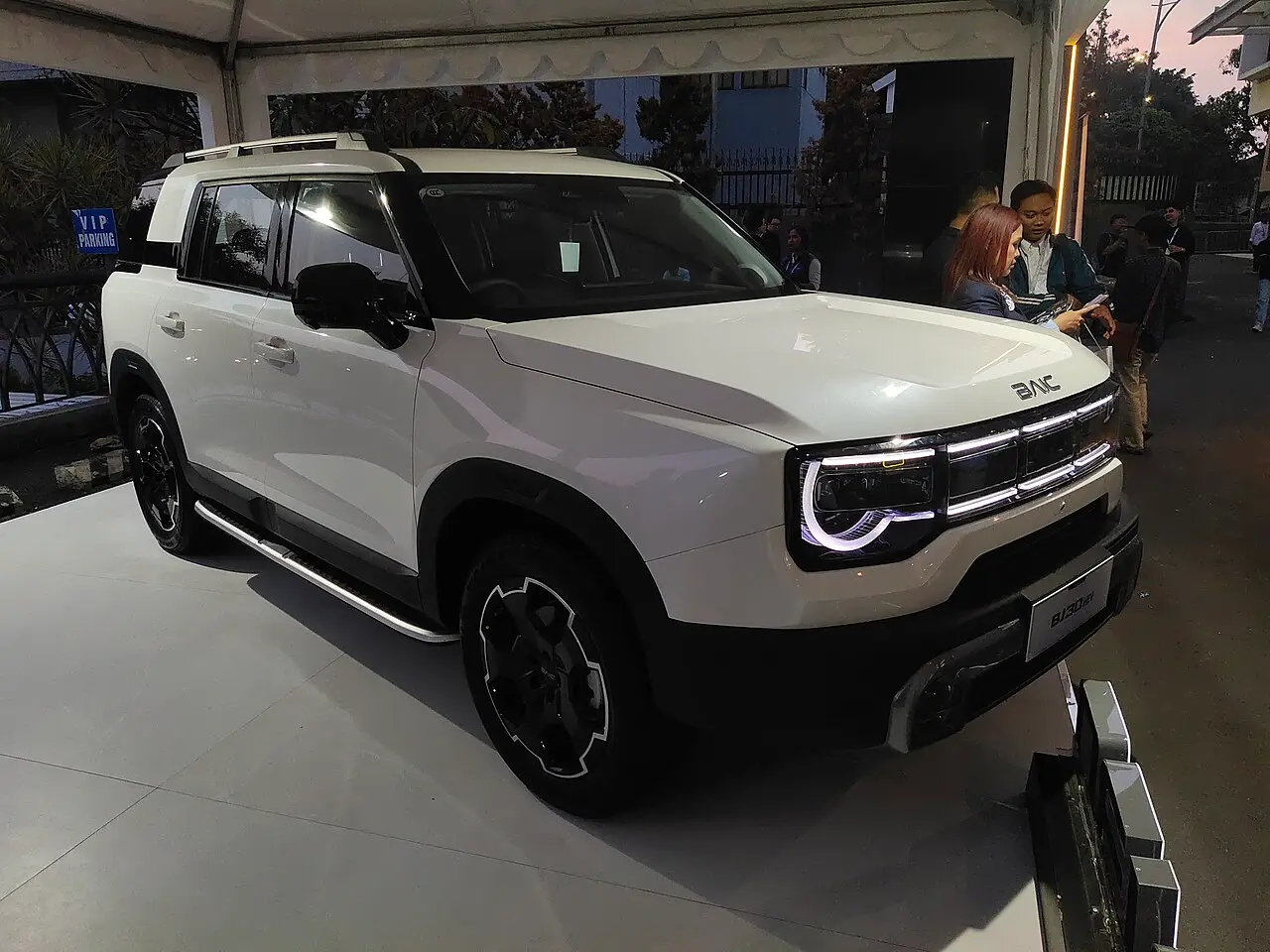
The BAIC BJ30 second generation (since 2024): dimensions, weights, reliability and the official figures of its 3 versions in the European Union.
Model codes: B30X
Dimensions, weights and capacity
| Specification | Wikipedia |
|---|---|
| Dimensions | |
| Length | 4,730 mm |
| Width | 1,910 mm |
| Height | 1,757 mm |
| Wheelbase | 2,820 mm |
| Weights and towing | |
| Kerb weight | 1,575–1,690 kg |
| Seats and space | |
| Fuel tank | 51–60 L |
| Performance | |
| Top speed | 170–190 km/h |
| Torque | 315 Nm |
Ranges cover the generation’s versions and body styles; European and North American versions can differ. Sources: Wikipedia (en, de). Wikipedia figures are used under CC BY-SA 4.0.
All 3 versions of the BAIC BJ30 second generation
European Union 3 versions
New cars registered in the EU (plus Norway and Iceland), from the European Environment Agency. Figures on the NEDC procedure until 2020 and on WLTP from 2021; versions are grouped by engine and power, with their number of registrations.
| Years and version | Engine | Power | Fuel | Consumption (combined) | CO₂ | EU registrations |
|---|---|---|---|---|---|---|
| 2025 | 1.5 L | 113 kW (154 PS) | Hybrid | 6.7 L/100 km WLTP | 156 g/km | 568 |
| 2025 | 1.5 L | 113 kW (154 PS) | Plug-in hybrid | – | 155 g/km | 16 |
| 2024 | 1.5 L | 113 kW (154 PS) | Hybrid | – | 156 g/km | 30 |
Similar models from other brands



Official figures are measured on standard test procedures and differ between markets. Your consumption depends on how, where and in what conditions you drive.