

Vauxhall Grandland first generation
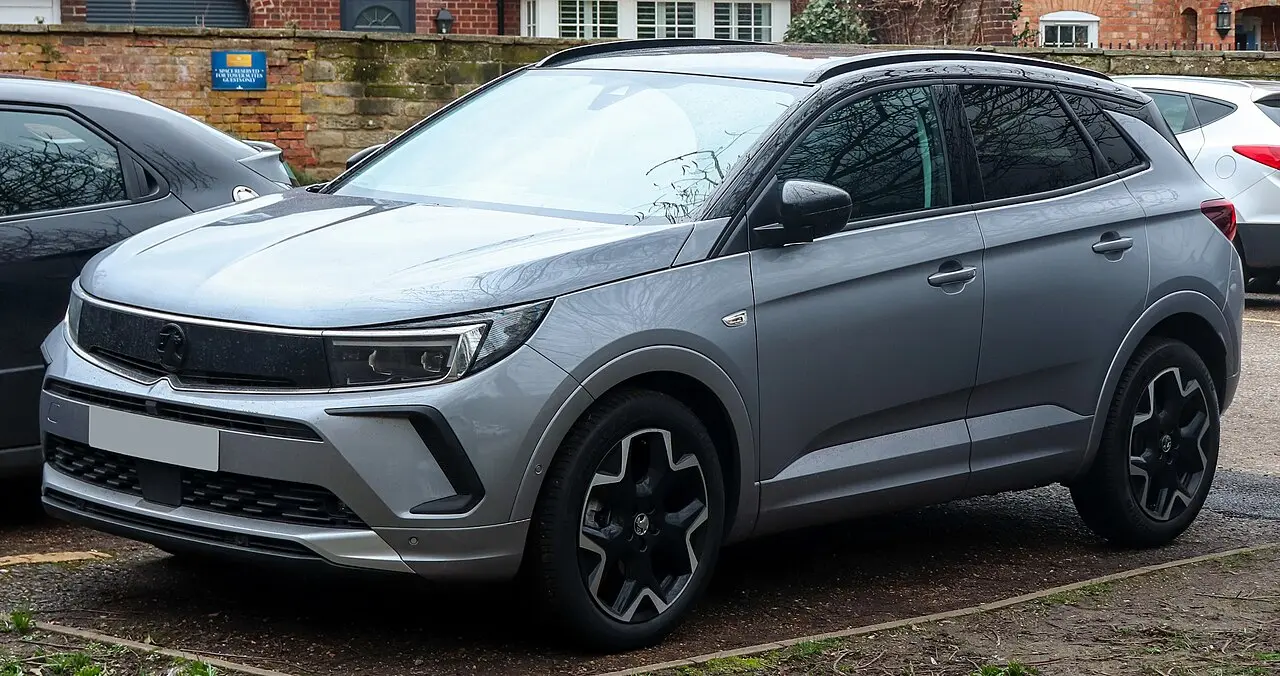
The Vauxhall Grandland first generation (2017–2024): dimensions, weights, reliability and the official figures of its 4 versions in the United Kingdom.
Model codes: A18 · Sold in: European Union and United Kingdom
Dimensions, weights and capacity
| Specification | Wikipedia |
|---|---|
| Dimensions | |
| Length | 4,477 mm |
| Width | 1,856 mm |
| Height | 1,609 mm |
| Wheelbase | 2,675 mm |
| Weights and towing | |
| Kerb weight | 1,350–1,575 kg |
| Electric | |
| Battery capacity (usable) | 13.2 kWh |
Ranges cover the generation’s versions and body styles; European and North American versions can differ. Sources: Wikipedia. Wikipedia figures are used under CC BY-SA 4.0.
Reliability and owner reports
UK MOT: first-time pass rate by age
| Age at test | Pass rate | UK average | Tests |
|---|---|---|---|
| 3 years | 93.2% (92.9–93.6) | 92.2% | 18,397 |
| 4–5 years | 91.0% (90.7–91.2) | 91.0% | 65,456 |
| 6–8 years | 86.9% (86.4–87.5) | 86.4% | 14,877 |
What the MOT finds
| Area | This model | UK average, same ages |
|---|---|---|
| Tyres | 25.8% | 24.2% |
| Brakes | 19.7% | 15.5% |
| Suspension | 5.5% | 5.5% |
| Lights and electrics | 3.6% | 5.2% |
| Visibility (glass, mirrors, wipers) | 3.6% | 6.2% |
| Body, chassis and structure | 2.8% | 1.3% |
First MOT test of each car per year in 2022–2024, from the DVSA’s anonymised test results; only ages with at least 500 tests are shown. The figure in brackets is the 95% confidence interval; green or red means clearly above or below the UK average. The second table shows how often an item was noted (defect or advisory) in each area, against the UK average for cars of the same ages. DVSA anonymised MOT tests (Open Government Licence)
All 4 versions of the Vauxhall Grandland first generation
United Kingdom 4 versions
New cars on sale in the UK, from the Vehicle Certification Agency. NEDC figures until 2018 and WLTP figures after; years are the editions a version appeared in.
| Years and version | Engine | Power | Fuel | Gearbox | Consumption (combined) | CO₂ | Electric range |
|---|---|---|---|---|---|---|---|
| 2024Electric Design 73kWh 210PS Auto (VH) · Electric GS 73kWh 210PS Auto (VH) · Electric Ultimate 73kWh 210PS Auto (VH) | Electric motor | 210 kW (286 PS) | Electric | Automatic | 21.3 kWh/100 km WLTP | 0 g/km | 415 km |
| 2024Electric Design 73kWh 210PS Auto (VL) · Electric GS 73kWh 210PS Auto (VL) · Electric Ultimate 73kWh 210PS Auto (VL) | Electric motor | 210 kW (286 PS) | Electric | Automatic | 16.0 kWh/100 km WLTP | 0 g/km | 545 km |
| 2024Hybrid Design 136PS e-DCT6 (VL) · Hybrid GS 136PS e-DCT6 (VL) · Hybrid Ultimate 136PS e-DCT6 (VL) | 1.2 L | 136 kW (185 PS) | Hybrid | 6-speed automatic | 5.4 L/100 km WLTP | 122 g/km | – |
| 2024Hybrid Design 136PS e-DCT6 (VH) · Hybrid GS 136PS e-DCT6 (VH) · Hybrid Ultimate 136PS e-DCT6 (VH) | 1.2 L | 136 kW (185 PS) | Hybrid | 6-speed automatic | 6.3 L/100 km WLTP | 143 g/km | – |
Similar models from other brands
Official figures are measured on standard test procedures and differ between markets. Your consumption depends on how, where and in what conditions you drive.