What is the Panhard 24?
The Panhard 24 is a French coupé from the final chapter of Panhard’s passenger-car story. It paired a low, cleanly shaped body with the company’s distinctive air-cooled flat-twin engine and front-wheel drive. Its two-door layout gave it a more personal character than the family saloons that had carried the Dyna and PL names.
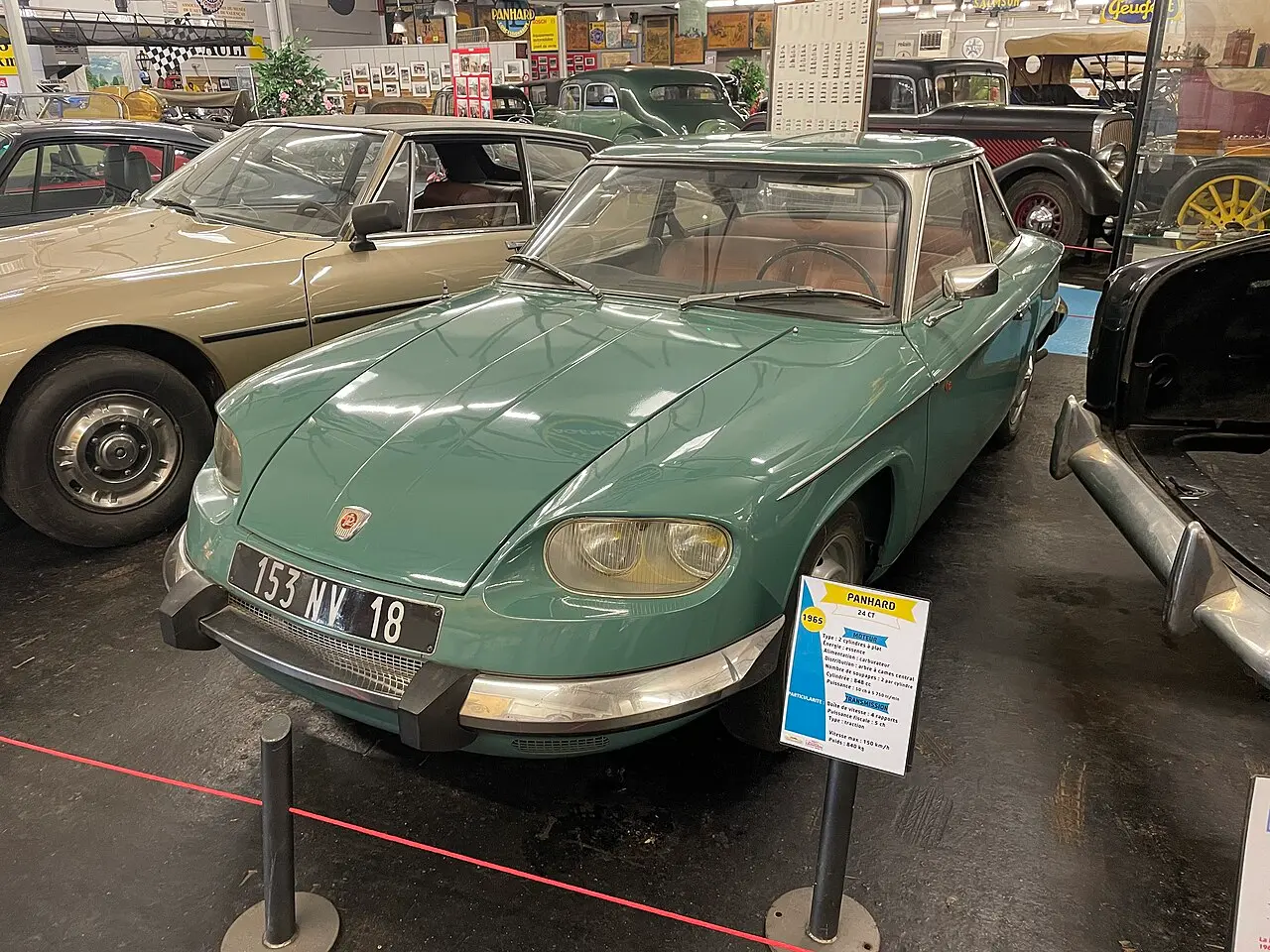
Panhard had a long history in the motor industry and became known after the war for light cars with small engines. The 24 carried that identity into a more stylish form. Its recessed twin headlamps, set behind a clear cover, give the front a smooth, distinctive appearance. The low engine also helped keep the bonnet line down.
Engines and design
The 24 used an air-cooled, horizontally opposed two-cylinder petrol engine to drive the front wheels. The CT and BT were the principal coupé forms: the CT had a shorter body, while the BT offered a longer cabin. Panhard also offered different engine tunes, including the sportier Tigre specification.
The covered headlamps, slim nose and flowing roofline gave the 24 a distinctive presence. It brought Panhard’s familiar engineering into a compact coupé with a more individual shape than the company’s family saloons.
Where was it built?
The 24 was built in France by Panhard, whose passenger-car business had become closely tied to Citroën. It arrived as the marque was winding down its independent passenger-car range. The coupé stands apart from Panhard’s earlier light saloons while retaining the company’s distinctive engineering.
Questions and answers
Was the Panhard 24 a saloon?
No. It was a coupé, offered in shorter CT and longer BT forms.
What kind of engine did the Panhard 24 use?
It used an air-cooled, horizontally opposed two-cylinder petrol engine driving the front wheels.
What is distinctive about its front end?
Its twin headlamps sit recessed behind a clear cover, giving the nose a smooth, unusual appearance.