What is the Panhard PL 17?
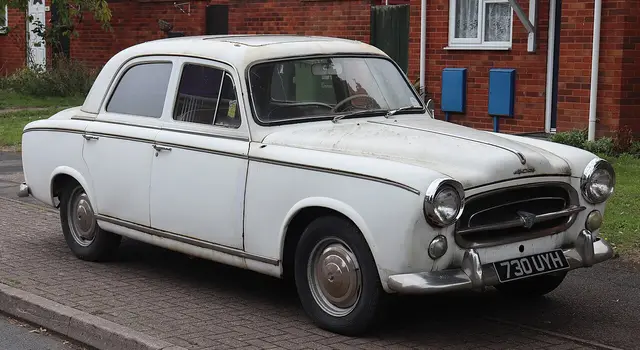
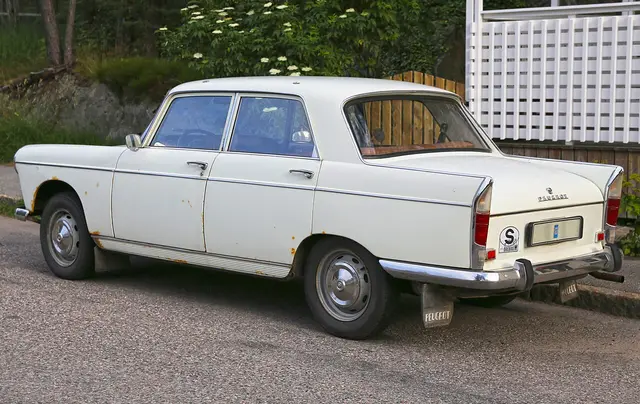
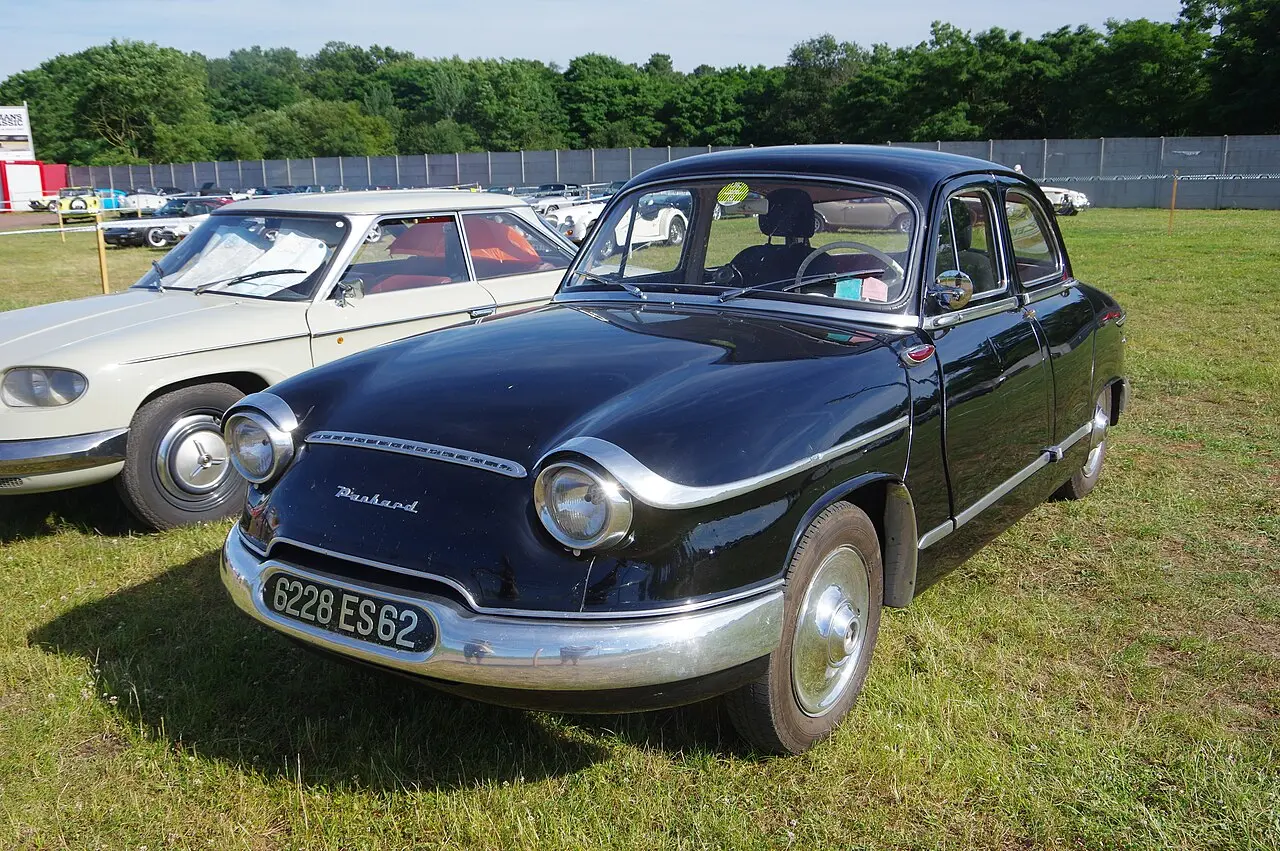
The Panhard PL 17 is a French family saloon that developed the ideas of the Dyna Z. It kept the earlier car’s roomy, front-wheel-drive layout and distinctive air-cooled flat-twin engine, while receiving a more angular treatment at the front and rear.
Panhard became known after the war for compact cars powered by small flat-twin engines. The PL 17 carried that identity into a practical family car. It was an evolution of the Dyna Z rather than a clean-sheet replacement: the updated styling gave it a fresher appearance, while the central body and mechanical character remained familiar.
Engines and design changes
The PL 17 used a front-mounted, air-cooled, horizontally opposed two-cylinder petrol engine driving the front wheels. Standard and Tigre engine specifications were offered, with the Tigre providing a livelier version of the same basic idea. The low engine and front-drive layout contributed to an open cabin. The range included different body and equipment variations.
The PL 17 succeeded the Dyna Z and remained part of the same broad family of Panhard saloons. It received refreshed styling and continued the earlier car’s approach to space and power. Later, Panhard’s passenger-car range moved on to the 24 coupé, which carried the marque’s flat-twin engineering into a different kind of car.
Where was it built?
The PL 17 was built in France. Citroën’s involvement in Panhard gave the marque access to a broader sales network.
Questions and answers
Was the PL 17 a new design from the ground up?
No. It was a modernised development of the Dyna Z, with revised styling and the same broad mechanical layout.
What does Tigre mean on a PL 17?
It identifies the livelier engine specification offered alongside the standard version.
What engine did the PL 17 use?
It used an air-cooled, horizontally opposed two-cylinder petrol engine driving the front wheels.