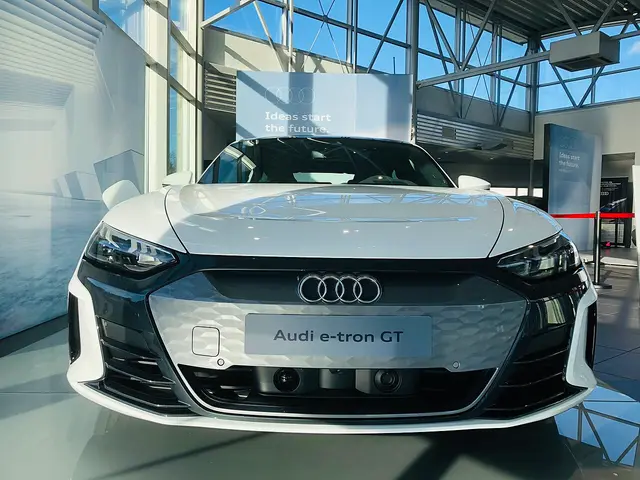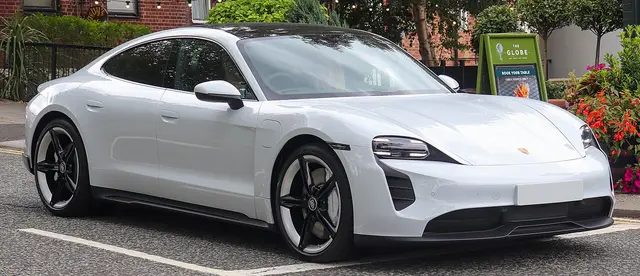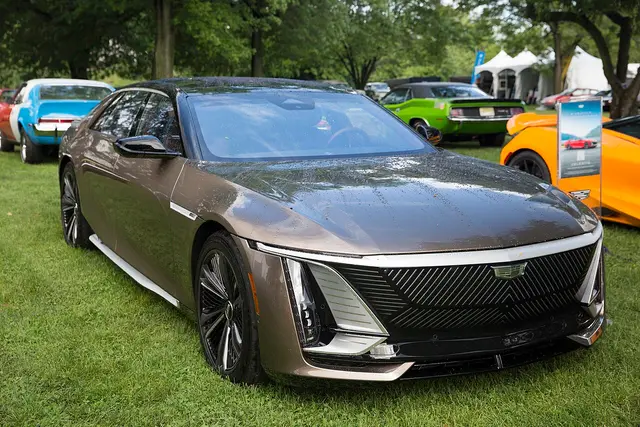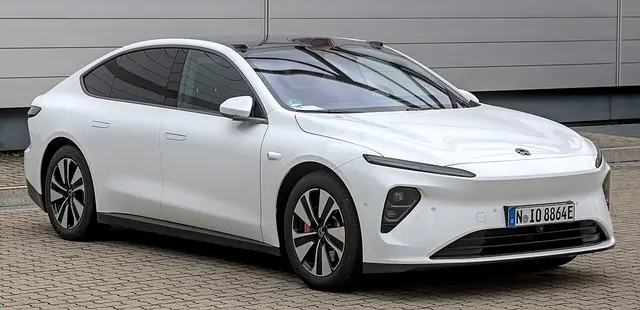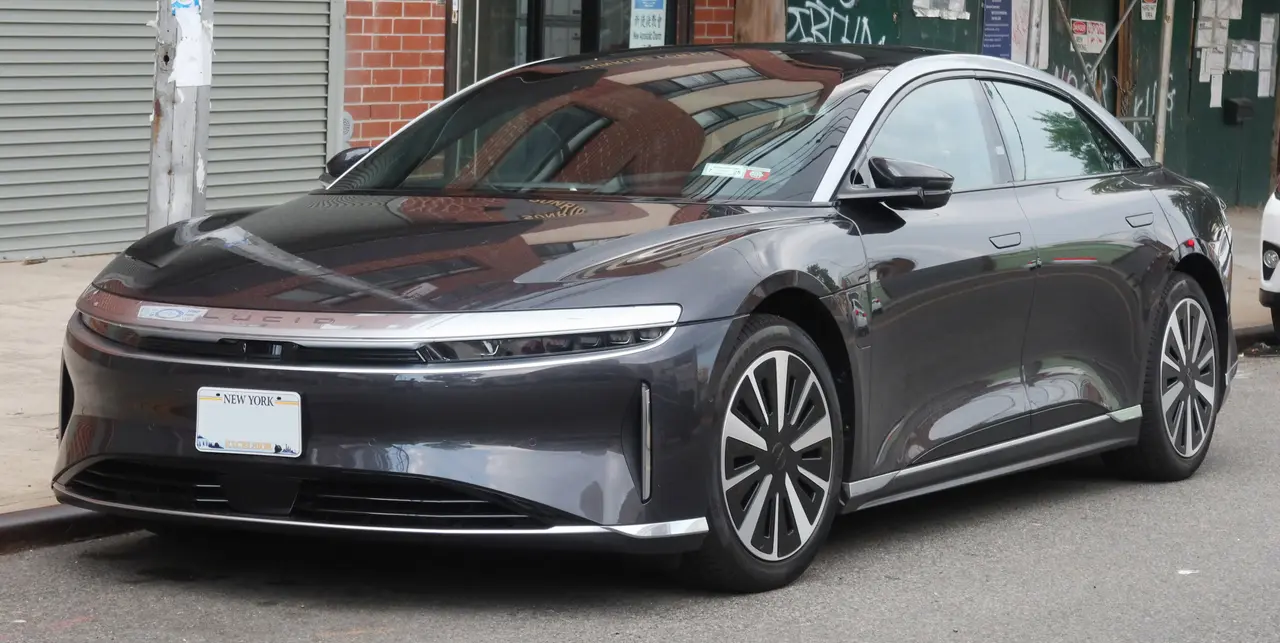
Lucid Air

Lucid Air
Photo: Kevauto / Wikimedia Commons · CC BY-SA 4.0

The official data lists 23 versions of the Lucid Air (2022 - 2027), in the European Union, the United States, and Canada. Each market publishes its own figures, measured on its own test procedure.

At a glance

Years in the data
2022 - 2027
Markets
European Union, United States, Canada
Power
255 kW (347 PS) to 964 kW (1,311 PS)
Fuels
Electric
New registrations in the EU
694

What is the Lucid Air?

The Lucid Air is a large, four-door luxury electric sedan, suited to everyday driving and longer journeys. It was Lucid’s first production car, bringing the company’s electric powertrain expertise into a premium saloon. Lucid began in Silicon Valley as Atieva, developing electric vehicle technology before turning to cars.

Generations, engines and power

The Air’s first generation dates from 2022 and continues today. It is fully electric, with no petrol or diesel engine. Power varies by version and market: European Union registrations list outputs from 255 kW (347 PS) to 964 kW (1,311 PS), while Canadian versions range from 330 kW (449 PS) to 930 kW (1264 PS).

How economical is the Lucid Air?

The Air uses electricity, so its energy consumption is measured in electricity rather than fuel. Test procedures differ by market: European ratings use WLTP or NEDC, US ratings use EPA testing, and Canadian ratings use the 5-cycle procedure. Results from these tests are not directly comparable.

Where was the Lucid Air sold?

The Air appears in European Economic Area registrations from 2022 to 2025, US EPA listings from 2022 to 2027, and Canadian NRCan listings from 2022 to 2025. European registrations total 694. The model’s range of power outputs and market-specific versions reflect its role as Lucid’s luxury electric sedan.

Questions and answers

Is the Lucid Air electric?

Yes. The Air is listed as electric in the European Union, United States and Canada.

How many generations of Lucid Air are there?

The Air has one listed generation: the first generation, from 2022 to today.

How much power does the Lucid Air have?

European Union registrations list 255-964 kW, while Canadian versions range from 330-930 kW. Output varies by market and version.

Where was the Lucid Air sold?

The Air appears in European Economic Area registrations, US EPA listings and Canadian NRCan listings.
Air first generation (since 2022)

Lucid Air first generation
Photo: Kevauto / Wikimedia Commons · CC BY-SA 4.0

References: en.wikipedia.org

At a glance: Length 4,980 mm · Kerb weight 2,045 - 2,335 kg · Top speed 200 - 270 km/h Specifications, reliability and all versions

Show all 5 versions

Air Sapphire (since 2023)

Lucid Air first generation
No photo of this generation yet; the photo shows the first generation.Photo: Kevauto / Wikimedia Commons · CC BY-SA 4.0

References: de.wikipedia.org

At a glance: Top speed 300 km/h Specifications, reliability and all versions

Versions outside these generations

Show all 20 versions

European Union 12 versions

New cars registered in the EU (plus Norway and Iceland), from the European Environment Agency. Figures on the NEDC procedure until 2020 and on WLTP from 2021; versions are grouped by engine and power, with their number of registrations.

Years and versionEnginePowerFuelConsumption (combined)CO₂Electric rangeEU registrations
2025Electric motor325 kW (442 PS)Electric13.3 kWh/100 km WLTP0 g/km729 km65
2025Electric motor539 kW (733 PS)Electric14.5 kWh/100 km WLTP0 g/km740 km39
2025Electric motor411 kW (559 PS)Electric14.6 kWh/100 km WLTP0 g/km706 km21
2025Electric motor674 kW (916 PS)Electric15.1 kWh/100 km WLTP0 g/km845 km21
2023 - 2025Electric motorNot listedElectric14.9 - 16.9 kWh/100 km WLTP0 g/km723 - 783 km29
2025Electric motor964 kW (1,311 PS)Electric16.5 kWh/100 km WLTP0 g/km803 km16
2024Electric motor255 kW (347 PS)Electric14.9 kWh/100 km WLTP0 g/km694 km172
2024Electric motor375 kW (510 PS)Electric15.6 kWh/100 km WLTP0 g/km664 km135
2023 - 2024Electric motor466 kW (634 PS)Electric16.0 - 16.1 kWh/100 km WLTP0 g/km784 km99
2023 - 2024Electric motor500 kW (680 PS)Electric16.3 - 16.5 kWh/100 km WLTP0 g/km805 - 818 km57
2023Electric motor464 kW (631 PS)Electric17.0 kWh/100 km WLTP0 g/km799 km19
2023Electric motorNot listedElectric - 0 g/km - 10

United States 2 versions

Model years sold in the USA, from the EPA and the Department of Energy (fueleconomy.gov). MPG on the EPA test; litres per 100 km = 235.215 ÷ MPG.

Years and versionEngineFuelGearboxDriveConsumption (combined)CO₂Electric range
2023 - 2027Electric motorElectricAutomaticAll-wheel drive105 - 140 MPGe EPA0 g/km581 - 830 km
2024 - 2027Electric motorElectricAutomaticRear-wheel drive129 - 146 MPGe EPA0 g/km599 - 676 km

Canada 6 versions

Model years sold in Canada, from Natural Resources Canada fuel consumption ratings (5-cycle test).

Years and versionEnginePowerFuelGearboxConsumption (combined)CO₂Electric range
2024 - 2025Full-sizeElectric motor330 kW (449 PS)ElectricAutomatic14.4 - 16.2 kWh/100 km 5-cycle0 g/km599 - 676 km
2023 - 2025Full-sizeElectric motor462 kW (628 PS)ElectricAutomatic14.9 - 18.0 kWh/100 km 5-cycle0 g/km581 - 684 km
2024 - 2025Full-sizeElectric motor611 kW (831 PS)ElectricAutomatic16.2 - 18.7 kWh/100 km 5-cycle0 g/km718 - 832 km
2024 - 2025Full-sizeElectric motor930 kW (1,264 PS)ElectricAutomatic20.0 kWh/100 km 5-cycle0 g/km687 km
2023Full-sizeElectric motor358 kW (487 PS)ElectricAutomatic14.9 - 17.3 kWh/100 km 5-cycle0 g/km618 - 660 km
2023Full-sizeElectric motor783 kW (1,065 PS)ElectricAutomatic18.9 kWh/100 km 5-cycle0 g/km718 km

Lucid Air recalls

19 official safety recalls for the Lucid Air from NHTSA (United States), DVSA (United Kingdom) and the EU Safety Gate, newest first. Recall repairs are normally free at the maker’s dealers.

  • Exterior lighting circuit may overheat2022 - 2026
  • Inverter may fail and cause loss of drive power2024 - 2025
  • Half-shaft bolts may allow disconnection2024 - 2026
  • Rearview camera image may not display2022 - 2026
  • Rearview camera image may be missing or inaccurate2022 - 2025

See all 19 recalls

Official figures are measured on standard test procedures and differ between markets. Your consumption depends on how, where and in what conditions you drive.