NIO

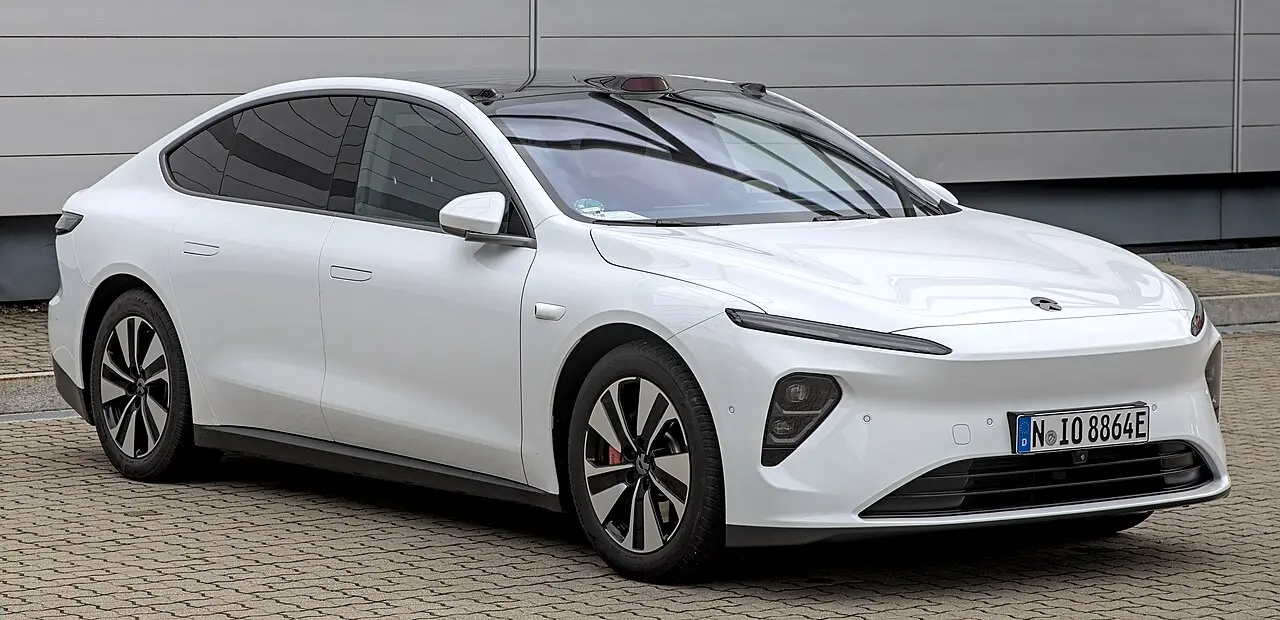
NIO ET7

NIO ET7
Photo: Alexander Migl / Wikimedia Commons · CC BY-SA 4.0

The official data lists 11 versions of the NIO ET7 (2022–2025), in the European Union. Each market publishes its own figures, measured on its own test procedure.

At a glance

Years in the data
2022–2025
Markets
European Union
Power
180 kW (245 PS) to 480 kW (653 PS)
Fuels
Electric
New registrations in the EU
1,936

What is the NIO ET7?

The ET7 is a large electric saloon and NIO’s flagship sedan. Its spacious cabin and connected technology give it a more executive feel within the brand’s range. NIO built the model around its second-generation NT2.0 platform, which introduced a new technology base for its vehicles.

The ET7 was the first NIO model built on NT2.0. It reached Europe as part of the company’s expansion beyond Norway, alongside other models from the platform.

Engines and power

Every ET7 in the European registration figures is electric. Across the versions recorded, power ranges from 180 kW (245 PS) to 480 kW (653 PS). NIO describes the ET7 as a smart electric flagship sedan, with software and connected services forming part of its approach to the cabin and driving experience.

How economical is the NIO ET7?

The ET7 has no petrol or diesel consumption figure because it is battery electric. Official EEA registration figures cover 2022–2025 and record 1,936 cars across 11 versions.

Registration figures do not give an electricity-consumption or CO₂ test result. European efficiency figures use WLTP, or NEDC for some earlier vehicles; these procedures differ from the EPA test used in the USA and Canada’s five-cycle method.

Questions and answers

Is the NIO ET7 electric?

Yes. All versions in the European registration figures are electric.

What power outputs are listed for the ET7?

The listed range is 180 kW (245 PS) to 480 kW (653 PS).

When did the ET7 appear in European registrations?

The figures cover 2022–2025.

Which generation is the ET7?

The ET7 is the first generation, built on NIO’s NT2.0 platform, and is listed from 2022 to today.

ET7 first generation (since 2022)

NIO ET7 first generation
Photo: Alexander Migl / Wikimedia Commons · CC BY-SA 4.0

Model codes: NT2.0 · References: nio.com, nio.com

European Union 11 versions

New cars registered in the EU (plus Norway and Iceland), from the European Environment Agency. Figures on the NEDC procedure until 2020 and on WLTP from 2021; versions are grouped by engine and power, with their number of registrations.

Years and versionEnginePowerFuelConsumption (combined)CO₂Electric rangeEU registrations
2025Electric motor480 kW (653 PS)Electric21.5 kWh/100 km WLTP0 g/km513 km118
2025Electric motor300 kW (408 PS)Electric19.4 kWh/100 km WLTP0 g/km569 km20
2024Electric motor300 kW (408 PS)Electric20.2 kWh/100 km WLTP0 g/km548 km211
2024Electric motor480 kW (653 PS)Electric20.9 kWh/100 km WLTP0 g/km539 km186
2023Electric motor300 kW (408 PS)Electric20.0 kWh/100 km WLTP0 g/km509 km564
2023Electric motor180 kW (245 PS)Electric19.7 kWh/100 km WLTP0 g/km527 km70
2023Electric motor480 kW (653 PS)Electric19.9 kWh/100 km WLTP0 g/km544 km62
2022Electric motor480 kW (653 PS)Electric20.3 kWh/100 km WLTP0 g/km548 km531
2022Electric motor180 kW (245 PS)Electric19.4 kWh/100 km WLTP0 g/km557 km125
2022Electric motor130 kW (177 PS)Electric19.0 kWh/100 km WLTP0 g/km–32
2022Electric motor300 kW (408 PS)Electric19.4 kWh/100 km WLTP0 g/km543 km17

Official figures are measured on standard test procedures and differ between markets. Your consumption depends on how, where and in what conditions you drive.