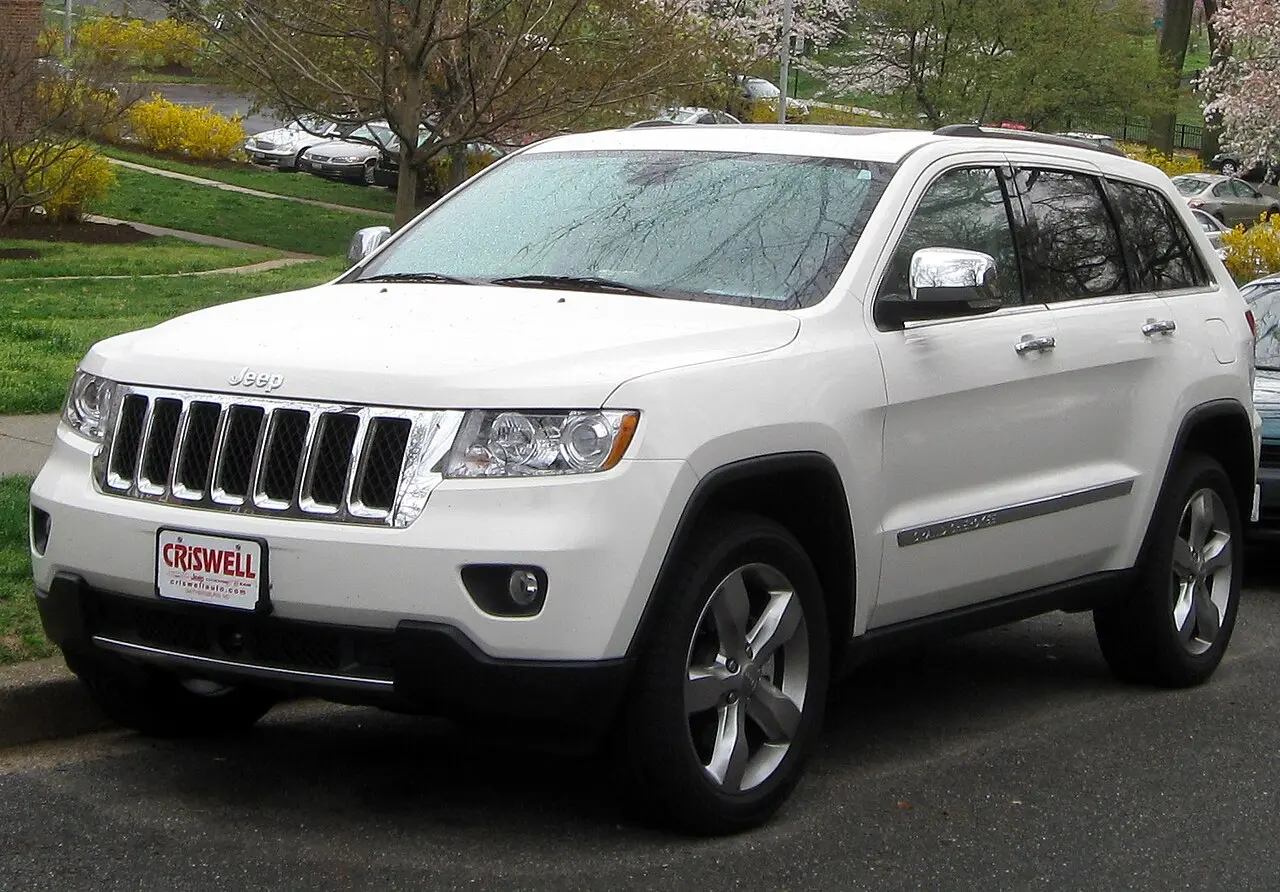
The official data lists 329 versions of the Jeep Grand Cherokee (1993–2027), in the European Union, the United Kingdom, France, the United States, and Canada. Each market publishes its own figures, measured on its own test procedure.
At a glance
Years in the data
1993–2027
Markets
European Union, United Kingdom, France, United States, Canada
The Grand Cherokee is a midsize SUV that brings Jeep’s four-wheel-drive heritage into a more comfort-focused, family-sized vehicle. It sits above the Cherokee in Jeep’s SUV range, combining everyday practicality with the brand’s off-road focus.
The first Grand Cherokee arrived in 1993, replacing the Wagoneer as Jeep’s midsize luxury SUV. Jeep introduced it as a blend of on-road comfort and off-road ability, a character the model has carried through its generations.
Grand Cherokee generations
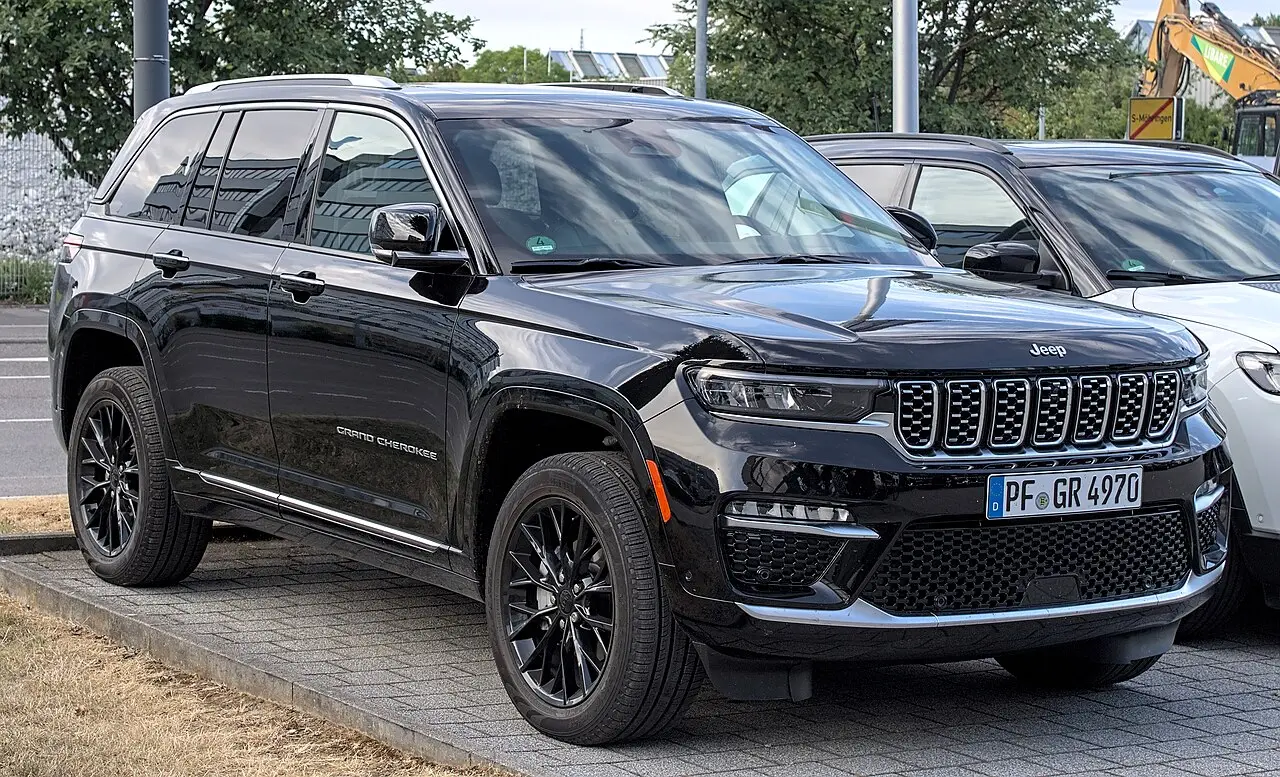
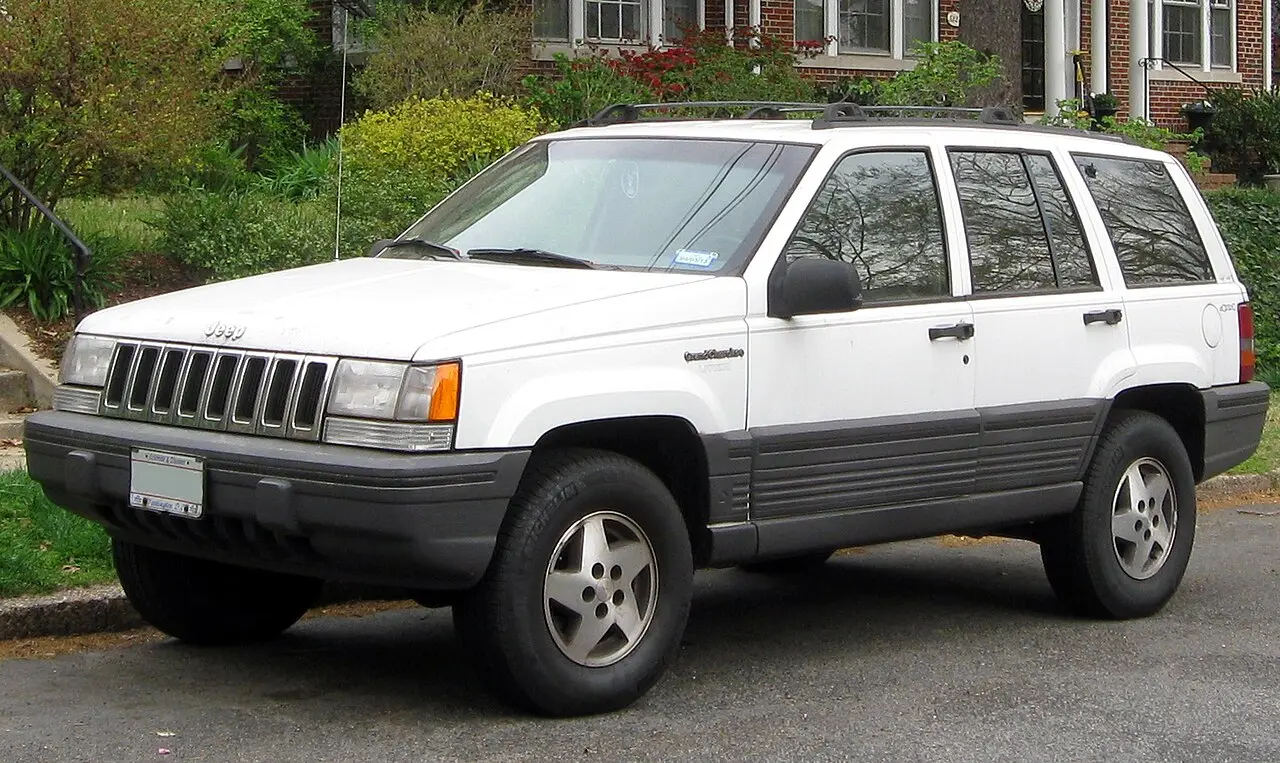
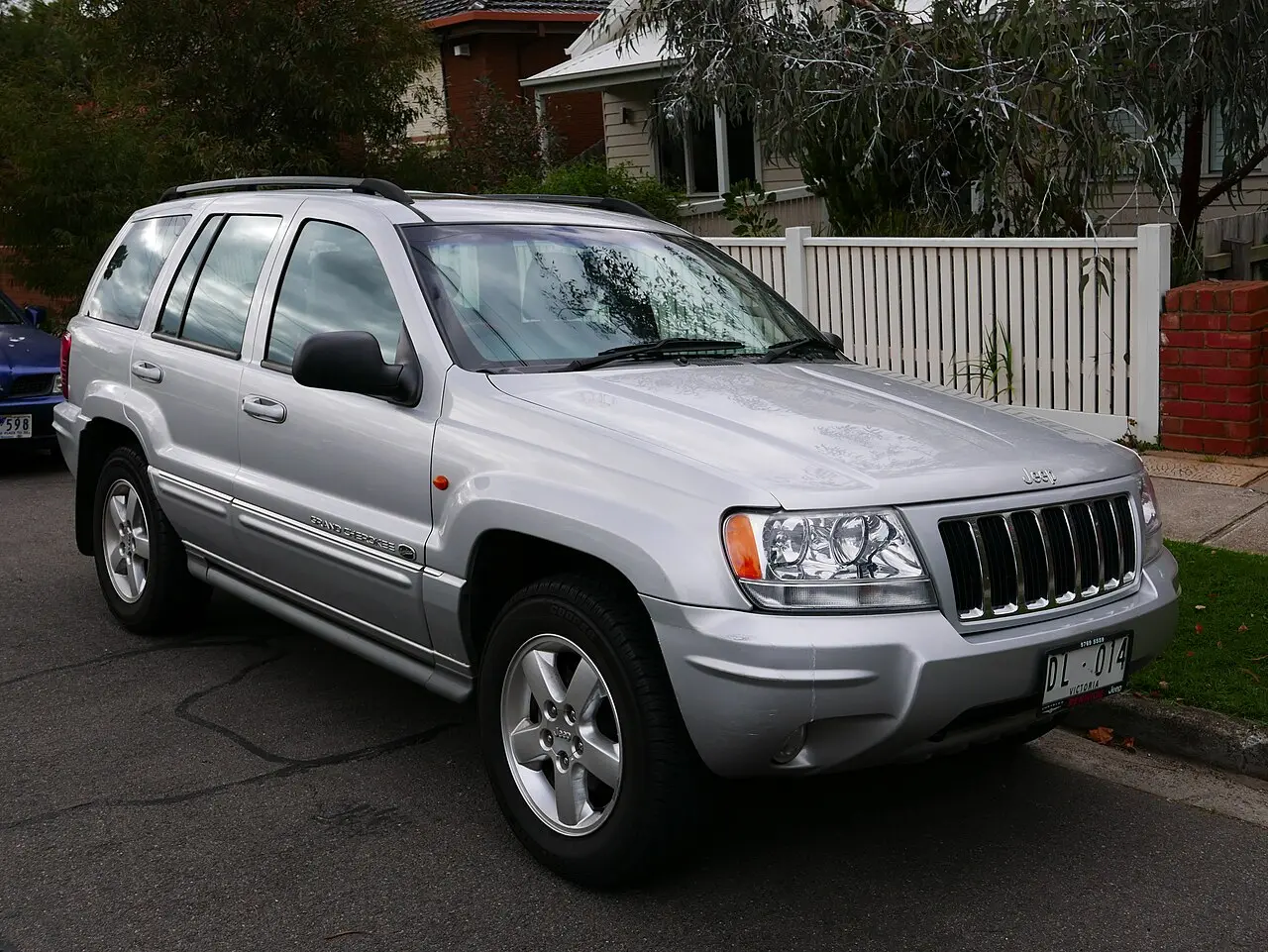
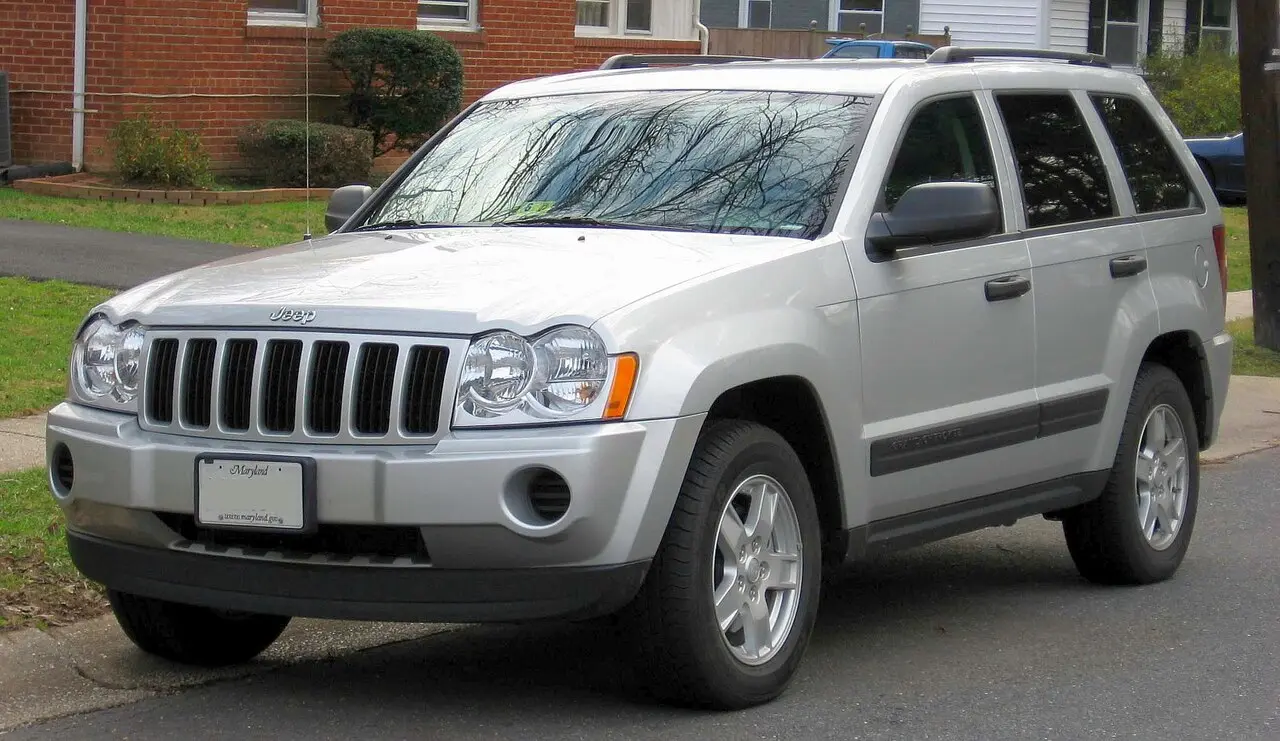
The model has five generations: ZJ (1993–1998), WJ (1999–2004), WK (2005–2010), WK2 (2011–2022) and WL (2022–today). Each generation updated the design and equipment while keeping the Grand Cherokee’s SUV shape. The current WL generation includes two-row and three-row versions, as well as plug-in hybrid power.
Engines, power and fuel consumption
Across the European Union figures, engines range from 2.0 to 6.4 litres and power from 140 kW (190 PS) to 522 kW (710 PS). The range has included petrol, diesel, LPG, E85 flex-fuel and plug-in hybrid versions, with choices varying by market and year.
The lowest official EU plug-in hybrid figure is 2.6 L/100 km on WLTP. This weighted figure assumes some driving is electric, so it differs from a fuel-only consumption result. In the UK, the lowest listed non-plug-in figure is 7 L/100 km on NEDC; in the USA, the best combined EPA rating is 25 MPG. Canada’s lowest listed figure is 10 L/100 km on the NRCan 5-cycle test. WLTP and NEDC in Europe, EPA in the USA and the 5-cycle procedure in Canada use different methods, so their results are not directly comparable.
Where was the Grand Cherokee sold?
The Grand Cherokee has been sold in North America and Europe. European Union registration figures cover 2010–2025 and total 152,418 vehicles. The 3.0-litre diesel rated at 184 kW (250 PS) led the listed annual registration results in 2014, 2015 and 2016.
Questions and answers
When did the Grand Cherokee first go on sale?
The first generation, the ZJ, dates from 1993–1998.
What are the Grand Cherokee generations?
They are ZJ (1993–1998), WJ (1999–2004), WK (2005–2010), WK2 (2011–2022) and WL (2022–today).
How much power does the Grand Cherokee have?
EU figures span 140 kW (190 PS) to 522 kW (710 PS), depending on version.
What is the lowest official EU plug-in hybrid consumption figure?
It is 2.6 L/100 km on WLTP, a weighted figure that assumes some driving is electric.
New cars registered in the EU (plus Norway and Iceland), from the European Environment Agency. Figures on the NEDC procedure until 2020 and on WLTP from 2021; versions are grouped by engine and power, with their number of registrations.
Years and version
Engine
Power
Fuel
Consumption (combined)
CO₂
Electric range
EU registrations
2025
2.0 L
200 kW (272 PS)
Plug-in hybrid
3.2 L/100 km WLTP25.8 kWh/100 km WLTP
73 g/km
47 km
582
2025
3.6 L
216 kW (294 PS)
Petrol
–
291 g/km
–
13
2025
3.6 L
216 kW (294 PS)
LPG
–
292 g/km
–
10
2024
2.0 L
200 kW (272 PS)
Plug-in hybrid
2.7 L/100 km WLTP26.3 kWh/100 km WLTP
63 g/km
47 km
754
2024
3.6 L
216 kW (294 PS)
Petrol
–
291 g/km
–
23
2024
5.7 L
268 kW (364 PS)
Petrol
–
347 g/km
–
12
2023
2.0 L
200 kW (272 PS)
Plug-in hybrid
2.6 L/100 km WLTP28.1 kWh/100 km WLTP
61 g/km
48 km
1,189
2023
5.7 L
268 kW (364 PS)
Petrol
–
354 g/km
–
34
2023
3.6 L
216 kW (294 PS)
Petrol
–
291 g/km
–
19
2022
5.7 L
268 kW (364 PS)
Petrol
–
345 g/km
–
35
United Kingdom 8 versions
New cars on sale in the UK, from the Vehicle Certification Agency. NEDC figures until 2018 and WLTP figures after; years are the editions a version appeared in.
Years and version
Engine
Power
Fuel
Gearbox
Consumption (combined)
CO₂
Electric range
2025–20262.0 ATX 4xe · 2.0 ATX 4xe (VL)
2.0 L
200 kW (272 PS)
Plug-in hybrid
8-speed automatic
10.3 L/100 km WLTP25.4 kWh/100 km WLTP
216 g/km
39 km
2025–20262.0 ATX 4xe · 2.0 ATX 4xe (VH)
2.0 L
200 kW (272 PS)
Plug-in hybrid
8-speed automatic
11.2 L/100 km WLTP27.4 kWh/100 km WLTP
245 g/km
39 km
2024LIMITED 2.0 ATX 4xe (VH)
2.0 L
272 kW (370 PS)
Plug-in hybrid
8-speed automatic
11.2 L/100 km WLTP27.4 kWh/100 km WLTP
245 g/km
39 km
2024SUMMIT RESERVE 2.0 ATX 4xe (VH)
2.0 L
272 kW (370 PS)
Plug-in hybrid
8-speed automatic
11.2 L/100 km WLTP27.4 kWh/100 km WLTP
250 g/km
39 km
2024LIMITED 2.0 ATX 4xe (VL)
2.0 L
272 kW (370 PS)
Plug-in hybrid
8-speed automatic
10.3 L/100 km WLTP25.4 kWh/100 km WLTP
216 g/km
39 km
2024SUMMIT RESERVE 2.0 ATX 4xe (VL)
2.0 L
272 kW (370 PS)
Plug-in hybrid
8-speed automatic
10.3 L/100 km WLTP25.4 kWh/100 km WLTP
232 g/km
39 km
2023LIMITED 2.0 PHEV 380HP AT8 eAWD (VL) · OVERLAND 2.0 PHEV 380HP AT8 eAWD (VL) · SUMMIT RESERVE 2.0 PHEV 380HP AT8 eAWD (VL) and 1 more trim
2.0 L
200 kW (272 PS)
Plug-in hybrid
8-speed automatic
10.2 L/100 km WLTP23.2 kWh/100 km WLTP
232 g/km
48 km
2023LIMITED 2.0 PHEV 380HP AT8 eAWD (VH) · OVERLAND 2.0 PHEV 380HP AT8 eAWD (VH) · SUMMIT RESERVE 2.0 PHEV 380HP AT8 eAWD (VH) and 1 more trim
2.0 L
200 kW (272 PS)
Plug-in hybrid
8-speed automatic
10.9 L/100 km WLTP25.2 kWh/100 km WLTP
247 g/km
44 km
United States 12 versions
Model years sold in the USA, from the EPA and the Department of Energy (fueleconomy.gov). MPG on the EPA test; litres per 100 km = 235.215 ÷ MPG.
Years and version
Engine
Fuel
Gearbox
Drive
Consumption (combined)
CO₂
2027SIDI
2.0 L
Petrol
8-speed automatic
Rear-wheel drive
23 MPG (10.2 L/100 km) EPA
241 g/km
2027SIDI
2.0 L
Petrol
8-speed automatic
All-wheel drive
22 MPG (10.7 L/100 km) EPA
249 g/km
2022–2027
3.6 L
Petrol
8-speed automatic
Rear-wheel drive
22 MPG (10.7 L/100 km) EPA
253 g/km
2026–2027
3.6 L
Petrol
8-speed automatic
All-wheel drive
22 MPG (10.7 L/100 km) EPA
257 g/km
2026SIDI; PHEV
2.0 L
Plug-in hybrid
8-speed automatic
Four-wheel drive
23 MPG (10.2 L/100 km) EPA
110 g/km
2026SIDI
2.0 L
Petrol
8-speed automatic
Rear-wheel drive
23 MPG (10.2 L/100 km) EPA
237 g/km
2026SIDI
2.0 L
Petrol
8-speed automatic
Four-wheel drive
22 MPG (10.7 L/100 km) EPA
249 g/km
2025SIDI; PHEV
2.0 L
Plug-in hybrid
8-speed automatic
Four-wheel drive
23 MPG (10.2 L/100 km) EPA
251 g/km
2025
3.6 L
Petrol
8-speed automatic
Four-wheel drive
22 MPG (10.7 L/100 km) EPA
257 g/km
2022–2024SIDI; PHEV
2.0 L
Plug-in hybrid
8-speed automatic
Four-wheel drive
23 MPG (10.2 L/100 km) EPA
110 g/km
2023–2024
3.6 L
Petrol
8-speed automatic
All-wheel drive
22 MPG (10.7 L/100 km) EPA
257 g/km
2022
3.6 L
Petrol
8-speed automatic
Four-wheel drive
22 MPG (10.7 L/100 km) EPA
257 g/km
Canada 3 versions
Model years sold in Canada, from Natural Resources Canada fuel consumption ratings (5-cycle test).
Official figures are measured on standard test procedures and differ between markets. Your consumption depends on how, where and in what conditions you drive.