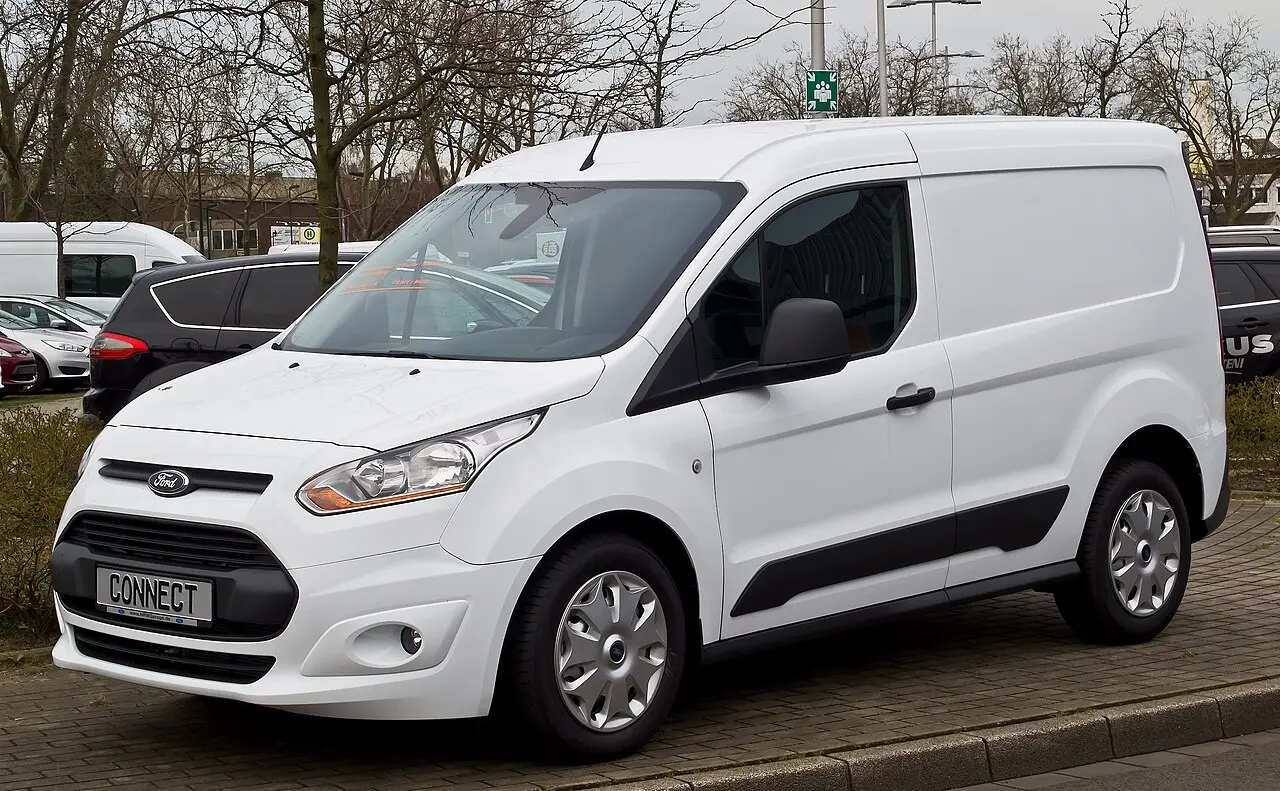
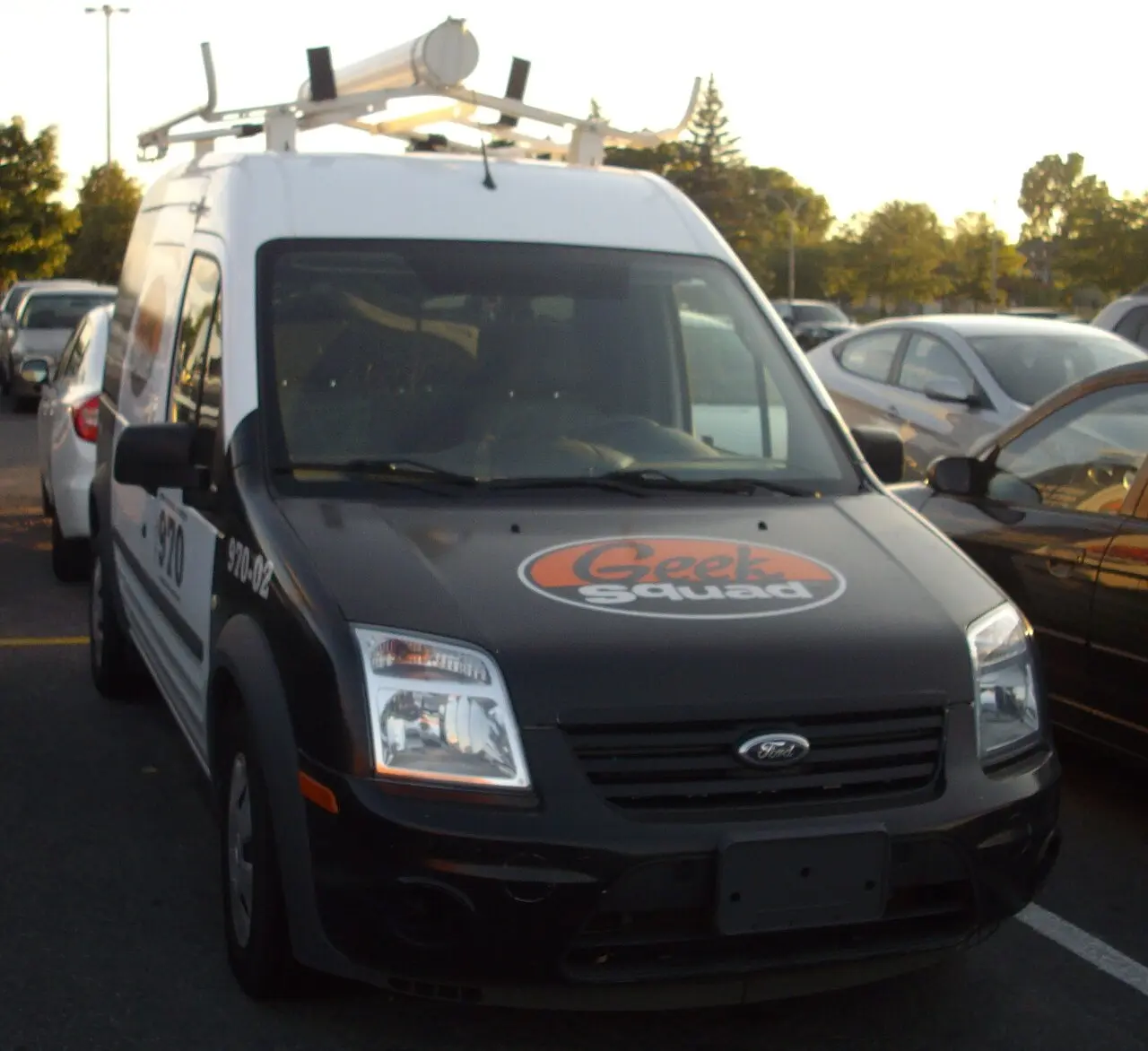
The official data lists 103 versions of the Ford Transit Connect (2010–2023), in the European Union, the United States, and Canada. Each market publishes its own figures, measured on its own test procedure.
At a glance
Years in the data
2010–2023
Markets
European Union, United States, Canada
Engines
1.5 L to 2.5 L
Power
70 kW (95 PS) to 88 kW (120 PS)
Fuels
Diesel, Petrol, Flex fuel (E85)
Lowest consumption (European Union)
5.4 L/100 km (WLTP)
Lowest consumption (United States)
9.0 L/100 km (EPA)
Lowest consumption (Canada)
9.2 L/100 km (5-cycle)
New registrations in the EU
21,478
What is the Ford Transit Connect?
The Transit Connect is Ford’s compact commercial van and a smaller member of the Transit family. Its compact size suits businesses that need a cargo van for urban work, while passenger versions offer a practical van-shaped cabin.
Transit Connect generations
The first generation, code V227, ran from 2010 to 2013 in the markets covered here. The second generation, code V408, followed from 2013 to 2024. The second generation was redesigned, with cargo van and passenger wagon versions in North America. Ford introduced a third generation for Europe in 2024.
Engines, power and fuel consumption
European Union figures cover petrol and diesel engines from 1.0 to 1.6 litres, with power from 70 kW (95 PS) to 88 kW (120 PS). The lowest listed EU consumption is 5.4 L/100 km on the WLTP test. In the US, petrol and E85 versions had engines from 1.6 to 2.5 litres; the lowest listed EPA consumption is 9 L/100 km, with a best combined rating of 26 MPG. Canada’s petrol and E85 range also spans 1.6 to 2.5 litres, with a lowest listed figure of 9.2 L/100 km on the NRCan 5-cycle test. WLTP, EPA and the Canadian 5-cycle procedure differ, so these results are not directly comparable.
Where was it sold?
The Transit Connect appears in European Union registration figures from 2010 to 2023 and in US and Canadian figures over the same period. It was also sold in the UK and France. The European lineup included diesel as well as petrol engines, while the North American versions listed here used petrol or E85.
Questions and answers
How powerful was the European Transit Connect?
The listed EU range runs from 70 kW (95 PS) to 88 kW (120 PS).
What is its lowest listed EU fuel consumption?
It is 5.4 L/100 km on the WLTP test.
Which Transit Connect generation does V408 refer to?
V408 is the second generation, which ran from 2013 to 2024.
Model codes: V408 · Sold in: European Union, United Kingdom, France, United States, and Canada · References: en.wikipedia.org, fordfan.de
European Union 29 versions
New cars registered in the EU (plus Norway and Iceland), from the European Environment Agency. Figures on the NEDC procedure until 2020 and on WLTP from 2021; versions are grouped by engine and power, with their number of registrations.
Years and version
Engine
Power
Fuel
Consumption (combined)
CO₂
Electric range
EU registrations
2023
1.5 L
73 kW (99 PS)
Diesel
5.8 L/100 km WLTP
153 g/km
–
42
2023
1.5 L
88 kW (120 PS)
Diesel
5.6 L/100 km WLTP
148 g/km
–
16
2022
1.5 L
73 kW (99 PS)
Diesel
5.5 L/100 km WLTP
152 g/km
169 km
848
2022
1.5 L
88 kW (120 PS)
Diesel
5.4 L/100 km WLTP
149 g/km
–
614
2021
1.5 L
73 kW (99 PS)
Diesel
5.8 L/100 km WLTP
152 g/km
–
758
2021
1.5 L
88 kW (120 PS)
Diesel
5.7 L/100 km WLTP
149 g/km
–
604
2021
1.5 L
74 kW (101 PS)
Diesel
–
156 g/km
–
40
2020
1.5 L
74 kW (101 PS)
Diesel
–
123 g/km
–
1,168
2020
1.5 L
88 kW (120 PS)
Diesel
–
122 g/km
–
1,048
2020
1.5 L
73 kW (99 PS)
Diesel
–
119 g/km
–
134
2019
1.5 L
74 kW (101 PS)
Diesel
–
125 g/km
–
2,302
2019
1.5 L
88 kW (120 PS)
Diesel
–
121 g/km
–
1,580
2019
1.5 L
73 kW (99 PS)
Diesel
–
120 g/km
–
406
2018
1.5 L
74 kW (101 PS)
Diesel
–
124 g/km
–
1,546
2018
1.5 L
88 kW (120 PS)
Diesel
–
120 g/km
–
1,268
2018
1.5 L
73 kW (99 PS)
Diesel
–
120 g/km
–
282
2017
1.5 L
74 kW (101 PS)
Diesel
–
120 g/km
–
1,668
2017
1.5 L
88 kW (120 PS)
Diesel
–
119 g/km
–
968
2017
1.5 L
132 kW (179 PS)
Diesel
–
119 g/km
–
10
2016
1.5 L
74 kW (101 PS)
Diesel
–
121 g/km
–
1,694
2016
1.5 L
88 kW (120 PS)
Diesel
–
120 g/km
–
1,062
2016
1.6 L
70 kW (95 PS)
Diesel
–
129 g/km
–
82
2016
1.0 L
–
Petrol
–
129 g/km
–
26
2015
1.6 L
70 kW (95 PS)
Diesel
–
128 g/km
–
1,372
2015
1.5 L
74 kW (101 PS)
Diesel
–
122 g/km
–
452
2015
1.5 L
88 kW (120 PS)
Diesel
–
119 g/km
–
266
2015
1.0 L
–
Petrol
–
128 g/km
–
52
2015
1.6 L
–
Petrol
–
180 g/km
–
20
2014
1.6 L
70 kW (95 PS)
Diesel
–
127 g/km
–
1,138
United States 32 versions
Model years sold in the USA, from the EPA and the Department of Energy (fueleconomy.gov). MPG on the EPA test; litres per 100 km = 235.215 ÷ MPG.
Years and version
Engine
Fuel
Gearbox
Drive
Consumption (combined)
CO₂
2022–2023SIDI
2.0 L
Petrol
8-speed automatic
Front-wheel drive
26 MPG (9.0 L/100 km) EPA
216 g/km
2023SIDI
2.0 L
Petrol
8-speed automatic
Front-wheel drive
25 MPG (9.4 L/100 km) EPA
221 g/km
2022SIDI
2.0 L
Petrol
8-speed automatic
Front-wheel drive
25 MPG (9.4 L/100 km) EPA
221 g/km
2022SIDI; FFV
2.0 L
Flex fuel (E85)
8-speed automatic
Front-wheel drive
25 MPG (9.4 L/100 km) EPA
221 g/km
2022SIDI; FFV
2.0 L
Flex fuel (E85)
8-speed automatic
Front-wheel drive
26 MPG (9.0 L/100 km) EPA
216 g/km
2019–2022
2.5 L
Petrol
6-speed automatic
Front-wheel drive
22 MPG (10.7 L/100 km) EPA
251 g/km
2022
2.5 L
Petrol
6-speed automatic
Front-wheel drive
22 MPG (10.7 L/100 km) EPA
246 g/km
2022
2.5 L
Petrol
6-speed automatic
Front-wheel drive
22 MPG (10.7 L/100 km) EPA
249 g/km
2019–2021SIDI
2.0 L
Petrol
8-speed automatic
Front-wheel drive
26 MPG (9.0 L/100 km) EPA
214 g/km
2019–2021SIDI; FFV
2.0 L
Flex fuel (E85)
8-speed automatic
Front-wheel drive
26 MPG (9.0 L/100 km) EPA
214 g/km
2021SIDI
2.0 L
Petrol
8-speed automatic
Front-wheel drive
25 MPG (9.4 L/100 km) EPA
217 g/km
2021SIDI; FFV
2.0 L
Flex fuel (E85)
8-speed automatic
Front-wheel drive
25 MPG (9.4 L/100 km) EPA
217 g/km
2019–2021
2.5 L
Petrol
6-speed automatic
Front-wheel drive
22 MPG (10.7 L/100 km) EPA
247 g/km
2019–2020SIDI; FFV
2.0 L
Flex fuel (E85)
8-speed automatic
Front-wheel drive
25 MPG (9.4 L/100 km) EPA
219 g/km
2019–2020SIDI
2.0 L
Petrol
8-speed automatic
Front-wheel drive
25 MPG (9.4 L/100 km) EPA
219 g/km
2019
2.5 L
Petrol
6-speed automatic
Front-wheel drive
22 MPG (10.7 L/100 km) EPA
246 g/km
2014–2018
2.5 L
Petrol
6-speed automatic
Front-wheel drive
23 MPG (10.2 L/100 km) EPA
244 g/km
2016–2018FFV
2.5 L
Flex fuel (E85)
6-speed automatic
Front-wheel drive
23 MPG (10.2 L/100 km) EPA
244 g/km
2018FFV
2.5 L
Flex fuel (E85)
6-speed automatic
Front-wheel drive
22 MPG (10.7 L/100 km) EPA
251 g/km
2018
2.5 L
Petrol
6-speed automatic
Front-wheel drive
22 MPG (10.7 L/100 km) EPA
251 g/km
2016–2017
2.5 L
Petrol
6-speed automatic
Front-wheel drive
22 MPG (10.7 L/100 km) EPA
253 g/km
2016–2017FFV
2.5 L
Flex fuel (E85)
6-speed automatic
Front-wheel drive
22 MPG (10.7 L/100 km) EPA
253 g/km
2017FFV
2.5 L
Flex fuel (E85)
6-speed automatic
Front-wheel drive
22 MPG (10.7 L/100 km) EPA
249 g/km
2016SIDI
1.6 L
Petrol
6-speed automatic
Front-wheel drive
24 MPG (9.8 L/100 km) EPA
226 g/km
2016SIDI
1.6 L
Petrol
6-speed automatic
Front-wheel drive
25 MPG (9.4 L/100 km) EPA
225 g/km
2014–2015SIDI
1.6 L
Petrol
6-speed automatic
Front-wheel drive
25 MPG (9.4 L/100 km) EPA
222 g/km
2015SIDI
1.6 L
Petrol
6-speed automatic
Front-wheel drive
25 MPG (9.4 L/100 km) EPA
221 g/km
2014–2015
2.5 L
Petrol
6-speed automatic
Front-wheel drive
24 MPG (9.8 L/100 km) EPA
234 g/km
2015
2.5 L
Petrol
6-speed automatic
Front-wheel drive
23 MPG (10.2 L/100 km) EPA
240 g/km
2014SIDI
1.6 L
Petrol
6-speed automatic
Front-wheel drive
24 MPG (9.8 L/100 km) EPA
226 g/km
2014
2.5 L
Petrol
6-speed automatic
Front-wheel drive
23 MPG (10.2 L/100 km) EPA
239 g/km
2013
2.0 L
Petrol
4-speed automatic
Front-wheel drive
23 MPG (10.2 L/100 km) EPA
235 g/km
Canada 33 versions
Model years sold in Canada, from Natural Resources Canada fuel consumption ratings (5-cycle test).
Official figures are measured on standard test procedures and differ between markets. Your consumption depends on how, where and in what conditions you drive.