Ford

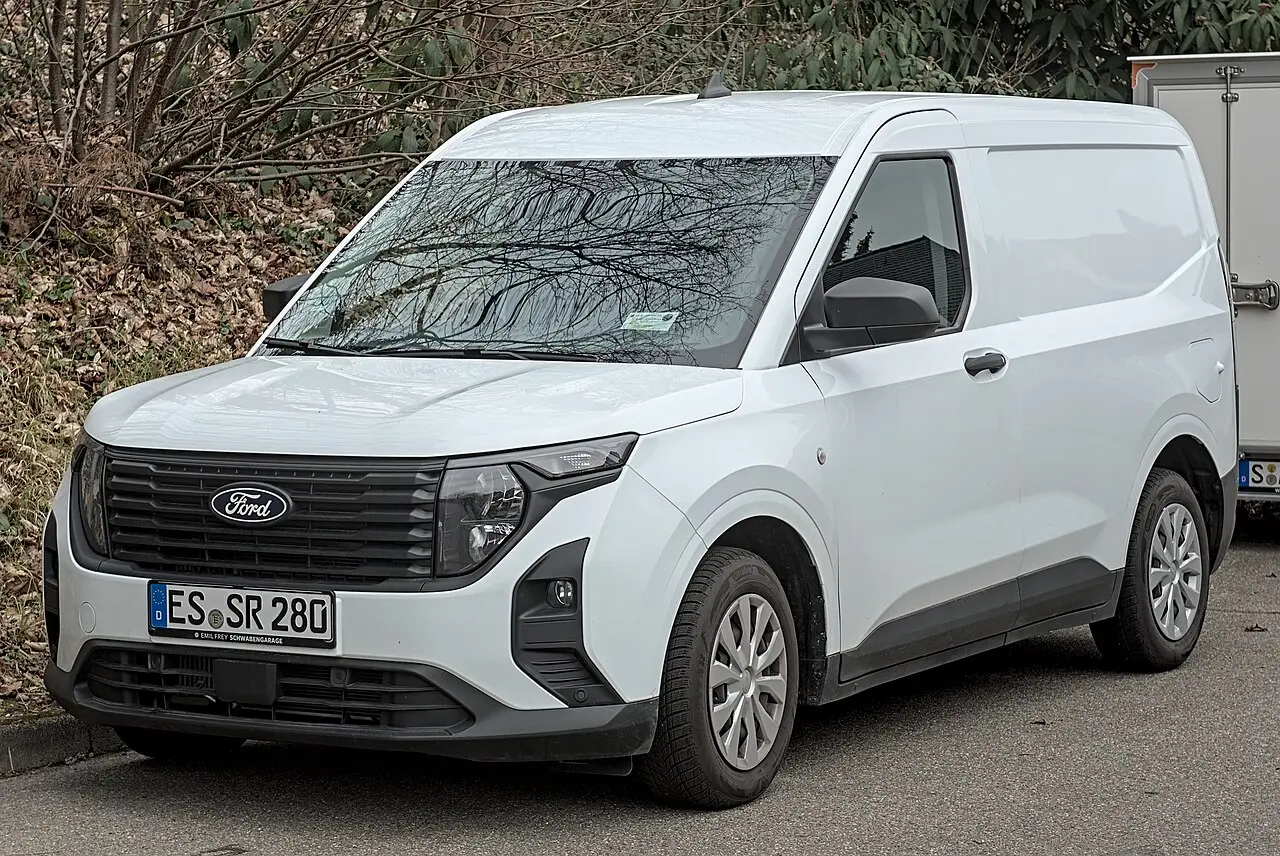
Ford Tourneo Courier

Ford Tourneo Courier
Photo: Alexander Migl / Wikimedia Commons · CC BY-SA 4.0

The official data lists 85 versions of the Ford Tourneo Courier (2014–2025), in the European Union, the United Kingdom, and France. Each market publishes its own figures, measured on its own test procedure.

At a glance

Years in the data
2014–2025
Markets
European Union, United Kingdom, France
Engines
1.0 L to 1.6 L
Power
55 kW (75 PS) to 105 kW (143 PS)
Fuels
Diesel, Petrol, Electric
Lowest consumption (France)
3.8 L/100 km (NEDC)
Lowest consumption (United Kingdom)
3.8 L/100 km (NEDC)
Lowest consumption (European Union)
4.5 L/100 km (WLTP)
New registrations in the EU
157,010

What is the Ford Tourneo Courier?

The Tourneo Courier is Ford’s compact passenger vehicle with a van-inspired shape and a practical cabin. It belongs to the Tourneo family, below the larger Connect and Custom, and is suited to daily trips where an upright seating position and useful interior space matter.

The first generation had a compact passenger-van format. The second generation, introduced in 2023, brought a more SUV-inspired look while keeping the Courier’s compact, multi-activity role.

Generations and engines

The first generation ran from 2014 to 2023. The second began in 2023 and continues today, with a more distinctive exterior and a practical cabin.

EU figures from 2014 to 2025 span 1.0 L to 1.6 L engines, with power from 52 kW (71 PS) to 111 kW (151 PS). Listed fuel categories include petrol, diesel and electric. UK figures from 2014 to 2022 cover 1.0 L to 1.5 L engines, with power from 55 kW (75 PS) to 75 kW (102 PS). French figures for 2014–2015 list petrol and diesel versions rated from 55 kW (75 PS) to 74 kW (101 PS).

Fuel consumption

The lowest listed EU consumption is 4.5 L/100 km WLTP. The UK low is 3.8 L/100 km NEDC; French figures for 2014–2015 give the same low on NEDC. WLTP and NEDC are different test procedures, so results from different markets are not directly comparable.

Where was it sold?

EU registration figures cover 2014–2025, UK figures cover 2014–2022, and French listings cover 2014–2015. EU figures record 157,010 Tourneo Courier registrations over the period. The 1.0 L petrol rated at 74 kW (101 PS) was a leading configuration in 2019; the 1.0 L petrol rated at 92 kW (125 PS) featured among the leading configurations in 2024 and 2025.

Questions and answers

How many Tourneo Courier generations are there?

Two: the first ran from 2014 to 2023, and the second began in 2023.

What kind of vehicle is the second-generation Tourneo Courier?

It is a compact passenger vehicle with a practical cabin and SUV-inspired styling.

What is the lowest listed EU fuel-consumption figure?

It is 4.5 L/100 km on the WLTP test.
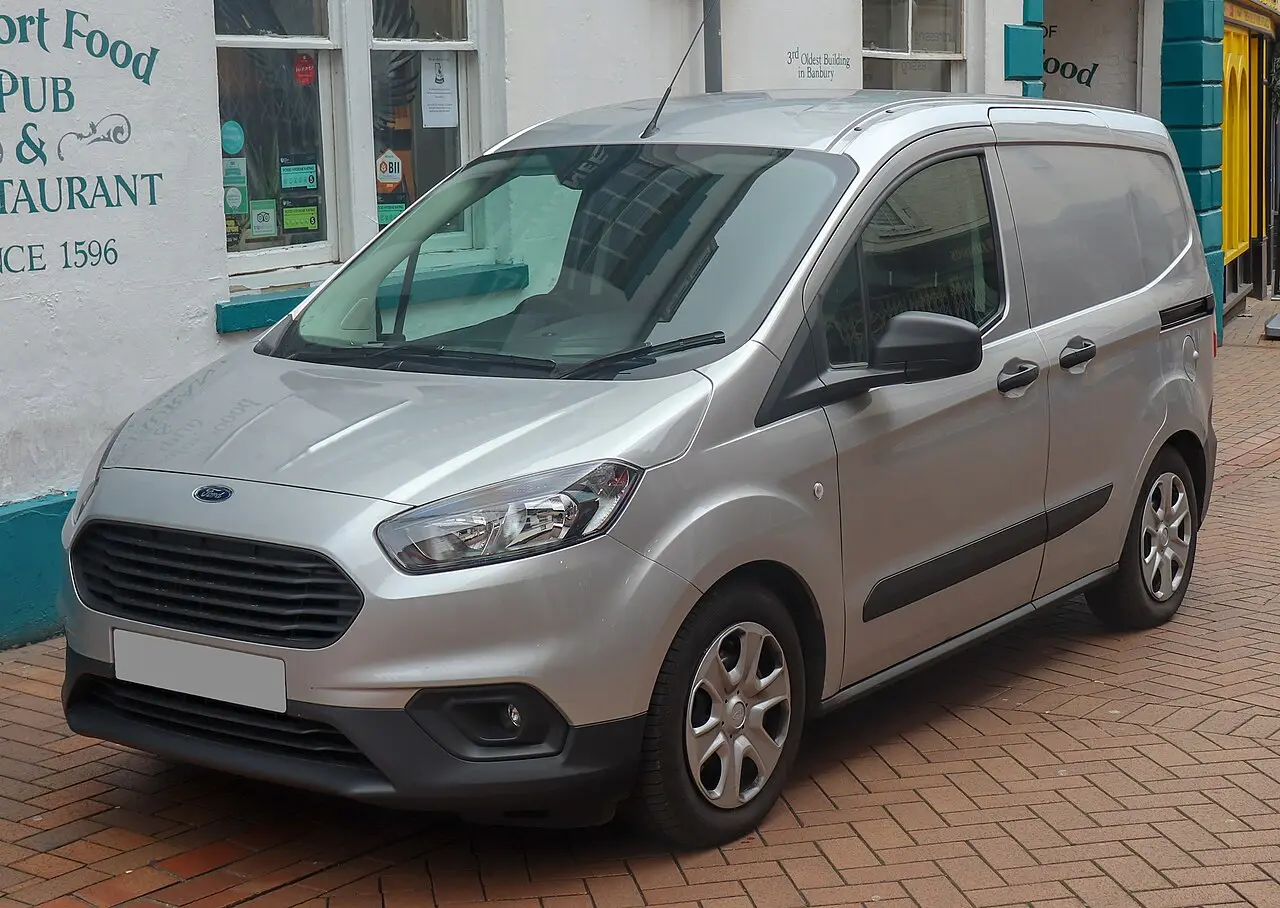
Tourneo Courier First generation (2014–2023)

Ford Tourneo Courier First generation
Photo: Vauxford / Wikimedia Commons · CC BY-SA 4.0

Model codes: B platform · Sold in: European Union, United Kingdom, and France · References: auto-motor-und-sport.de, autocentrum.pl

Show all 79 versions

Tourneo Courier Second generation (since 2023)

Ford Tourneo Courier Second generation
Photo: Alexander Migl / Wikimedia Commons · CC BY-SA 4.0

Model codes: B platform · Sold in: European Union, United Kingdom, and France · References: en.wikipedia.org, media.ford.com

European Union 8 versions

New cars registered in the EU (plus Norway and Iceland), from the European Environment Agency. Figures on the NEDC procedure until 2020 and on WLTP from 2021; versions are grouped by engine and power, with their number of registrations.

Years and versionEnginePowerFuelConsumption (combined)CO₂Electric rangeEU registrations
20251.0 L92 kW (125 PS)Petrol6.8 L/100 km WLTP154 g/km–14,095
20251.0 L91 kW (124 PS)Petrol6.8 L/100 km WLTP154 g/km–3,224
2025Electric motor100 kW (136 PS)Electric17.5 kWh/100 km WLTP0 g/km285 km780
2025Electric motor52 kW (71 PS)Electric17.7 kWh/100 km WLTP0 g/km285 km218
20241.0 L92 kW (125 PS)Petrol6.8 L/100 km WLTP156 g/km–14,550
20241.0 L91 kW (124 PS)Petrol6.8 L/100 km WLTP155 g/km–3,916
20231.0 L92 kW (125 PS)Petrol7.0 L/100 km WLTP161 g/km–32
20231.5 L74 kW (101 PS)Diesel5.1 L/100 km WLTP135 g/km–15

Official figures are measured on standard test procedures and differ between markets. Your consumption depends on how, where and in what conditions you drive.