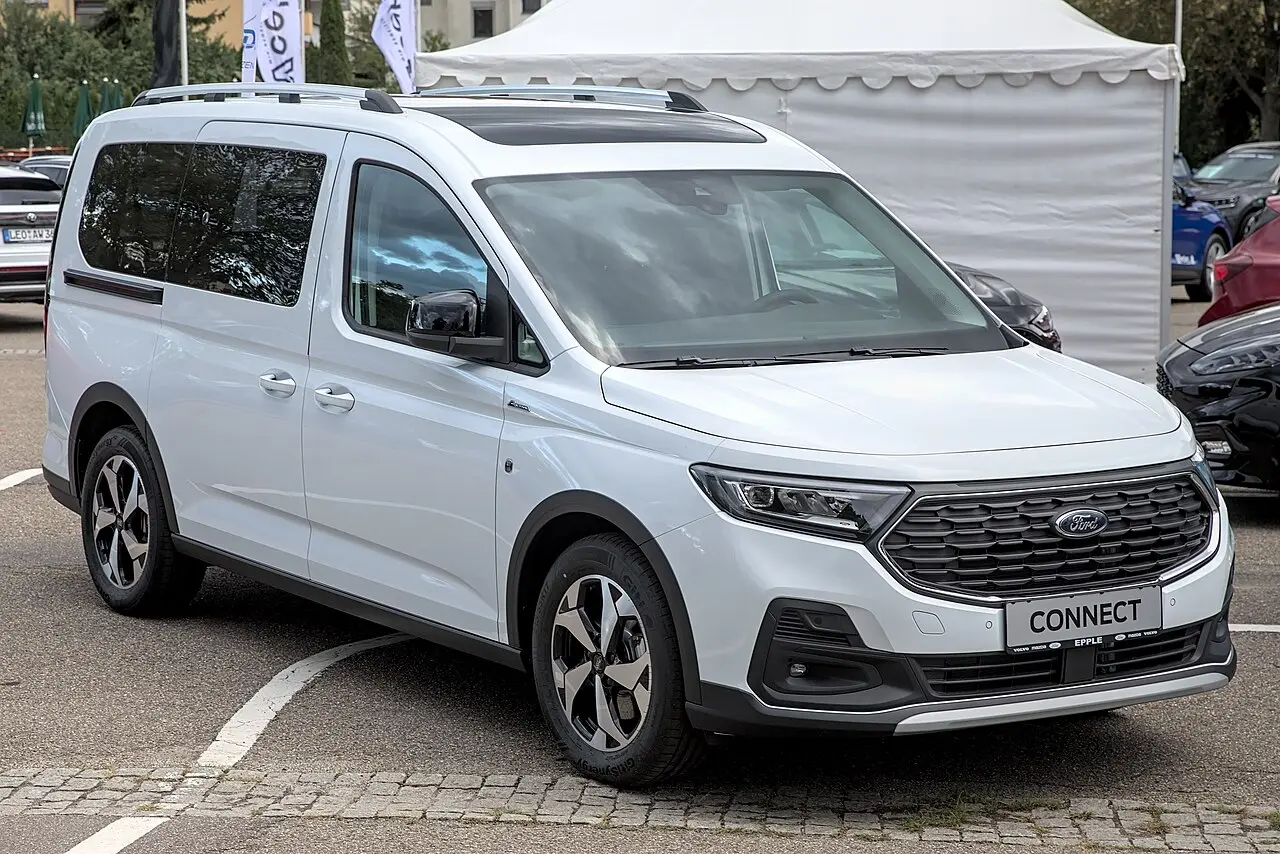
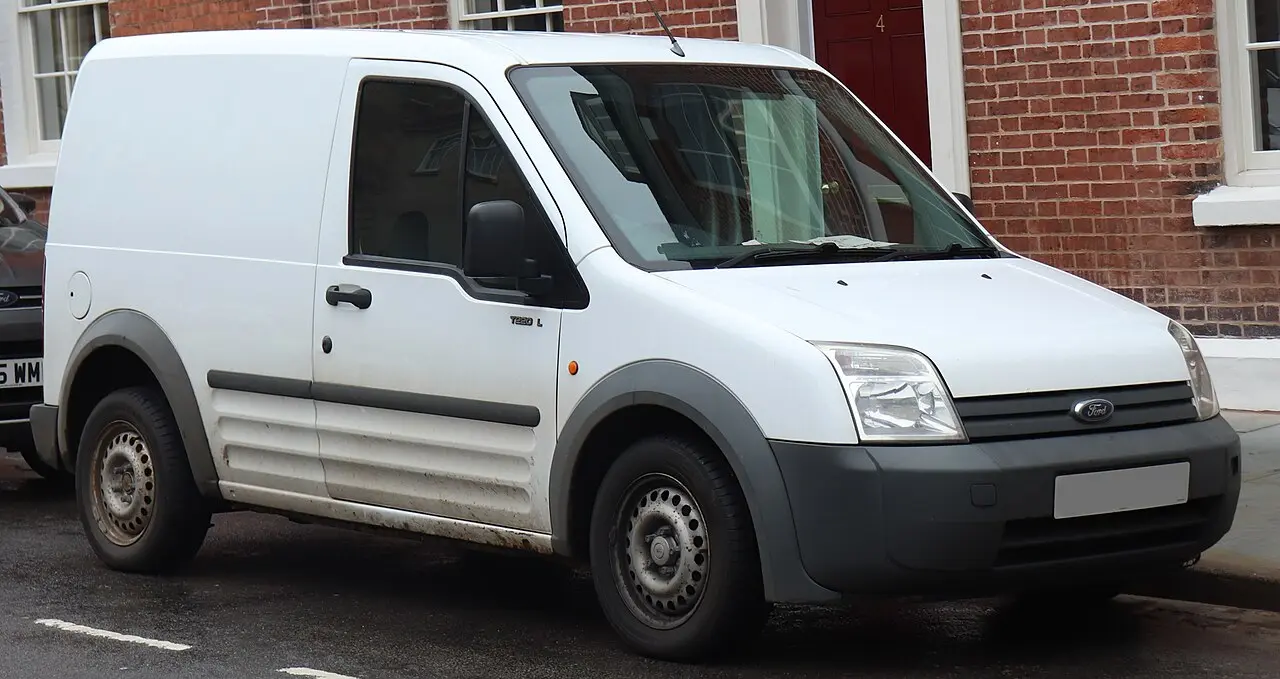
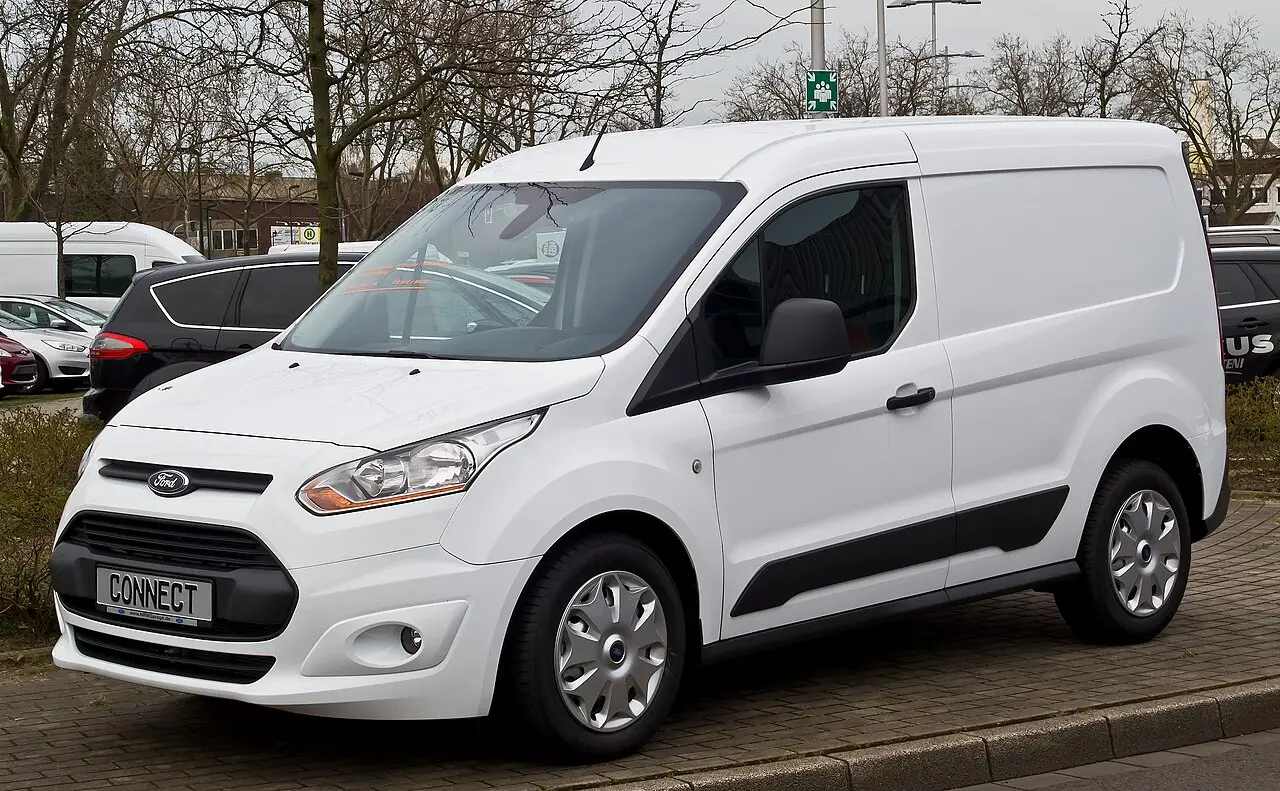
The official data lists 169 versions of the Ford Tourneo Connect (2004–2026), in the European Union, the United Kingdom, and France. Each market publishes its own figures, measured on its own test procedure.
At a glance
Years in the data
2004–2026
Markets
European Union, United Kingdom, France
Engines
1.0 L to 2.0 L
Power
55 kW (75 PS) to 122 kW (166 PS)
Fuels
Petrol, Diesel, Plug-in hybrid, Hybrid
Lowest consumption (United Kingdom)
4.3 L/100 km (NEDC)
Lowest consumption (France)
4.6 L/100 km (WLTP)
Lowest consumption (European Union)
4.7 L/100 km (WLTP)
Plug-in hybrid, weighted (European Union)
0.5 L/100 km (WLTP)
New registrations in the EU
172,223
What is the Ford Tourneo Connect?
The Tourneo Connect is a compact passenger van with an upright shape and a roomy, flexible cabin. It belongs to Ford’s Tourneo family, alongside the smaller Courier and larger Custom, and is designed for everyday passenger and family use. Its van-based layout makes getting in and out straightforward and gives the cabin a practical feel.
Ford’s Tourneo models are the passenger-focused side of its van range. The Connect has kept that role through several generations, with the Grand Tourneo Connect offering a longer body.
Generations and engines
The first generation ran from 2003 to 2013, the second from 2013 to 2022, and the third began in 2022. Each carried forward the Connect’s compact, practical passenger-van format. The latest generation is offered in standard and Grand body styles, with flexible seating.
In EU registration figures from 2010 to 2025, engine sizes range from 1.0 L to 2.0 L and power from 55 kW (75 PS) to 110 kW (150 PS). The listed fuels include petrol, diesel, hybrid and plug-in hybrid. UK figures from 2004 to 2024 cover petrol and diesel engines from 1.0 L to 2.0 L, with power from 66 kW (90 PS) to 122 kW (166 PS).
Fuel consumption
The lowest listed EU consumption for petrol, diesel and hybrid versions is 4.7 L/100 km on the WLTP test. The plug-in hybrid’s official weighted figure is 0.5 L/100 km WLTP; it assumes that some driving is electric. UK figures give a low of 4.3 L/100 km on NEDC, while France’s 2026 listings give 4.6 L/100 km WLTP. WLTP and NEDC are different test procedures, so results from different markets are not directly comparable.
Where was it sold?
EU registration figures cover 2010–2025, UK figures cover 2004–2024, and French listings cover 2026. EU figures record 172,223 Tourneo Connect registrations over the period. The 1.5 L diesel rated at 88 kW (120 PS) was a leading configuration in 2016, 2017 and 2019.
Questions and answers
How many generations of Tourneo Connect are there?
Three: the first generation ran from 2003 to 2013, the second from 2013 to 2022, and the third began in 2022.
What engines and power outputs are listed in EU figures?
EU figures cover 1.0 L to 2.0 L engines, with power from 55 kW (75 PS) to 110 kW (150 PS).
What is the lowest official fuel-consumption figure?
The lowest listed figure is 0.5 L/100 km WLTP for the plug-in hybrid. It is a weighted figure that assumes some driving is electric.
Model codes: V760 · Sold in: European Union, United Kingdom, and France · References: fordfan.de, en.wikipedia.org
European Union 21 versions
New cars registered in the EU (plus Norway and Iceland), from the European Environment Agency. Figures on the NEDC procedure until 2020 and on WLTP from 2021; versions are grouped by engine and power, with their number of registrations.
Years and version
Engine
Power
Fuel
Consumption (combined)
CO₂
Electric range
EU registrations
2025
2.0 L
90 kW (122 PS)
Diesel
5.7 L/100 km WLTP
150 g/km
–
5,111
2025
1.5 L
85 kW (116 PS)
Plug-in hybrid
0.7 L/100 km WLTP18.5 kWh/100 km WLTP
16 g/km
117 km
2,269
2025
1.5 L
85 kW (116 PS)
Petrol
6.8 L/100 km WLTP
155 g/km
–
2,146
2025
2.0 L
75 kW (102 PS)
Diesel
5.4 L/100 km WLTP
142 g/km
–
1,258
2025
1.5 L
84 kW (114 PS)
Petrol
6.7 L/100 km WLTP
152 g/km
–
178
2025
1.5 L
–
Hybrid
5.8 L/100 km WLTP
135 g/km
–
70
2024
2.0 L
90 kW (122 PS)
Diesel
5.3 L/100 km WLTP
140 g/km
–
5,990
2024
1.5 L
84 kW (114 PS)
Petrol
6.7 L/100 km WLTP
151 g/km
–
2,123
2024
2.0 L
75 kW (102 PS)
Diesel
5.1 L/100 km WLTP
134 g/km
–
1,486
2024
1.5 L
85 kW (116 PS)
Petrol
6.9 L/100 km WLTP
156 g/km
–
706
2024
1.5 L
85 kW (116 PS)
Plug-in hybrid
0.5 L/100 km WLTP18.9 kWh/100 km WLTP
19 g/km
117 km
62
2023
2.0 L
90 kW (122 PS)
Diesel
5.1 L/100 km WLTP
135 g/km
–
5,607
2023
1.5 L
84 kW (114 PS)
Petrol
6.6 L/100 km WLTP
150 g/km
–
2,884
2023
2.0 L
75 kW (102 PS)
Diesel
5.0 L/100 km WLTP
131 g/km
–
852
2023
1.5 L
67 kW (91 PS)
Petrol
6.8 L/100 km WLTP
153 g/km
–
11
2023
2.0 L
67 kW (91 PS)
Diesel
5.1 L/100 km WLTP
133 g/km
–
10
2022
1.5 L
88 kW (120 PS)
Diesel
5.5 L/100 km WLTP
154 g/km
–
2,379
2022
2.0 L
90 kW (122 PS)
Diesel
4.9 L/100 km WLTP
133 g/km
–
2,320
2022
1.5 L
84 kW (114 PS)
Petrol
6.2 L/100 km WLTP
149 g/km
–
1,002
2022
1.5 L
73 kW (99 PS)
Diesel
5.6 L/100 km WLTP
150 g/km
–
477
2022
2.0 L
75 kW (102 PS)
Diesel
4.7 L/100 km WLTP
128 g/km
–
215
United Kingdom 20 versions
New cars on sale in the UK, from the Vehicle Certification Agency. NEDC figures until 2018 and WLTP figures after; years are the editions a version appeared in.
Years and version
Engine
Power
Fuel
Gearbox
Consumption (combined)
CO₂
20241.5 EcoBoost
1.5 L
114 kW (155 PS)
Petrol
6-speed manual
6.1 L/100 km WLTP
138 g/km
20241.5 EcoBoost
1.5 L
114 kW (155 PS)
Petrol
7-speed automatic
6.3 L/100 km WLTP
144 g/km
20241.5 EcoBoost
1.5 L
114 kW (155 PS)
Petrol
6-speed manual
7.4 L/100 km WLTP
167 g/km
20241.5 EcoBoost
1.5 L
114 kW (155 PS)
Petrol
7-speed automatic
7.5 L/100 km WLTP
170 g/km
20242.0 EcoBlue - 3.944 FDR
2.0 L
122 kW (166 PS)
Diesel
6-speed manual
4.6 L/100 km WLTP
121 g/km
20242.0 EcoBlue
2.0 L
122 kW (166 PS)
Diesel
7-speed automatic
4.9 L/100 km WLTP
128 g/km
20242.0 EcoBlue - 4.235/3.273 FDR
2.0 L
122 kW (166 PS)
Diesel
6-speed manual
5.1 L/100 km WLTP
133 g/km
20242.0 EcoBlue - 3.944 FDR
2.0 L
122 kW (166 PS)
Diesel
6-speed manual
5.5 L/100 km WLTP
143 g/km
20242.0 EcoBlue
2.0 L
122 kW (166 PS)
Diesel
7-speed automatic
5.7 L/100 km WLTP
151 g/km
20242.0 EcoBlue - 4.235/3.273 FDR
2.0 L
122 kW (166 PS)
Diesel
6-speed manual
6.1 L/100 km WLTP
159 g/km
2022–20231.5 EcoBoost
1.5 L
84 kW (114 PS)
Petrol
6-speed manual
6.1 L/100 km WLTP
138 g/km
2022–20231.5 EcoBoost
1.5 L
84 kW (114 PS)
Petrol
7-speed automatic
6.3 L/100 km WLTP
144 g/km
2022–20231.5 EcoBoost
1.5 L
84 kW (114 PS)
Petrol
6-speed manual
7.4 L/100 km WLTP
167 g/km
2022–20231.5 EcoBoost
1.5 L
84 kW (114 PS)
Petrol
7-speed automatic
7.5 L/100 km WLTP
170 g/km
2022–20232.0 EcoBlue
2.0 L
90 kW (122 PS)
Diesel
7-speed automatic
4.9 L/100 km WLTP
128 g/km
2022–20232.0 EcoBlue
2.0 L
90 kW (122 PS)
Diesel
7-speed automatic
5.7 L/100 km WLTP
151 g/km
2022–20232.0 EcoBlue - 3.944 FDR
2.0 L
90 kW (122 PS)
Diesel
6-speed manual
4.6 L/100 km WLTP
121 g/km
2022–20232.0 EcoBlue - 3.944 FDR
2.0 L
90 kW (122 PS)
Diesel
6-speed manual
5.5 L/100 km WLTP
143 g/km
2022–20232.0 EcoBlue - 4.235/3.273 FDR
2.0 L
90 kW (122 PS)
Diesel
6-speed manual
5.1 L/100 km WLTP
133 g/km
2022–20232.0 EcoBlue - 4.235/3.273 FDR
2.0 L
90 kW (122 PS)
Diesel
6-speed manual
6.1 L/100 km WLTP
159 g/km
France 6 versions
New cars on sale in France, from ADEME Car Labelling. NEDC figures until 2015, WLTP figures in the current catalogue.
Official figures are measured on standard test procedures and differ between markets. Your consumption depends on how, where and in what conditions you drive.