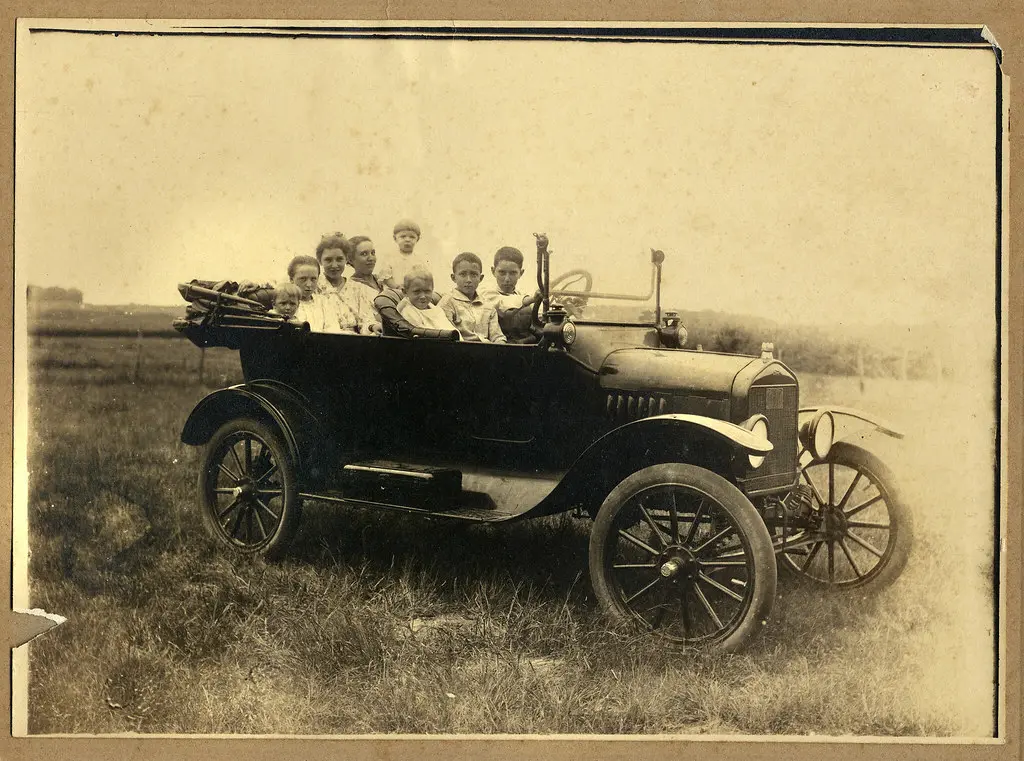
What was the Ford Model T?
The Model T was Ford’s mass-market car, designed as practical transport for a broad range of drivers. It came in body styles that included open cars and enclosed sedans, and could serve as personal transport or a work vehicle.
The Model T became closely associated with Ford’s manufacturing story. The company built it on a moving assembly line at its Highland Park plant, helping bring mass production to the car industry. Its design and equipment evolved during its production life, while the basic concept remained familiar.
Engine and power
The Model T used a four-cylinder petrol engine. Its controls and transmission were unlike those of a modern car, and driving one takes some getting used to. Details changed over its production life, but it remained a straightforward car.
Fuel consumption and CO₂
The Model T was built before modern fuel-economy and CO₂ testing existed, so it has no comparable official result. European WLTP and NEDC tests, the US EPA procedure and Canada’s five-cycle test belong to later eras and cannot provide a rating for this car.
Where was the Model T sold?
Ford built the Model T for buyers around the world, using overseas plants and local assembly. Ford of Canada supplied cars to markets across the British Commonwealth. Its wide reach made the Model T a familiar form of transport in places with very different roads and conditions.
Questions and answers
What sort of car was the Model T?
It was a practical Ford offered in several body styles, including open cars and enclosed sedans.
What engine did the Model T use?
It used a four-cylinder petrol engine.
Does the Model T have an official modern fuel-economy rating?
No. Modern European, US and Canadian test procedures came later and do not provide a result for the Model T.