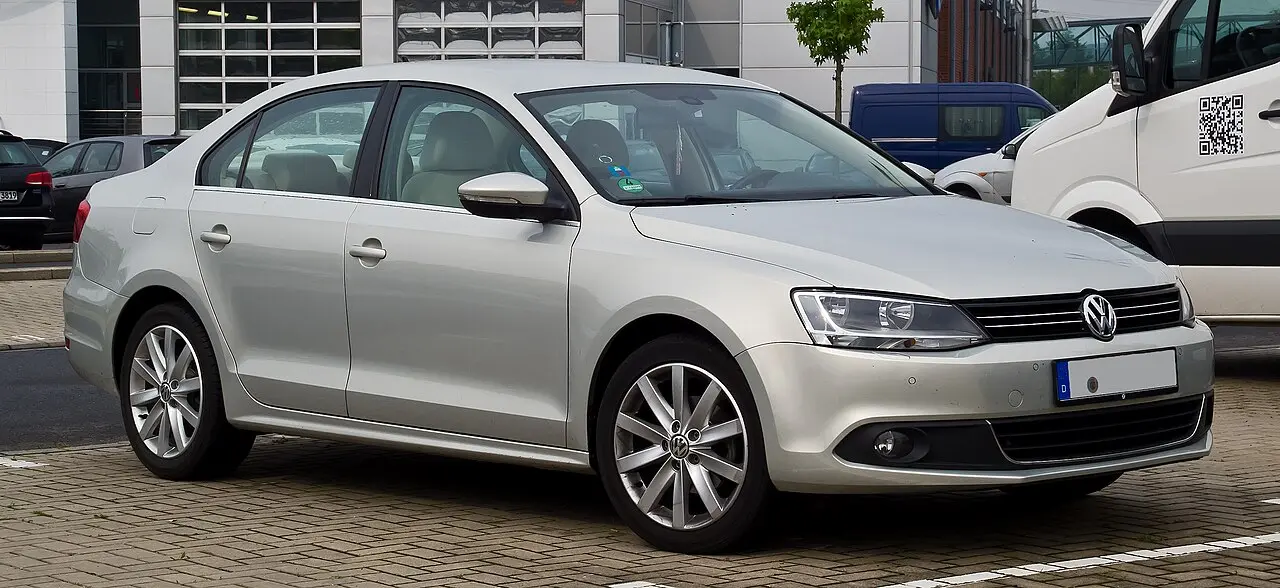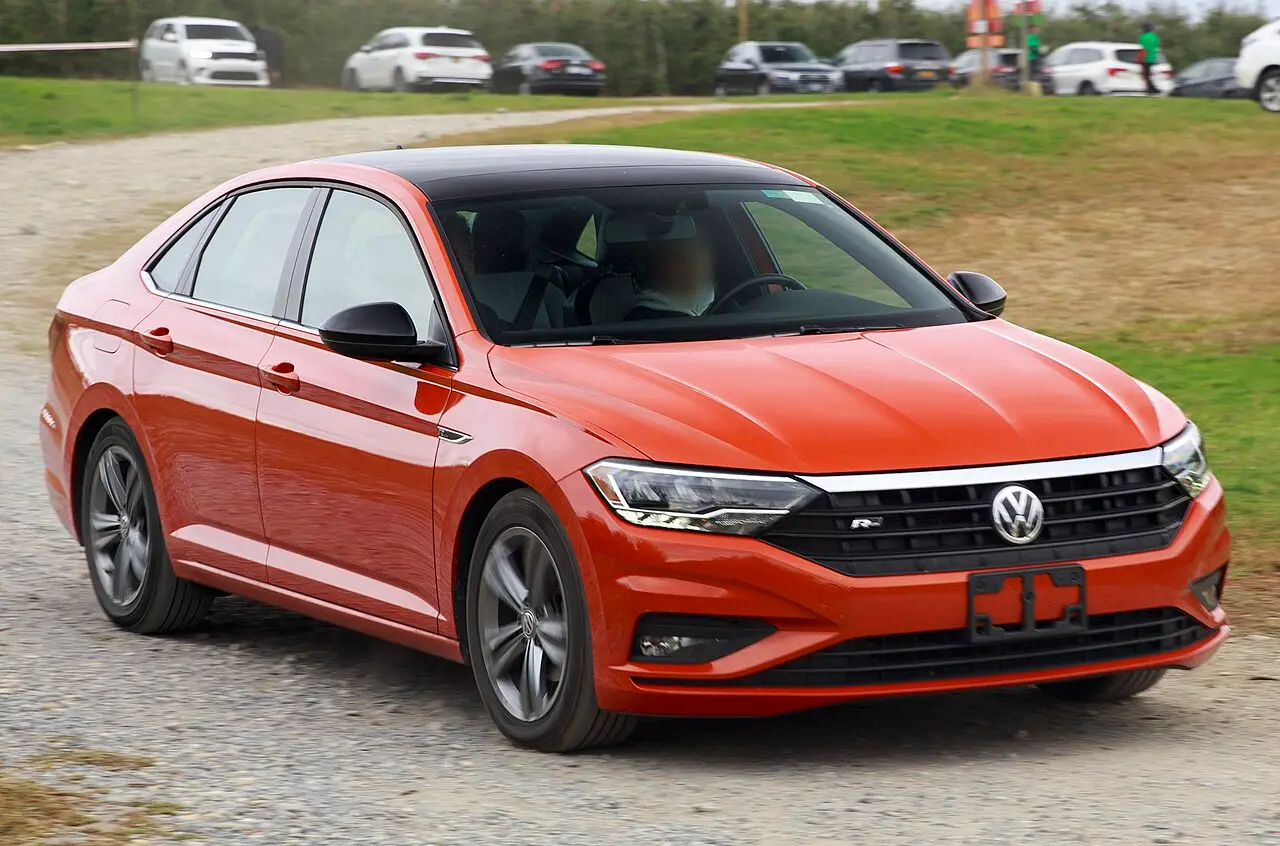
What is the Volkswagen Sagitar?
The Sagitar is a compact four-door saloon built for Volkswagen’s Chinese range. Its notchback shape has a separate boot, and the model offers a traditional saloon alternative within the local line-up. FAW-Volkswagen has made the Sagitar since 2006; it is part of the wider Jetta family, adapted for China.
The third generation arrived in China as a long-wheelbase saloon, with extra space for rear passengers. The Sagitar reflects Volkswagen’s long-running presence in China, where compact notchback cars remain an important part of its range.
Sagitar generations and engines
Generation II, also known as A6 or Typ 5C6, is listed for 2012–2019. Generation III, associated with A7, is listed for 2019–2024. The third generation’s long-wheelbase layout gives the rear cabin more room.
European Union registration versions use petrol engines. They include a 1.2-litre engine rated at 85 kW (116 PS), a 1.4-litre at 110 kW (150 PS), and a 1.5-litre at 118 kW (160 PS). Volkswagen has described the Sagitar as an MQB model, with 1.2- and 1.4-litre TSI engines in its China-market range.
European registrations
EEA registration figures cover 2019–2025 and record five petrol versions, with 82 cars registered in total. The most registered versions were the 1.4-litre, 110 kW model in 2021, with 26 registrations; the 1.5-litre, 118 kW model in 2020, with 18; and the 1.2-litre, 85 kW model in 2019, with 16.
The Sagitar is part of Volkswagen’s Chinese range, and its EEA registrations do not represent a regular European-market offering. Registration counts are not fuel-consumption or CO₂ test results. Where consumption figures are compared across markets, the procedures differ: Europe uses WLTP or, for older vehicles, NEDC; the USA uses EPA testing, and Canada uses the 5-cycle procedure.
Questions and answers
What kind of car is the Volkswagen Sagitar?
It is a compact four-door saloon with a notchback shape.
Which Sagitar generations are listed?
Generation II (A6/Typ 5C6) is listed for 2012–2019, followed by Generation III (A7) for 2019–2024.
What petrol engine outputs appear in EEA registrations?
The listed engines produce 85 kW, 110 kW or 118 kW.