What is the DKW Munga?
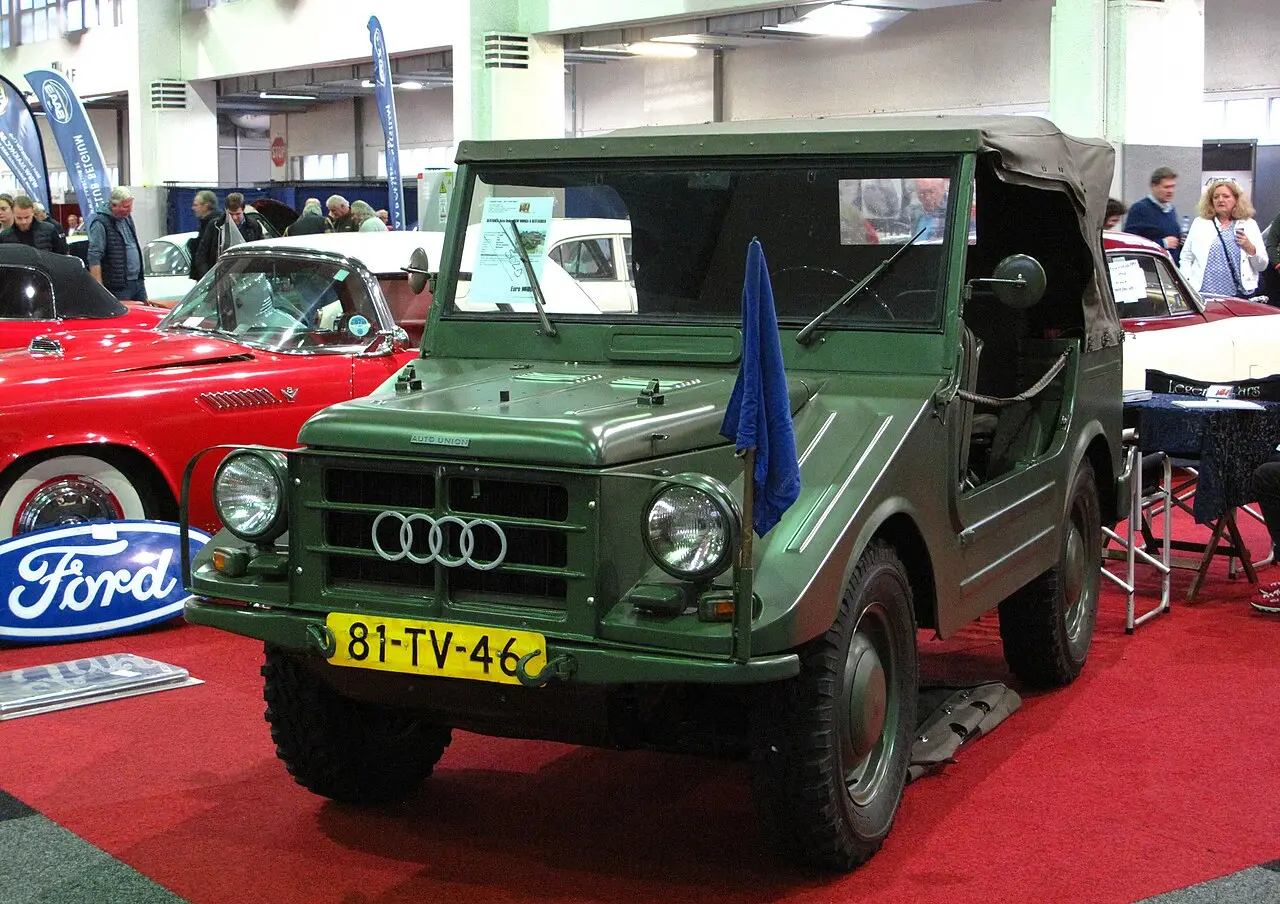
The DKW Munga was a light off-road vehicle developed by Auto Union. Its upright, open body and four-wheel drive suited military and utility work, setting it apart from DKW’s compact passenger cars.
The name Munga comes from a German phrase meaning multi-purpose universal off-road vehicle with all-wheel drive. Auto Union developed the vehicle for military use, and it also served civilian and public-service roles.
Engines and power
The Munga combined four-wheel drive with an engine from DKW’s two-stroke tradition. Its open, practical body reflected its role as a working vehicle.
Body layouts and specifications varied by version. The vehicle’s simple cabin and upright shape were shaped by its off-road and utility purpose.
Fuel use and CO₂
Official fuel-consumption and CO₂ results depend on the version and market. European figures use NEDC or WLTP, while US EPA ratings and Canada’s five-cycle results follow different methods, so results from those markets are not directly equivalent.
Fuel use in practice can change with terrain, load and vehicle condition. The Munga’s off-road role is useful context when interpreting a result from a road test procedure.
Where was it sold?
Auto Union developed the Munga in West Germany for military service. It was also exported and used by public services and civilian owners.
The Munga extended DKW’s range beyond compact passenger cars. Its four-wheel drive, open body and practical layout gave it a distinct role within the Auto Union story.
Questions and answers
What does the name Munga mean?
It comes from a German phrase meaning multi-purpose universal off-road vehicle with all-wheel drive.
Was the DKW Munga a four-wheel-drive vehicle?
Yes. Four-wheel drive was central to its off-road design.
What engine does the Munga use?
The Munga belonged to DKW’s two-stroke tradition. Exact specifications depended on the version.