The official data lists 306 versions of the Citroën C4 Picasso (2007–2024), in the European Union, the United Kingdom, and France. Each market publishes its own figures, measured on its own test procedure.
At a glance
Years in the data
2007–2024
Markets
European Union, United Kingdom, France
Engines
1.2 L to 2.0 L
Power
68 kW (92 PS) to 121 kW (165 PS)
Fuels
Diesel, Petrol, Hybrid
Lowest consumption (France)
3.8 L/100 km (NEDC)
Lowest consumption (United Kingdom)
3.8 L/100 km (NEDC)
New registrations in the EU
1,337,403
What is the Citroën C4 Picasso?
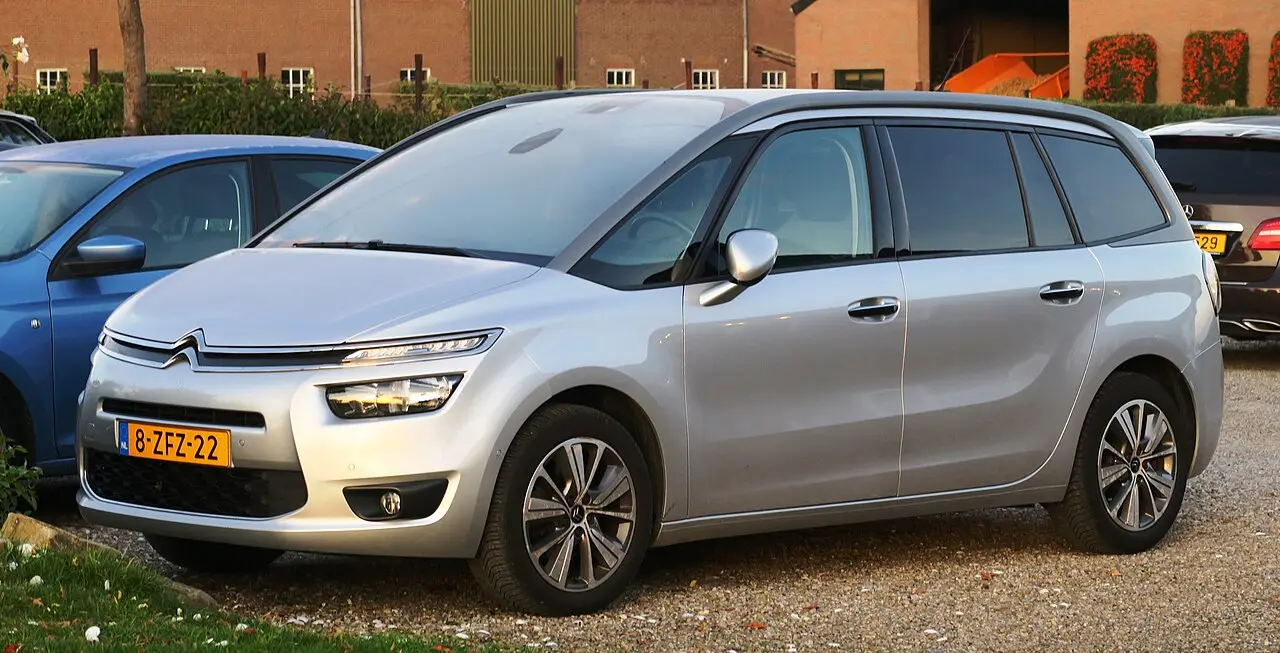
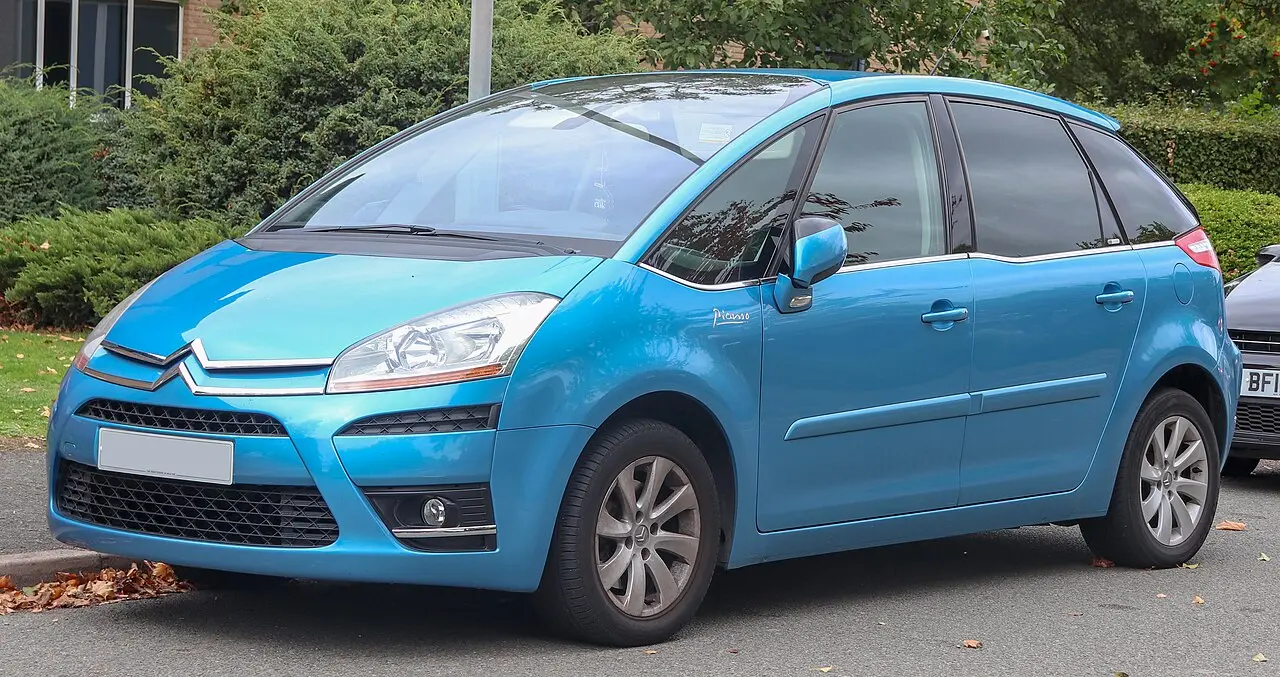
The Citroën C4 Picasso is a compact multi-purpose vehicle, or MPV, designed around passenger space and everyday family use. It came in standard and longer Grand forms, including versions with five or seven seats. A broad windscreen and airy cabin helped make the most of its people-carrier layout.
The C4 Picasso brought Citroën’s distinctive approach to design into the compact MPV class. Its second generation, introduced in 2013, refined the shape and cabin concept. In 2018, the name changed to C4 SpaceTourer, with the Grand version becoming Grand C4 SpaceTourer.
C4 Picasso generations
The first generation ran from 2007 to 2013, and the second from 2013 to 2018. Both generations were sold in the EU, UK and France. The range included the shorter C4 Picasso and the longer Grand C4 Picasso, with five- and seven-seat versions. The SpaceTourer name followed the C4 Picasso name in 2018.
Engines and power
EU figures span 1.2-litre to 2.0-litre engines and outputs from 68 kW (92 PS) to 165 kW (224 PS). Fuel types include diesel, petrol, hybrid and other. UK figures list 1.2-litre to 2.0-litre engines and 82 kW (111 PS) to 112 kW (152 PS), with petrol and diesel versions. French figures include petrol, diesel and hybrid cars, with outputs from 68 kW (92 PS) to 121 kW (165 PS).
The lowest listed UK consumption is 3.8 L/100 km on the NEDC test, and France’s lowest listed figure is also 3.8 L/100 km on NEDC. NEDC and WLTP are different European test procedures, so their results are not directly comparable.
Where was the C4 Picasso sold?
EU figures cover 2010–2024, the UK series 2007–2017 and the French series 2012–2015. EU registrations total 1,337,403 over the period. The leading listed EU configuration was a 1.6-litre diesel in 2010, with 142,042 registrations.
Questions and answers
Was the C4 Picasso available with seven seats?
Yes. The longer Grand C4 Picasso was available with seven seats, alongside five-seat versions.
How many C4 Picasso generations are there?
Two: the first ran from 2007 to 2013 and the second from 2013 to 2018.
What is the lowest listed C4 Picasso consumption?
The lowest listed figure is 3.8 L/100 km on NEDC, in both the UK and French figures.
New cars registered in the EU (plus Norway and Iceland), from the European Environment Agency. Figures on the NEDC procedure until 2020 and on WLTP from 2021; versions are grouped by engine and power, with their number of registrations.
Years and version
Engine
Power
Fuel
CO₂
EU registrations
2018–2019
1.2 L
81 kW (110 PS)
Petrol
115 g/km
1,064
2018
1.6 L
88 kW (120 PS)
Diesel
103 g/km
38,338
2018
1.2 L
96 kW (131 PS)
Petrol
115 g/km
21,025
2018
2.0 L
110 kW (150 PS)
Diesel
111 g/km
6,704
2018
1.6 L
85 kW (116 PS)
Diesel
103 g/km
4,098
2018
1.6 L
121 kW (165 PS)
Petrol
131 g/km
3,014
2018
1.6 L
73 kW (99 PS)
Diesel
100 g/km
1,313
2018
1.2 L
–
Petrol
116 g/km
736
2017–2018
1.6 L
–
Petrol
134 g/km
54
2017
1.6 L
88 kW (120 PS)
Other fuel
102 g/km
72,954
2017
1.2 L
96 kW (131 PS)
Petrol
115 g/km
33,572
2017
2.0 L
110 kW (150 PS)
Diesel
110 g/km
17,154
2017
1.6 L
85 kW (116 PS)
Diesel
102 g/km
12,500
2017
1.6 L
121 kW (165 PS)
Petrol
130 g/km
5,192
2017
1.6 L
73 kW (99 PS)
Other fuel
100 g/km
2,976
2017
1.2 L
81 kW (110 PS)
Petrol
115 g/km
2,220
2017
1.6 L
88 kW (120 PS)
Diesel
103 g/km
1,192
2017
1.2 L
–
Petrol
116 g/km
1,178
2017
1.6 L
132 kW (179 PS)
Diesel
103 g/km
712
2017
2.0 L
165 kW (224 PS)
Diesel
110 g/km
506
2017
1.2 L
144 kW (196 PS)
Petrol
115 g/km
474
2017
1.6 L
182 kW (247 PS)
Petrol
130 g/km
210
2017
1.6 L
51 kW (69 PS)
Petrol
105 g/km
62
2017
1.6 L
73 kW (99 PS)
Diesel
100 g/km
18
2016
1.6 L
88 kW (120 PS)
Diesel
102 g/km
82,706
2016
2.0 L
110 kW (150 PS)
Diesel
110 g/km
28,182
2016
1.2 L
96 kW (131 PS)
Petrol
115 g/km
22,990
2016
1.6 L
85 kW (116 PS)
Diesel
104 g/km
9,212
2016
1.6 L
121 kW (165 PS)
Petrol
131 g/km
6,390
2016
1.6 L
73 kW (99 PS)
Diesel
99 g/km
4,686
2016
1.2 L
81 kW (110 PS)
Petrol
115 g/km
1,574
2016
1.2 L
–
Petrol
115 g/km
652
2016
2.0 L
100 kW (136 PS)
Diesel
105 g/km
136
2016
1.6 L
–
Petrol
133 g/km
94
2016
1.6 L
115 kW (156 PS)
Petrol
138 g/km
14
2016
1.6 L
68 kW (92 PS)
Diesel
105 g/km
10
2015
1.6 L
85 kW (116 PS)
Diesel
105 g/km
66,108
2015
1.6 L
88 kW (120 PS)
Diesel
102 g/km
40,660
2015
2.0 L
110 kW (150 PS)
Diesel
110 g/km
28,968
2015
1.2 L
96 kW (131 PS)
Petrol
116 g/km
11,336
2015
1.6 L
121 kW (165 PS)
Petrol
131 g/km
6,722
2015
1.6 L
73 kW (99 PS)
Diesel
99 g/km
4,226
2015
1.6 L
68 kW (92 PS)
Diesel
103 g/km
2,936
2015
1.6 L
115 kW (156 PS)
Petrol
139 g/km
2,230
2015
2.0 L
110 kW (150 PS)
Hybrid
108 g/km
1,770
2015
1.6 L
88 kW (120 PS)
Petrol
146 g/km
1,558
2015
1.6 L
88 kW (120 PS)
Hybrid
101 g/km
1,148
2015
1.6 L
85 kW (116 PS)
Hybrid
105 g/km
338
2015
2.0 L
100 kW (136 PS)
Diesel
105 g/km
316
2015
1.2 L
96 kW (131 PS)
Hybrid
116 g/km
282
2015
1.2 L
–
Petrol
116 g/km
180
2015
1.6 L
121 kW (165 PS)
Hybrid
131 g/km
178
2015
1.6 L
–
Petrol
132 g/km
116
2015
1.6 L
115 kW (156 PS)
Hybrid
138 g/km
64
2015
1.6 L
68 kW (92 PS)
Hybrid
103 g/km
22
2015
1.6 L
73 kW (99 PS)
Hybrid
99 g/km
14
2015
1.6 L
88 kW (120 PS)
Hybrid
145 g/km
14
2014
1.6 L
85 kW (116 PS)
Diesel
105 g/km
135,774
2014
2.0 L
110 kW (150 PS)
Diesel
114 g/km
28,152
2014
1.6 L
68 kW (92 PS)
Diesel
102 g/km
7,166
2014
1.6 L
88 kW (120 PS)
Petrol
145 g/km
5,720
2014
1.6 L
115 kW (156 PS)
Petrol
139 g/km
4,814
2014
1.6 L
121 kW (165 PS)
Petrol
130 g/km
1,246
2014
1.6 L
88 kW (120 PS)
Diesel
103 g/km
530
2014
2.0 L
100 kW (136 PS)
Diesel
110 g/km
360
2014
1.6 L
82 kW (111 PS)
Diesel
130 g/km
192
2014
–
–
Diesel
105 g/km
14
2014
2.0 L
110 kW (150 PS)
Hybrid
102 g/km
12
2013
1.6 L
85 kW (116 PS)
Diesel
105 g/km
69,784
2013
1.6 L
82 kW (111 PS)
Diesel
131 g/km
44,230
2013
2.0 L
110 kW (150 PS)
Diesel
132 g/km
7,394
2013
1.6 L
88 kW (120 PS)
Petrol
153 g/km
5,304
2013
1.6 L
68 kW (92 PS)
Diesel
102 g/km
4,250
2013
1.6 L
115 kW (156 PS)
Petrol
147 g/km
3,520
2013
2.0 L
120 kW (163 PS)
Diesel
175 g/km
836
2013
–
–
Diesel
128 g/km
68
United Kingdom 45 versions
New cars on sale in the UK, from the Vehicle Certification Agency. NEDC figures until 2018 and WLTP figures after; years are the editions a version appeared in.
New cars registered in the EU (plus Norway and Iceland), from the European Environment Agency. Figures on the NEDC procedure until 2020 and on WLTP from 2021; versions are grouped by engine and power, with their number of registrations.
Official figures are measured on standard test procedures and differ between markets. Your consumption depends on how, where and in what conditions you drive.