The official data lists 9 versions of the Buick Rendezvous (2002 - 2007), in the United States and Canada. Each market publishes its own figures, measured on its own test procedure.
At a glance
Years in the data
2002 - 2007
Markets
United States, Canada
Engines
3.4 L to 3.6 L
Fuels
Petrol
Lowest consumption (Canada)
11.6 L/100 km (5-cycle)
Lowest consumption (United States)
11.8 L/100 km (EPA)
What is the Buick Rendezvous?
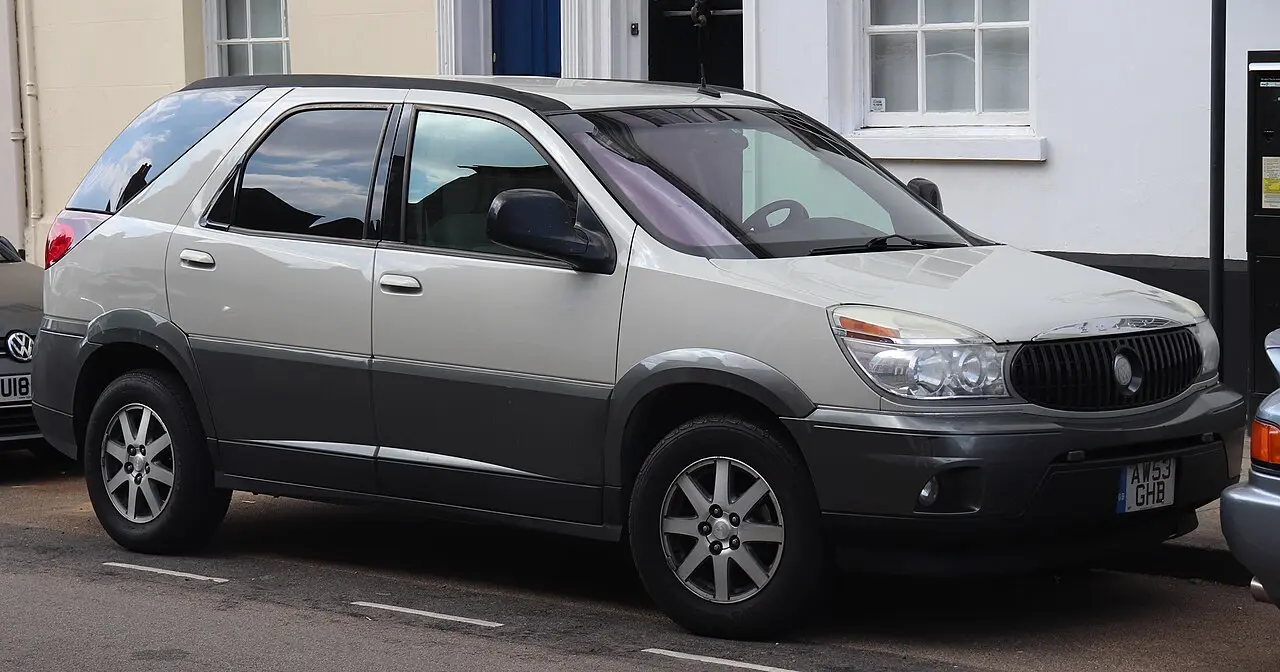
The Rendezvous was a mid-size crossover SUV that brought Buick into the crossover market. Sold for model years 2002-2007, it combined an SUV-style body with a car-like ride and family-friendly space. An optional third row added flexibility for passengers, while available all-wheel drive broadened its appeal.
Generations and engines
The Rendezvous had one generation, running from 2002 to 2007. Its raised stance and optional third row gave it a mix of SUV presence and minivan practicality. Petrol engines ranged from 3.4 L to 3.6 L in the US and Canada.
How economical is the Buick Rendezvous?
The best combined EPA rating in the United States was 20 MPG, with a lowest listed consumption of 11.8 L/100 km. In Canada, the lowest listed figure was 11.6 L/100 km on the 5-cycle test. These procedures differ: the EPA rates vehicles in the United States, while Canada uses its 5-cycle method.
Where was the Buick Rendezvous sold?
The Rendezvous was sold in the United States and Canada from 2002 to 2007. It brought family-focused crossover utility to Buick’s lineup, with room for extra passengers and available all-wheel drive.
Model years sold in the USA, from the EPA and the Department of Energy (fueleconomy.gov). MPG on the EPA test; litres per 100 km = 235.215 ÷ MPG.
Years and version
Engine
Fuel
Gearbox
Drive
Consumption (combined)
CO₂
2006 - 2007CLKUP
3.5 L
Petrol
4-speed automatic
Front-wheel drive
19 MPG (12.4 L/100 km) EPA
291 g/km
2006 - 2007CLKUP
3.5 L
Petrol
4-speed automatic
Four- or all-wheel drive
18 MPG (13.1 L/100 km) EPA
307 g/km
2004 - 2006CLKUP
3.6 L
Petrol
4-speed automatic
Four- or all-wheel drive
18 - 19 MPG (12.4 - 13.1 L/100 km) EPA
291 - 307 g/km
2005 - 2006CLKUP
3.6 L
Petrol
4-speed automatic
Front-wheel drive
19 MPG (12.4 L/100 km) EPA
291 g/km
2002 - 2005CLKUP
3.4 L
Petrol
4-speed automatic
Four- or all-wheel drive
18 MPG (13.1 L/100 km) EPA
307 g/km
2002 - 2005CLKUP
3.4 L
Petrol
4-speed automatic
Front-wheel drive
19 - 20 MPG (11.8 - 12.4 L/100 km) EPA
276 - 291 g/km
Canada 3 versions
Model years sold in Canada, from Natural Resources Canada fuel consumption ratings (5-cycle test).
Years and version
Engine
Fuel
Gearbox
Consumption (combined)
CO₂
2006 - 2007Sport utility vehicle
3.5 L
Petrol
4-speed automatic
12.3 - 13.2 L/100 km 5-cycle
283 - 304 g/km
2004 - 2006Sport utility vehicle
3.6 L
Petrol
4-speed automatic
12.2 - 12.8 L/100 km 5-cycle
281 - 294 g/km
2002 - 2005Sport utility vehicle
3.4 L
Petrol
4-speed automatic
11.6 - 13.5 L/100 km 5-cycle
267 - 311 g/km
Buick Rendezvous recalls
9 official safety recalls for the Buick Rendezvous from NHTSA (United States), DVSA (United Kingdom) and the EU Safety Gate, newest first. Recall repairs are normally free at the maker’s dealers.
Fuel tank inlet valve may fracture2002 - 2004
Aftermarket seat covers may affect passenger airbag sensing2005 - 2006
Ignition relay may cause the vehicle to stall2004
Rear liftgate latch support may fail in a crash2003 - 2004
Official figures are measured on standard test procedures and differ between markets. Your consumption depends on how, where and in what conditions you drive.