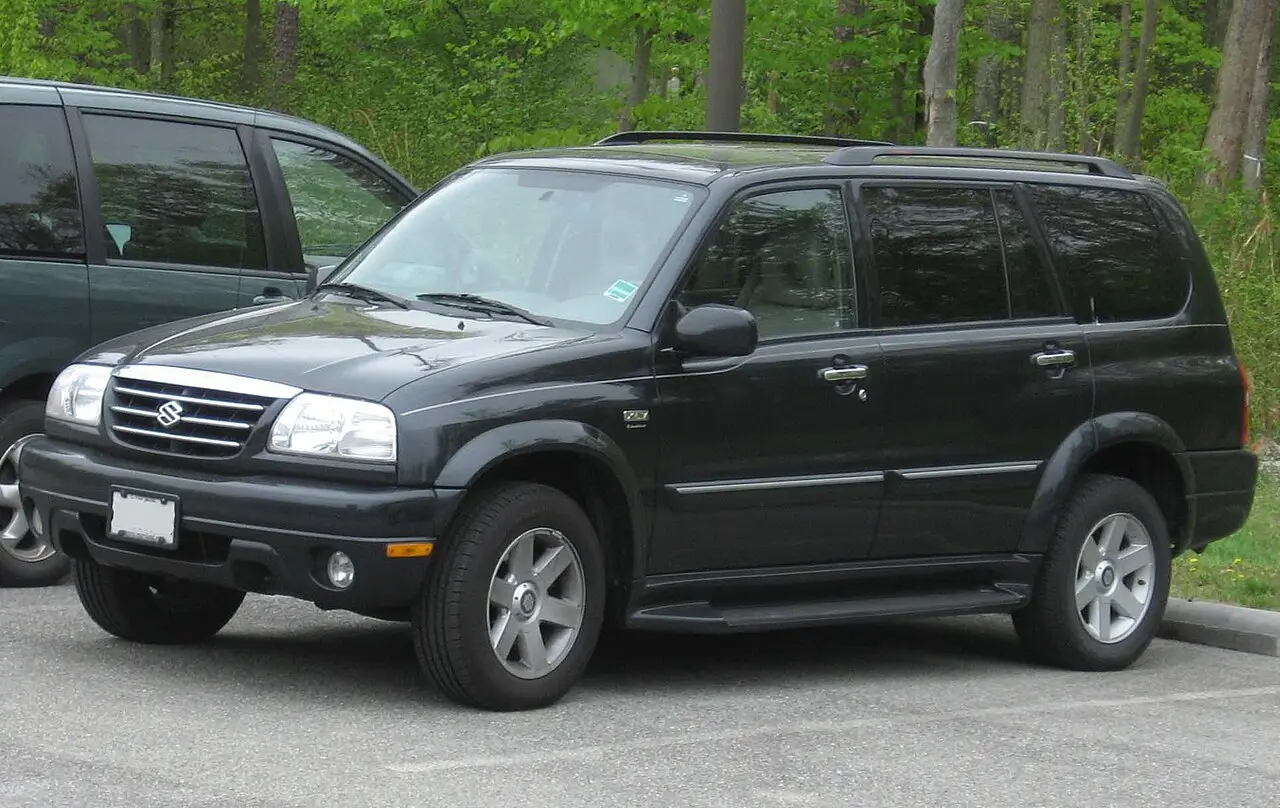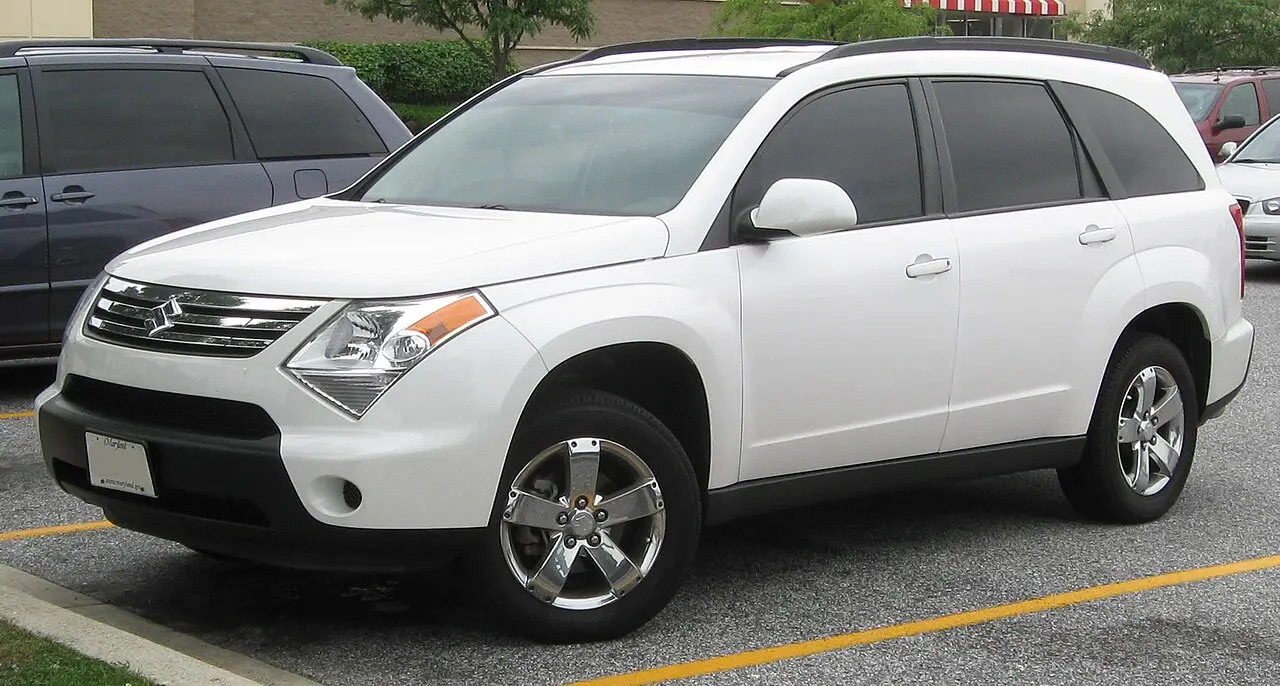
What is the Suzuki XL-7?
The Suzuki XL-7 was the larger SUV in the brand’s North American range, with room for seven. Its first generation extended the Grand Vitara family and kept a traditional SUV layout. For the second generation, Suzuki shifted to a crossover design based on GM’s Theta platform, with front-wheel drive and available all-wheel drive. That change gave the XL-7 a more road-focused character.
The first generation ran from 2001 to 2006, followed by the second from 2007 to 2009. Both generations were sold in the United States and Canada.
Engines and power
US petrol engines ranged from 2.7 L to 3.6 L. The Canadian range also ran from 2.7 L to 3.6 L. The second-generation XL-7 used a 3.6 L V6.
How economical is the Suzuki XL-7?
The EPA’s United States figures cover 2001–2009, with a best combined rating of 19 MPG and a lowest listed consumption of 12.4 L/100 km. Canadian NRCan figures cover the same years, with a lowest listed consumption of 12.7 L/100 km on the five-cycle test. EPA and Canadian five-cycle results use different procedures, so they are best read within their own markets.
Where was the XL-7 sold?
The XL-7 was sold in the United States and Canada during its two-generation run, from 2001 to 2009. Suzuki’s range includes compact passenger cars and utility vehicles; the XL-7 served as its larger North American SUV.
Questions and answers
How many XL-7 generations are covered?
Two: the first ran from 2001 to 2006 and the second from 2007 to 2009.
What engines were offered?
US and Canadian petrol engines ranged from 2.7 L to 3.6 L.
What is the XL-7’s best combined EPA rating?
Its best combined EPA rating is 19 MPG.
What is the lowest listed Canadian consumption?
The lowest listed NRCan consumption is 12.7 L/100 km on the five-cycle test.