What is the Armstrong Siddeley Hurricane?
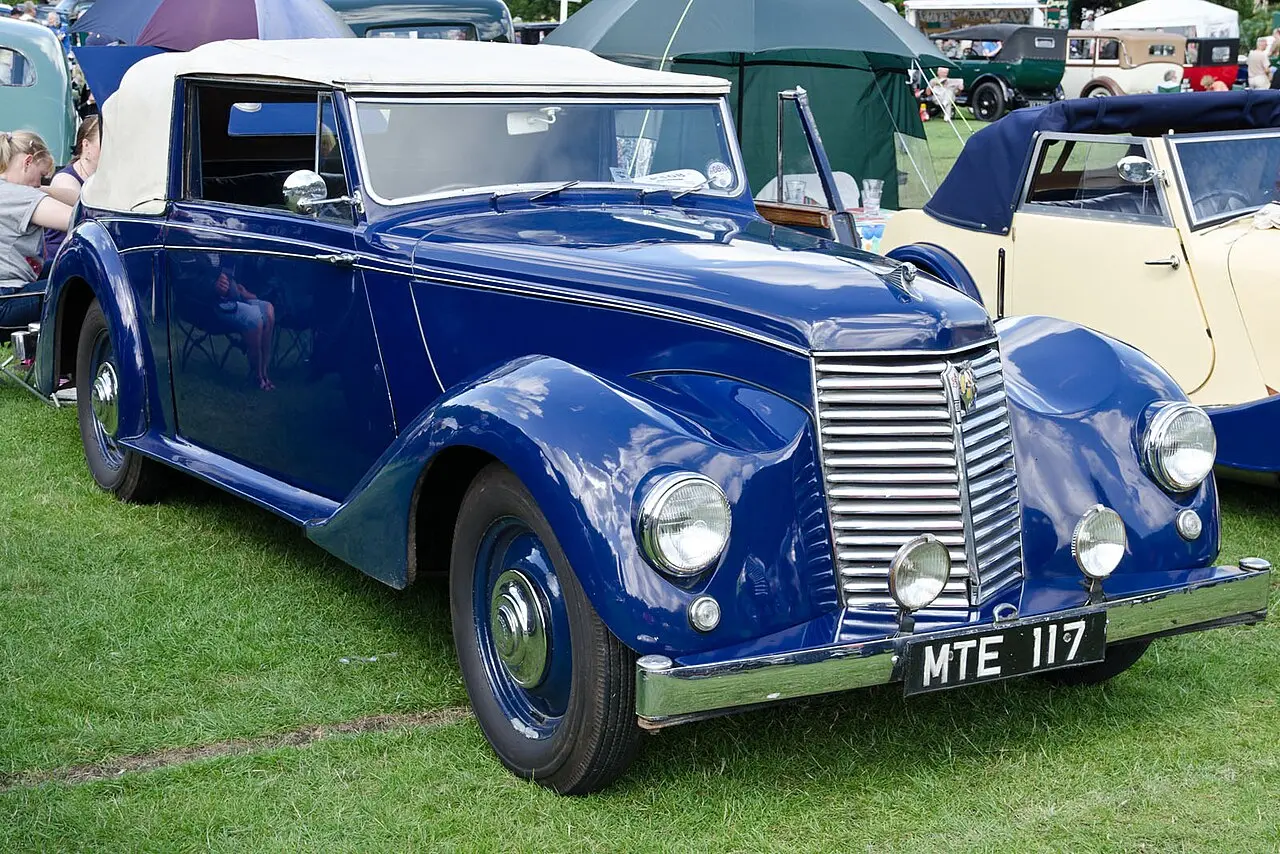
The Hurricane was a four-seat drophead coupé in Armstrong Siddeley’s post-war range. Its folding hood had three positions, so drivers could close it, open it partway or fold it back for open-air motoring. The model shared the range with saloons, including the Lancaster.
Armstrong Siddeley made cars and aircraft engines. The Hurricane reflects that engineering heritage in a substantial, carefully finished car with a distinctive open body.
Engines and power
The Hurricane was part of Armstrong Siddeley’s six-cylinder range. It was available with a pre-selector gearbox, a type of transmission that let the driver select the next gear before changing into it.
Its drophead body is the defining feature. With the hood raised, it offered the enclosed comfort of a coupé; with it folded back, the cabin opened to the sky.
Fuel consumption and CO₂
No official fuel-consumption or CO₂ figures are available for the Hurricane, so there is no comparable test rating to quote.
Where was it sold?
The Hurricane was made by British manufacturer Armstrong Siddeley.
Questions and answers
What body style is the Hurricane?
It is a four-seat drophead coupé with a folding, three-position hood.
Was the Hurricane part of a wider range?
Yes. It sat alongside saloons such as the Lancaster in Armstrong Siddeley’s post-war range.
What fuel economy does it achieve?
No official fuel-consumption figure is available for the Hurricane.