



Who made Wartburg cars?
Wartburg was an East German car marque built by Automobilwerk Eisenach, in the city of Eisenach. The name is closely tied to the country’s car industry and to the factory that made its cars. Wartburgs were practical family cars, offered in different body styles, and became a familiar part of everyday life in East Germany.
The two model lines listed here span 1956-1988: the 311 and its successor, the 353. Together they show a long-running approach to family motoring, with a substantial change in styling and chassis between generations.
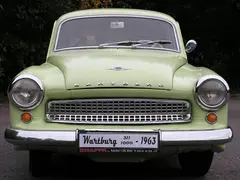
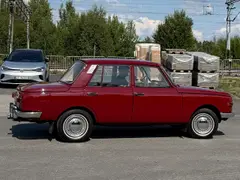
The Wartburg 311
The 311 was the first of these two lines, running from 1956 to 1965. It was a family car with a rounded, sculpted appearance that gave it a distinctive character. The range included several body styles, so the 311 name covered more than one kind of everyday use.
Its look reflected the period’s softer, flowing car design. Underneath, the 311 used a separate chassis, a layout that shaped how the car was constructed. It established Wartburg as a maker of roomy, versatile cars rather than a specialist marque.
How the 353 changed the range
The 353 took over in 1966 and continued through 1988, making it the longer-running of the two lines. Its squarer, more modern body marked a clear visual break from the 311. The new model also brought a revised chassis with coil springs and independent suspension, improving the car’s basic layout while keeping it in the same family-car role.
The 353 developed over its long life, with updates including disc brakes and other improvements. Its extended production meant that the model remained a central part of Wartburg’s identity for many years. The succession from the 311 to the 353 was therefore both a design change and a substantial update to the car beneath the body.
Wartburg models and markets
The model range represented here is focused on the 311 and 353. The 311 ran from 1956 to 1965, followed by the 353 from 1966 to 1988. No electrified model appears in this range, so Wartburg’s story here is one of conventional family cars rather than a move toward electric power.
Wartburg cars were associated above all with East Germany, though the 311 was also exported. Market availability varied by model and destination, and official fuel economy or emissions results should be read within the relevant test system: European WLTP or NEDC procedures differ from the EPA method in the USA and the five-cycle method in Canada.
Questions and answers
What was the last Wartburg model in this range?
The 353 was the later model, following the 311 and continuing through 1988.
What kind of car was the Wartburg 311?
It was a family car offered in several body styles, with rounded styling and a separate chassis.
What changed with the Wartburg 353?
The 353 introduced a squarer body and a revised chassis with coil springs and independent suspension. It also received later improvements, including disc brakes.
Were Wartburg cars electric?
No electrified model appears in this range; the 311 and 353 were conventional family cars.