Volvo

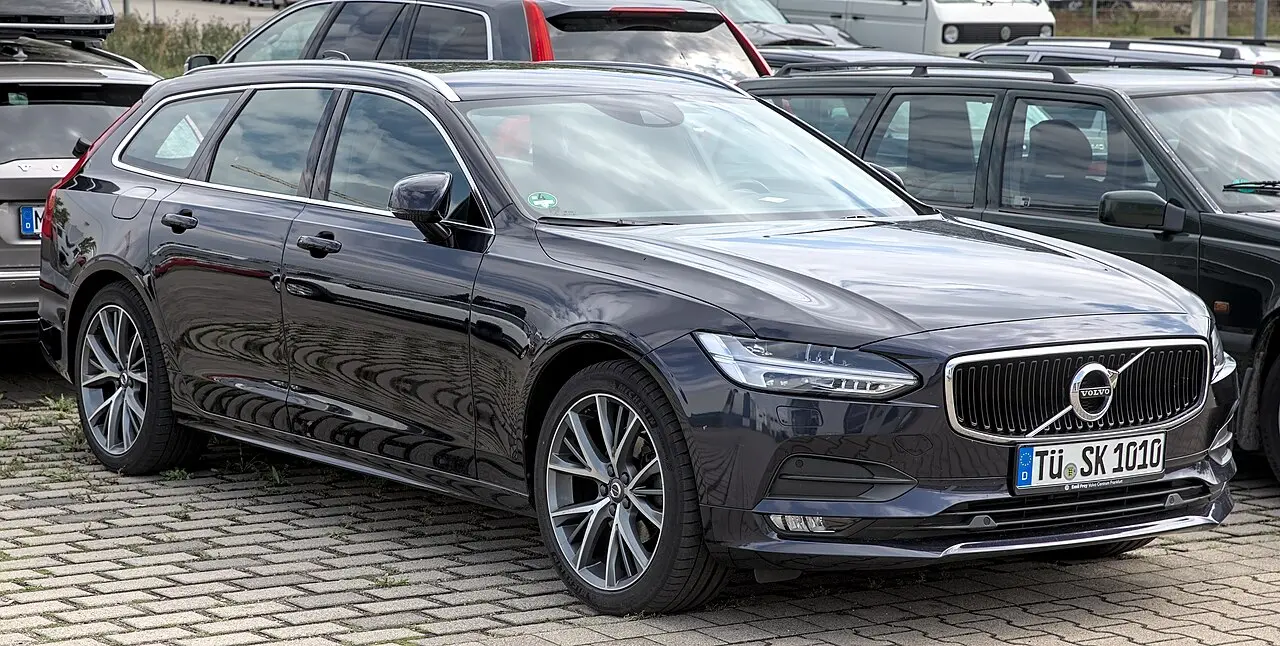
Volvo V90 Cross Country

Volvo V90 Cross Country
Photo: Alexander Migl / Wikimedia Commons · CC BY-SA 4.0

The official data lists 86 versions of the Volvo V90 Cross Country (2016–2026), in the European Union, the United States, and Canada. Each market publishes its own figures, measured on its own test procedure.

At a glance

Years in the data
2016–2026
Markets
European Union, United States, Canada
Engines
2.0 L to 2.0 L
Power
140 kW (190 PS) to 235 kW (320 PS)
Fuels
Hybrid, Diesel, Petrol, Plug-in hybrid
Lowest consumption (European Union)
5.8 L/100 km (WLTP)
Lowest consumption (United States)
9.0 L/100 km (EPA)
Lowest consumption (Canada)
9.2 L/100 km (5-cycle)
New registrations in the EU
99,640

What is the Volvo V90 Cross Country?

The V90 Cross Country is a large estate with a more rugged, all-road character than the standard V90. It extends Volvo’s long-roof estate tradition with styling and equipment for varied weather and road conditions. Volvo introduced the Cross Country name on an estate model in the 1990s.

It had one generation, known internally as SPA. It arrived in Europe and the UK in 2016, and in the United States and Canada in 2017. The generation is listed from 2017 in Europe and North America.

Engines and power

The European Union range uses 2.0-litre engines and includes diesel, petrol, hybrid and plug-in hybrid versions. Listed power runs from 140 kW (190 PS) to 235 kW (320 PS). The diesel versions at 140 kW (190 PS) were the leading configurations in the EU registration figures for 2017, 2018 and 2019.

US versions are listed with 2.0-litre petrol or hybrid powertrains. Canadian listings also show 2.0-litre petrol versions. Available fuel and powertrain choices vary by market.

Fuel consumption and emissions

The lowest listed European Union consumption is 5.8 L/100 km on the WLTP test. The United States EPA listing gives a best combined rating of 26 MPG, or 9 L/100 km. In Canada, the lowest listed figure is 9.2 L/100 km on the NRCan 5-cycle test.

These results use different procedures: WLTP in Europe, EPA testing in the United States and the 5-cycle test in Canada.

Where was the V90 Cross Country sold?

The V90 Cross Country was sold in the European Union, the UK, the United States and Canada. EU registrations span 2016–2025 and total 99,640. The leading listed configuration in 2017, 2018 and 2019 was the 2.0-litre diesel with 140 kW (190 PS).

Questions and answers

How many generations of V90 Cross Country are listed?

One generation, SPA: from 2016 in Europe and the UK, and from 2017 in the United States and Canada.

What engines did the V90 Cross Country use?

The European Union range used 2.0-litre diesel, petrol, hybrid and plug-in hybrid powertrains. US listings include petrol and hybrid versions, and Canadian listings include petrol versions.

What is its lowest listed official consumption?

The lowest listed value is 5.8 L/100 km on the European Union WLTP test.

What kind of car is the V90 Cross Country?

It is a large estate with a more rugged, all-road character, part of Volvo’s Cross Country range.
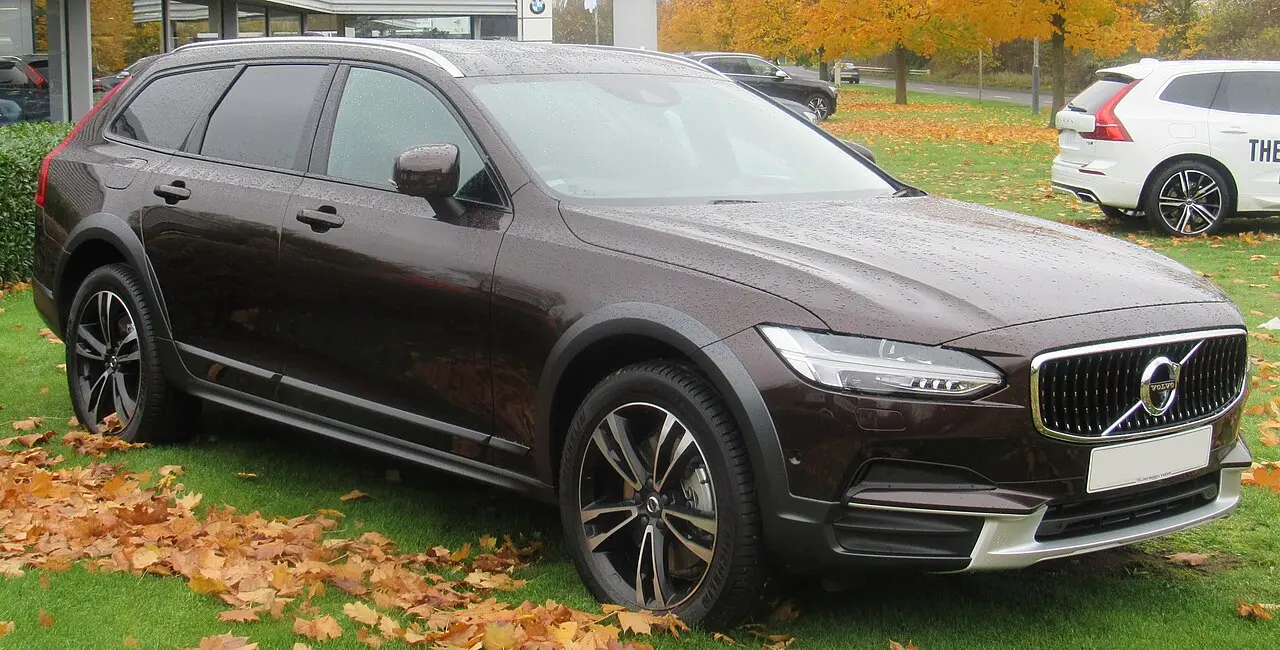
V90 Cross Country I (2016–2025)

Volvo V90 Cross Country I
Photo: Vauxford / Wikimedia Commons · CC BY-SA 4.0

Model codes: SPA · Sold in: European Union and United Kingdom · References: volvocars.com, volvoclub.org.uk

Show all 69 versions

V90 Cross Country I (since 2017)

Volvo V90 Cross Country I
Photo: Alexander Migl / Wikimedia Commons · CC BY-SA 4.0

Model codes: SPA · Sold in: United States and Canada · References: volvocars.com, cars.com

United States 9 versions

Model years sold in the USA, from the EPA and the Department of Energy (fueleconomy.gov). MPG on the EPA test; litres per 100 km = 235.215 ÷ MPG.

Years and versionEngineFuelGearboxDriveConsumption (combined)CO₂
2024–2026SIDI; Mild Hybrid2.0 LHybrid8-speed automaticAll-wheel drive25 MPG (9.4 L/100 km) EPA222 g/km
2023SIDI; Mild Hybrid2.0 LHybrid8-speed automaticAll-wheel drive25 MPG (9.4 L/100 km) EPA219 g/km
2022SIDI2.0 LPetrol8-speed automaticAll-wheel drive25 MPG (9.4 L/100 km) EPA219 g/km
2020–2021SIDI2.0 LPetrol8-speed automaticAll-wheel drive24 MPG (9.8 L/100 km) EPA232 g/km
2019SIDI2.0 LPetrol8-speed automaticAll-wheel drive25 MPG (9.4 L/100 km) EPA219 g/km
2019SIDI2.0 LPetrol8-speed automaticAll-wheel drive24 MPG (9.8 L/100 km) EPA231 g/km
2018SIDI2.0 LPetrol8-speed automaticAll-wheel drive25 MPG (9.4 L/100 km) EPA224 g/km
2018SIDI2.0 LPetrol8-speed automaticAll-wheel drive26 MPG (9.0 L/100 km) EPA214 g/km
2017SIDI2.0 LPetrol8-speed automaticAll-wheel drive25 MPG (9.4 L/100 km) EPA221 g/km

Canada 8 versions

Model years sold in Canada, from Natural Resources Canada fuel consumption ratings (5-cycle test).

Years and versionEngineFuelGearboxConsumption (combined)CO₂
2026Station wagon: Mid-size2.0 LPetrol8-speed automatic9.3 L/100 km 5-cycle219 g/km
2024–2025Station wagon: Mid-size2.0 LPetrol8-speed automatic9.5 L/100 km 5-cycle223 g/km
2023Station wagon: Mid-size2.0 LPetrol8-speed automatic9.7 L/100 km 5-cycle227 g/km
2022Station wagon: Mid-size2.0 LPetrol8-speed automatic9.5 L/100 km 5-cycle222 g/km
2019Station wagon: Mid-size2.0 LPetrol8-speed automatic10.0 L/100 km 5-cycle233 g/km
2018Station wagon: Mid-size2.0 LPetrol8-speed automatic9.2 L/100 km 5-cycle214 g/km
2018Station wagon: Mid-size2.0 LPetrol8-speed automatic9.6 L/100 km 5-cycle224 g/km
2017Station wagon: Mid-size2.0 LPetrol8-speed automatic9.4 L/100 km 5-cycle221 g/km

Official figures are measured on standard test procedures and differ between markets. Your consumption depends on how, where and in what conditions you drive.