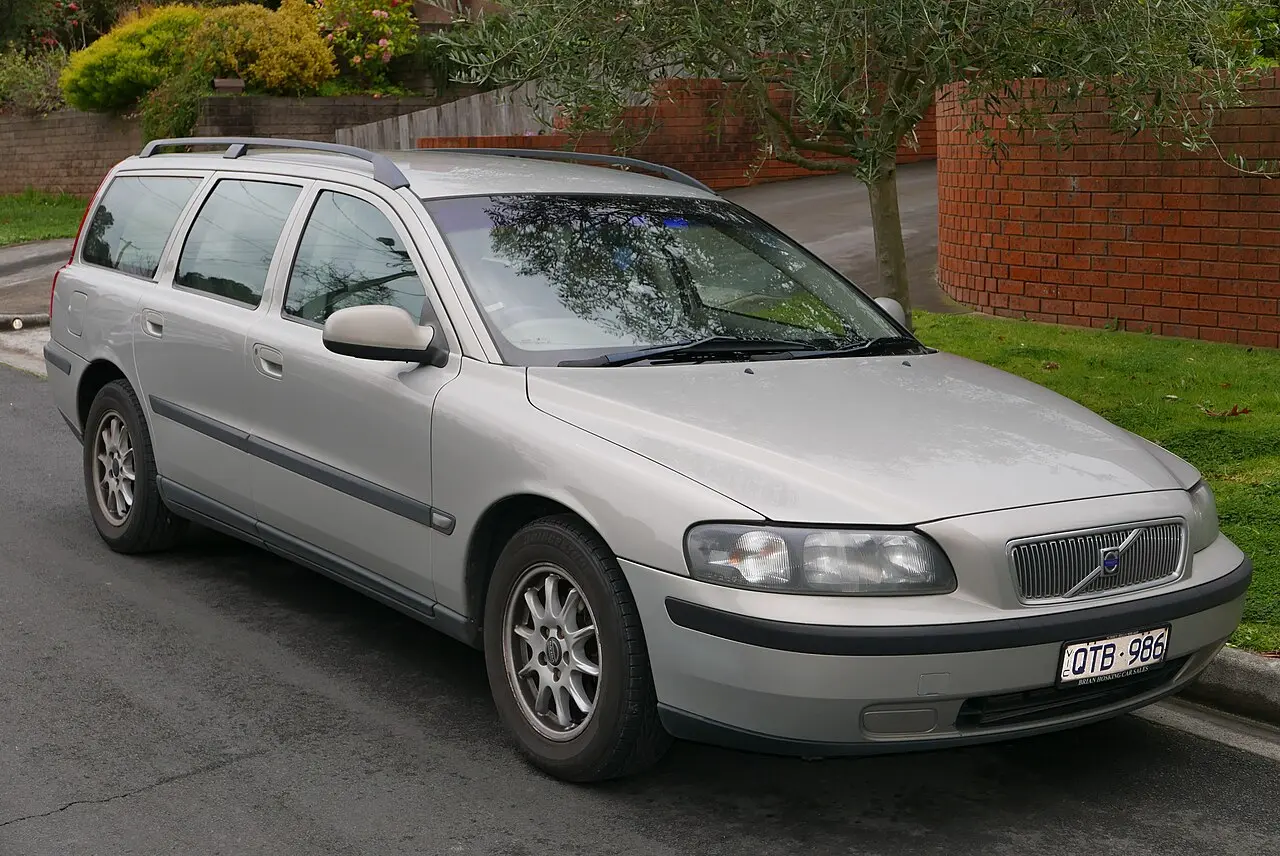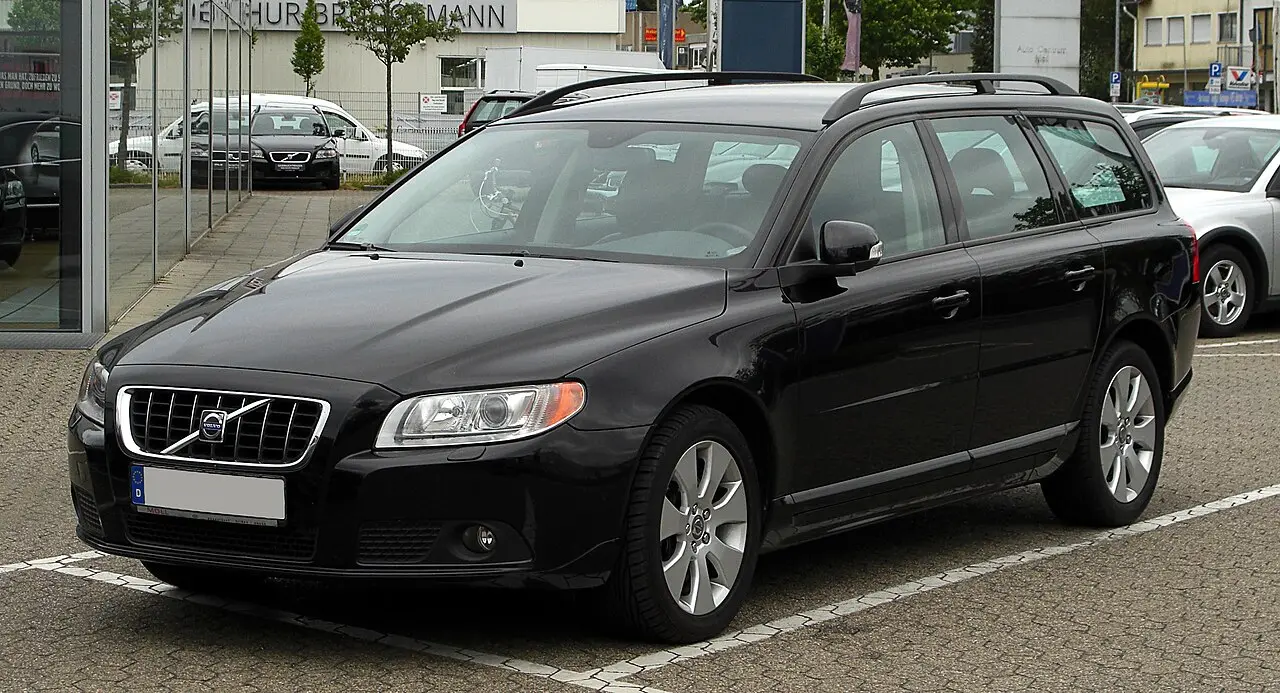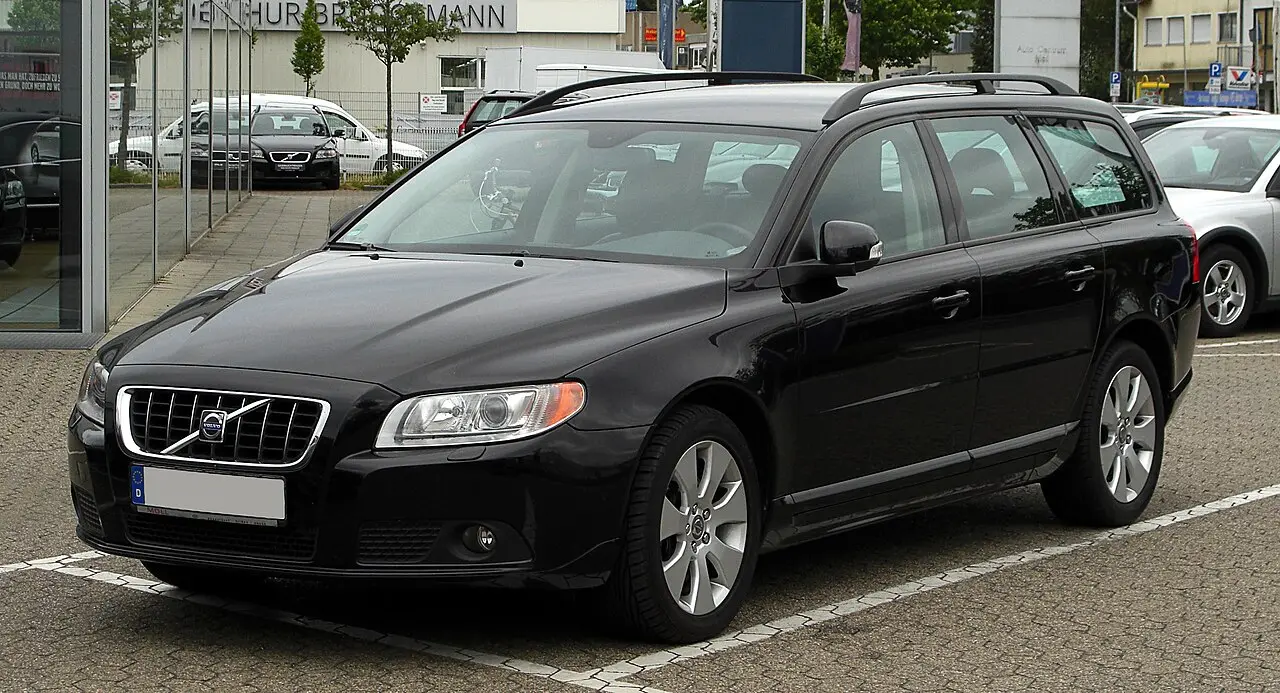
Volvo

Volvo V70

Volvo V70
Photo: M 93 / Wikimedia Commons · CC BY-SA 3.0 de

The official data lists 452 versions of the Volvo V70 (1998–2017), in the European Union, the United Kingdom, France, the United States, and Canada. Each market publishes its own figures, measured on its own test procedure.

At a glance

Years in the data
1998–2017
Markets
European Union, United Kingdom, France, United States, Canada
Engines
1.6 L to 3.2 L
Power
84 kW (114 PS) to 224 kW (305 PS)
Fuels
Diesel, Petrol, Natural gas, Flex fuel (E85), LPG
Lowest consumption (United Kingdom)
4.1 L/100 km (NEDC)
Lowest consumption (France)
4.3 L/100 km (NEDC)
Lowest consumption (Canada)
10.6 L/100 km (5-cycle)
New registrations in the EU
366,994

What is the Volvo V70?

The V70 is a large five-door estate, with a roomy cabin and a useful load space. It carried Volvo’s long estate-car tradition into a modern family car, giving the model a practical role among the larger cars in the range.

The V70 name spans three generations. The first ran from 1998 to 2000, the second from 2000 to 2007, and the third from 2007 to 2016 in Europe, the UK and France. North American figures for the third generation cover 2008 to 2010.

Generations, engines and power

The V70 developed through three generations while retaining its estate-car format. Volvo’s estate-car history includes the Duett, which began the company’s estate tradition; the V70 brought that practical emphasis to a later family car.

EU engine sizes range from 1.6 to 3.0 litres, with power from 84 kW (114 PS) to 224 kW (305 PS). The UK range covers 1.6 to 3.0 litres and power from 103 kW (140 PS) to 127 kW (172 PS). European versions included petrol and diesel, as well as natural gas and flex-fuel E85 in some markets. Among the most registered EU versions were 2.0-litre diesels rated at 120 kW (163 PS) and 133 kW (181 PS), and a 2.4-litre diesel.

Fuel consumption and emissions

The lowest listed consumption is 4.1 L/100 km in the UK on the NEDC test. France lists 4.3 L/100 km, also on NEDC. Actual fuel use varies by version and driving conditions.

For North American petrol versions, the US EPA lists a minimum of 10.7 L/100 km and 22 MPG combined. Canada’s minimum is 10.6 L/100 km on its 5-cycle test. European NEDC figures, US EPA ratings and Canadian 5-cycle results use different procedures, so they are not directly comparable.

Where was it sold?

The V70 appears in figures for the EU, UK and France, as well as the US and Canada. European ranges included more fuel choices, while North American figures cover petrol engines from 2.3 to 3.2 litres. EU figures span 2010 to 2017, while UK figures span 2000 to 2016.

Questions and answers

How many V70 generations were there?

Three: 1998–2000, 2000–2007 and 2007–2016 in Europe, the UK and France.

What engines were listed for the EU V70?

The range spans 1.6 to 3.0 litres, with power from 84 kW (114 PS) to 224 kW (305 PS).

What is the lowest listed V70 consumption?

The UK lists 4.1 L/100 km on NEDC; France lists 4.3 L/100 km on NEDC.

Did the V70 have alternative-fuel versions?

Some European and UK versions used natural gas or flex-fuel E85; UK versions also included LPG.
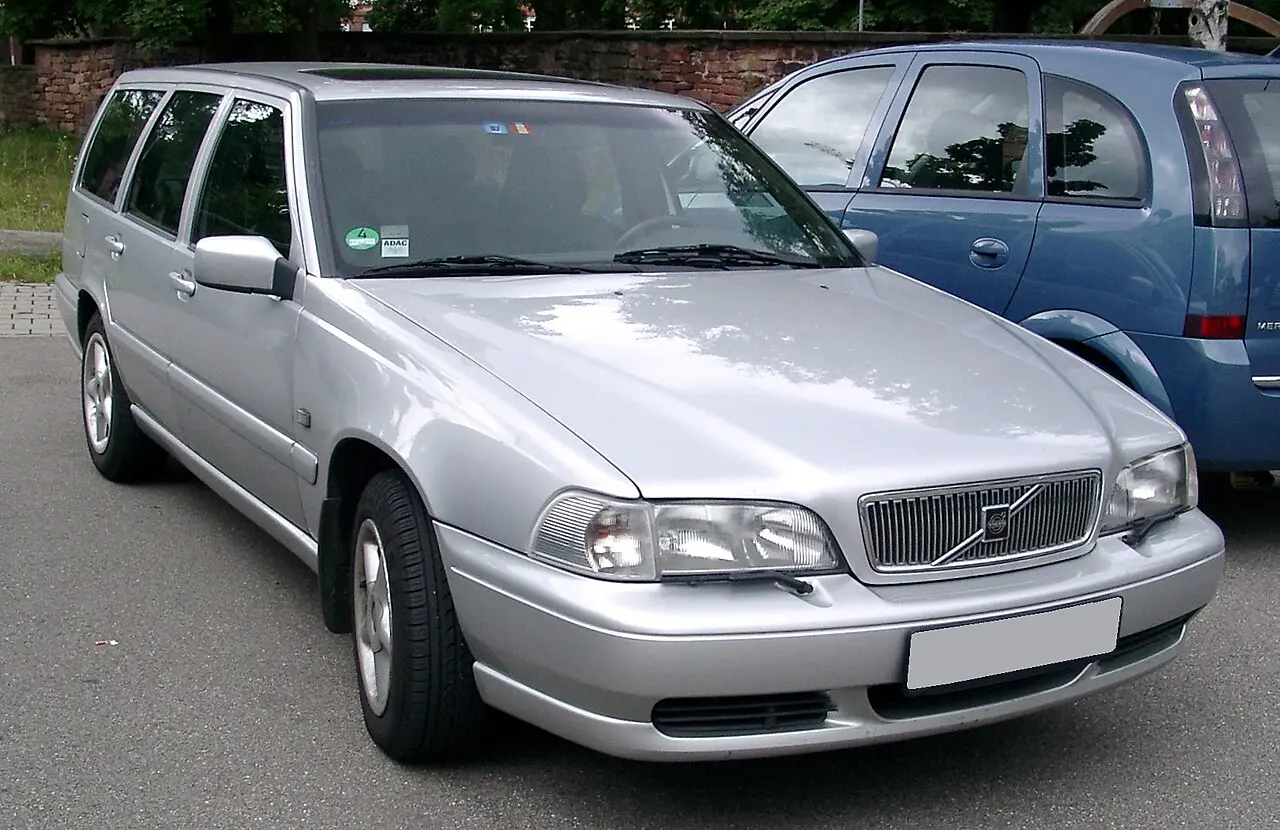
V70 I (1998–2000)

Volvo V70 I
Photo: Rudolf Stricker / Wikimedia Commons · Attribution

Model codes: P80 · Sold in: United States, Canada, European Union, United Kingdom, and France · References: en.wikipedia.org, ipdusa.com

Show all 51 versions

V70 II (2000–2007)

Volvo V70 II
Photo: OSX / Wikimedia Commons · Public domain

Model codes: P2 · Sold in: United States, Canada, European Union, United Kingdom, and France · References: en.wikipedia.org, ipdusa.com

Show all 175 versions

V70 III (2007–2016)

Volvo V70 III
Photo: M 93 / Wikimedia Commons · CC BY-SA 3.0 de

Model codes: P3 · Sold in: European Union, United Kingdom, and France · References: en.wikipedia.org, ipdusa.com

Show all 248 versions

V70 III (2008–2010)

Volvo V70 III
Photo: M 93 / Wikimedia Commons · CC BY-SA 3.0 de

Model codes: P3 · Sold in: United States and Canada · References: ipdusa.com, en.wikipedia.org

United States 3 versions

Model years sold in the USA, from the EPA and the Department of Energy (fueleconomy.gov). MPG on the EPA test; litres per 100 km = 235.215 ÷ MPG.

Years and versionEngineFuelGearboxDriveConsumption (combined)CO₂
20103.2 LPetrol6-speed automaticFront-wheel drive21 MPG (11.2 L/100 km) EPA263 g/km
20092MODE CLKUP3.2 LPetrol6-speed automaticFront-wheel drive20 MPG (11.8 L/100 km) EPA276 g/km
20082MODE CLKUP3.2 LPetrol6-speed automaticFront-wheel drive19 MPG (12.4 L/100 km) EPA291 g/km

Canada 3 versions

Model years sold in Canada, from Natural Resources Canada fuel consumption ratings (5-cycle test).

Years and versionEngineFuelGearboxConsumption (combined)CO₂
2010Station wagon: Mid-size3.2 LPetrol6-speed automatic11.6 L/100 km 5-cycle267 g/km
2009Station wagon: Mid-size3.2 LPetrol6-speed automatic12.0 L/100 km 5-cycle276 g/km
2008Station wagon: Mid-size3.2 LPetrol6-speed automatic12.6 L/100 km 5-cycle290 g/km

Versions outside these generations

European Union 4 versions

New cars registered in the EU (plus Norway and Iceland), from the European Environment Agency. Figures on the NEDC procedure until 2020 and on WLTP from 2021; versions are grouped by engine and power, with their number of registrations.

Years and versionEnginePowerFuelCO₂EU registrations
20172.0 L110 kW (150 PS)Diesel112 g/km38
20172.4 L–Diesel156 g/km22
20172.0 L133 kW (181 PS)Diesel117 g/km18
20172.0 L88 kW (120 PS)Diesel110 g/km10

Official figures are measured on standard test procedures and differ between markets. Your consumption depends on how, where and in what conditions you drive.